
6 Best HVAC Work Boots for All-Day Comfort
The Thorogood 1957 Series Waterproof Steel Toe Work Boots is the top pick for most buyers searching for the best hvac work boots because it combines waterproof protection with a steel toe. Its full-grain leather construction and work-ready outsole suit technicians who move between job sites, crawlspaces, and wet outdoor areas. The design also looks less bulky than many heavy-duty safety boots, though fit can vary by foot shape.
This guide is for HVAC technicians, apprentices, and maintenance workers who spend long shifts on ladders, concrete, and unfinished floors. Focus on accurate sizing and the materials that control protection and wet-weather comfort, especially the waterproof upper, steel-toe fit, and slip-resistant outsole. The six picks below are ranked with clear reasons and honest drawbacks for each, so you can compare safety, comfort, and job-site practicality before buying.
Quick Comparison
| # | Product | Best For | Price | |
|---|---|---|---|---|
| 1 | Thorogood 1957 Series Waterproof Steel Toe Work Boots | Wet-Weather Construction Workers | ~$295 | View → |
| 2 | EVER BOOTS Tank Men's Work Boots | Budget-Conscious Trade Apprentices | ~$65 | View → |
| 3 | Wolverine Floorhand Waterproof Steel-Toe Work Boot | Waterproof Warehouse Employees | ~$99 | View → |
| 4 | SUADEX Steel Toe Work Safety Boots | Lightweight Jobsite Protection Seekers | ~$40 | View → |
| 5 | Wolverine Overpass Composite Toe Waterproof Work Boot | Metal-Free Outdoor Contractors | ~$135 | View → |
| 6 | Thorogood American Heritage Steel Toe Work Boots | Long-Shift Factory Workers | ~$285 | View → |
6 Top HVAC Work Boot Picks
This ranked list counts down from the most practical pair to our top pick for HVAC technicians.
6. Thorogood American Heritage Steel Toe Work Boots

Best for: Construction crews needing steel-toe protection
These 8-inch Thorogood work boots use Trail Crazyhorse full-grain leather and a moc-toe design. This version comes in size 10 with a 2E wide fit. Its steel toe meets ASTM F2413-18 impact and compression standards, while the electrical hazard rating adds protection around qualifying electrical risks. The roomy toe box should suit workers who dislike cramped safety boots.
Comfort comes from a removable dual-density Ultimate Shock Absorption footbed, Poron cushioning, and a rubber midsole. Underfoot, the MAXWear wedge outsole resists oil and abrasion and provides slip resistance for many job-site surfaces. Goodyear storm welt construction allows future resoling, which can extend the boots’ working life. Thorogood makes them in the USA with domestic and globally sourced components. At around $285, they cost more than many basic safety boots, but the repairable construction helps support that price.
Pros
- Steel toes meet ASTM F2413-18 impact and compression requirements.
- Removable cushioning makes the footbed easier to replace or adjust.
- Goodyear storm welt construction supports resoling and long-term use.
Cons
- The 8-inch leather build may feel heavier and stiffer than casual work shoes.
- No waterproof rating is listed, so wet-weather workers may need separate protection.
5. Wolverine Overpass Composite Toe Waterproof Work Boot

Best for: Outdoor job sites needing toe protection
The Wolverine Overpass is a 6-inch work boot with a composite safety toe, waterproof leather, and a brown finish. This size 10 Medium version uses a toe cap rated to ASTM F2413-11 M I/75 C/75, with electrical hazard protection. The composite design avoids the weight of a steel toe, though the boot still offers substantial coverage around the ankle.
Its flexible contour welt bends at key points instead of forcing a stiff stride. A removable OrthoLite footbed adds cushioning and can be replaced if it wears down. The outsole resists slipping, oil, water, abrasion, and chemicals, giving it broad job-site coverage. The leather toe area also has extra abrasion resistance, which helps in rough work conditions. At around $135, it sits in the middle of the work-boot price range. The waterproof build suits wet ground, but it may feel warmer than a lightweight shoe during hot shifts.
Pros
- Composite toe provides ASTM-rated impact and compression protection.
- Waterproof leather and water-resistant outsole help in wet work areas.
- Removable cushioned footbed supports long shifts and easier replacement.
Cons
- Six-inch waterproof construction may feel warm in summer conditions.
- Chemical resistance does not mean protection from every chemical or solvent.
4. SUADEX Steel Toe Work Safety Boots

Best for: Construction crews needing toe protection
The SUADEX work boot combines a steel toe, Kevlar midsole, and high-top ankle coverage in one work shoe. The listing states that its European-standard toe resists impacts up to 200J and complies with ASTM standards. That makes it suited to jobs where dropped tools, materials, or floor debris pose a real risk. A pair costs around $40, though prices can change.
The Kevlar layer is designed to block punctures from nails, steel bars, and similar hazards. Its rubber-like outsole uses a patterned tread for traction on wet floors, while the breathable lining should help reduce heat during long shifts. These boots fit construction, warehouse, roofing, automotive, and machine-manufacturing work better than casual outdoor use. The high collar may also provide more ankle support than a low work shoe. Still, buyers should confirm the exact certification details and fit before ordering.
Pros
- Steel toes are listed with 200J impact resistance and ASTM compliance.
- Kevlar midsoles help protect against punctures from nails and sharp metal.
- Patterned, wear-resistant soles provide grip on wet work surfaces.
Cons
- Steel-toe construction can feel heavier and stiffer than standard work shoes.
- The high-top design and protective layers may feel warm during long shifts.
3. Wolverine Floorhand Waterproof Steel-Toe Work Boot

Best for: Budget-conscious jobsites and warehouse shifts
The Wolverine Men’s Floorhand is a six-inch work boot with a steel toe for common workplace hazards. This version is size 10.5M. Its full-grain leather upper is designed to resist water, while the rubber outsole provides traction on everyday work surfaces. A nylon shank adds support beneath the foot. At around $99, it fits buyers who want basic protection without paying premium boot prices.
Comfort features give this pair more daily-use appeal. The removable, full-cushion footbed can be taken out for replacement or drying, and its shape is intended to adapt to the foot over time. A moisture-wicking mesh lining helps move sweat away from the skin, which can make long shifts more tolerable. The strongest feature combination is the waterproof leather, cushioned insole, and grippy rubber sole. Still, this is a steel-toe boot, so it may feel heavier than a comparable composite-toe model. The leather may also need a break-in period, and waterproof materials can feel warmer in mild weather.
Pros
- Waterproof full-grain leather helps protect against wet conditions.
- Rubber outsole provides traction across many work surfaces.
- Removable cushioned footbed supports long periods on your feet.
Cons
- Steel-toe construction can add noticeable weight.
- Leather boots may feel stiff before they break in.
2. EVER BOOTS Tank Men’s Work Boots
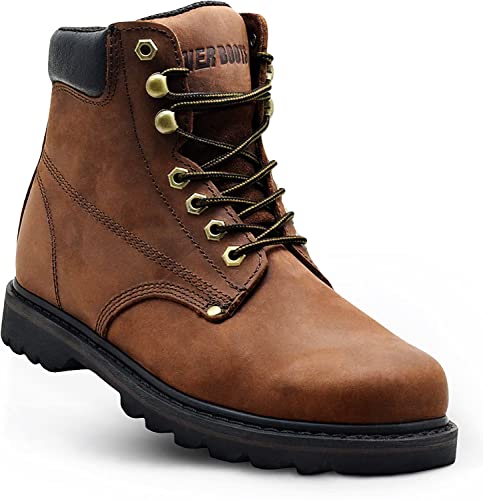
Best for: Budget-conscious construction and landscaping workers
The EVER BOOTS Tank is a pull-on work boot with a dark brown leather upper and a soft toe. The listed version is size 6 D(M), with a wide, ankle-high profile and a rubber outsole built for everyday work surfaces. At around $65, it targets buyers who need a basic leather work boot without moving into premium pricing. Its sizing follows major men’s work-boot brands, and women’s size 9 converts to an Ever Boots size 7.
The upper uses supple nubuck with reinforced stitching and a padded collar around the ankle. That combination should provide more comfort than a stiff, unlined boot during long shifts. The sole includes arch support and removable insoles, so the fit can accommodate custom orthotics. A wide rubber base also adds stability for construction, contracting, landscaping, and household projects. Still, the soft toe does not provide the impact or crush protection of a safety toe, so this model may not meet every job-site requirement.
Pros
- Nubuck leather upper offers a flexible feel with reinforced stitching.
- Removable insoles leave room for custom orthotics.
- Wide rubber sole and built-in arch support suit long periods on foot.
Cons
- Soft toe lacks steel-toe or composite-toe protection.
- Pull-on ankle design may feel less adjustable than lace-up boots.
1. Thorogood 1957 Series Waterproof Steel Toe Work Boots

Best for: Construction crews needing waterproof toe protection
The Thorogood 1957 Series is an 8-inch work boot with full-grain leather, a moc toe, and a steel safety toe. This men’s size 10 D version meets ASTM F2413-18 standards for impact, compression, and electrical hazard resistance. Its gusseted tongue helps block water and jobsite liquids, while the moisture-wicking lining moves sweat away from the foot.
The standout feature is the serviceable Goodyear storm welt, which seals the upper to the midsole and supports future repairs. A fiberglass shank adds structure without making the boot completely rigid. Underfoot, the slip-resistant wedge outsole pairs with a removable dual-density polyurethane footbed, with extra cushioning beneath the heel and ball of the foot. Thorogood makes these boots at U.S. plants with domestic and globally sourced components. At around $295, they target buyers who need durable, rebuildable footwear for construction, electrical, plumbing, and similar work.
Pros
- Steel toes meet ASTM F2413-18 impact and compression requirements.
- Waterproof construction includes a gusseted tongue and moisture-wicking lining.
- Goodyear storm welt and fiberglass shank support long-term use and repairs.
Cons
- Around $295, these boots cost more than many basic safety-toe options.
- The 8-inch leather build and steel toe may feel warm and less flexible than lighter soft-toe boots.
Buying Guide
A secure, accurate fit matters most in HVAC footwear because technicians often spend 8 to 12 hours walking, climbing ladders, and kneeling. Boots that pinch or allow heel movement can cause blisters and reduce stability.
- Safety toe: Choose ASTM F2413-rated steel, composite, or alloy toes with about ½ inch of wiggle room in front of your longest toe. Composite toes weigh less and do not conduct cold as quickly.
- Traction: Look for slip-resistant rubber outsoles with deep lugs, around 3 to 5 millimeters, especially for rooftops, wet floors, and greasy mechanical rooms.
- Electrical protection: For work near live equipment, select boots marked ASTM F2413 EH. This rating does not replace lockout procedures or other electrical safety gear.
- Water resistance: Waterproof membranes suit outdoor service calls, while treated leather with a gusseted tongue handles light moisture and usually breathes better. Avoid unlined waterproof boots in hot climates.
- Support and durability: A heel counter, shank, and cushioned insole help during ladder work. Aim for 6- to 8-inch boots with rubber toe caps or reinforced stitching if crawling around equipment is common.
If you cannot have everything, prioritize proper fit and certified safety protection, then choose traction suited to your worksite.
Frequently Asked Questions
How should HVAC technicians choose work boots?
HVAC technicians should choose work boots with slip-resistant soles, protective toes, ankle support, and insulation suited to their job sites. Look for waterproof leather or treated synthetic uppers if they enter crawlspaces or outdoor areas. A 6-inch boot usually covers the ankle without restricting ladder movement.
What features matter in boots for HVAC work?
The most useful features are a safety toe, oil- and slip-resistant outsole, waterproofing, firm arch support, and a secure lacing system. For example, a composite toe weighs less than steel, while a heel with a 90-degree edge can improve ladder stability.
Can insulated work boots keep feet warm in cold HVAC job sites?
Yes, insulated work boots can keep feet warmer on cold HVAC sites, but insulation alone does not prevent dampness or heat loss. Choose a pair with roughly 200 to 400 grams of insulation for winter service, then match it with moisture-wicking socks and a waterproof membrane.
Are composite-toe boots better than steel-toe boots for HVAC technicians?
Composite-toe boots can be better when lighter weight and nonmetallic construction matter, while steel toes offer a thinner, heavier cap. A composite toe may also feel warmer in cold conditions but usually needs more room inside the boot for thick socks.
Conclusion
Thorogood 1957 Series Waterproof Steel Toe Work Boots are the top choice for HVAC technicians who need dependable protection during wet service calls and demanding job-site work. If your priority is a lighter feel, choose a composite-toe option instead, since it can reduce the weight carried through long shifts while still meeting many workplace safety requirements. Before buying, double-check the size chart, toe and electrical-hazard compatibility, whether the listing includes one pair or separate quantities, and the current price, since work-boot listings can change. Also confirm the return policy before ordering. A small fit problem can become painful after hours of climbing, kneeling, and walking between service calls.