
7 Best Work Boots for Railroad Workers on Track
The NORTIV 8 Steel Toe Work Boots is the top pick for most buyers seeking the best work boots for railroad workers. Its main advantage is a practical mix of steel-toe protection, waterproof construction, and a price that typically stays below premium job-site footwear. That combination fits long shifts around ballast, ties, and changing weather.
This guide is for track crews, maintenance staff, and rail workers who need protective footwear for long hours outdoors. Railroad work can demand repeated walking, climbing, kneeling, and exposure to wet ground. The biggest factors are toe protection, outsole grip on loose stone and steel, ankle support, and fit. A secure heel, roomy toe box, and manageable weight can matter as much as the safety rating. The seven picks below are ranked with clear reasons and honest drawbacks for each, so you can compare comfort, protection, and job-site durability before buying.
Quick Comparison
| # | Product | Best For | Price | |
|---|---|---|---|---|
| 1 | NORTIV 8 Steel Toe Work Boots | Budget-Conscious Construction Workers | ~$49 | View → |
| 2 | NORTIV 8 Men's Steel Toe Work Boots | Men Needing Extra Toe Protection | ~$44 | View → |
| 3 | Wolverine Overpass 6" Mid Composite Toe Waterproof Work Boot | Wet Outdoor Job Sites | ~$135 | View → |
| 4 | EVER BOOTS Tank Men's Leather Work Boots | Traditional Leather Boot Fans | ~$65 | View → |
| 5 | Wolverine Men's Floorhand Steel-Toe Work Boot | Warehouse and Flooring Crews | ~$99 | View → |
| 6 | SAFETY LOONG Moc Toe Work Boots | Casual Moc-Toe Workwear | ~$70 | View → |
| 7 | TOSAFZXY Work Safety Boots | Light-Duty Safety Tasks | ~$73 | View → |
7 Top Railroad Work Boot Picks
These choices are ranked by protection, traction, comfort, and durability, counting down to the top pick.
7. TOSAFZXY Work Safety Boots

Best for: Construction and outdoor work
The TOSAFZXY safety boot is a brown men’s work shoe with a steel toe, oil-treated crazy-horse leather, and a rubber outsole. This listing is for size 9 and costs around $73, though prices can change. Its construction targets job sites where workers face wet ground, rough surfaces, and heavy objects.
The strongest feature combination is the protective underfoot design. A Kevlar midsole resists punctures up to 1100N while staying lighter and more flexible than a steel plate. The steel toe meets ASTM F2412/F2413 standards, offering certified impact and compression protection. The rubber outsole is oil-resistant, designed for traction on dry surfaces, and rated for temperatures up to 390°F. The leather has a soft, waxed finish that should resist water and wear better than basic work-shoe uppers. Still, product descriptions cannot confirm fit, long-term comfort, or complete waterproof protection in deep water.
Pros
- ASTM-rated steel toe helps shield toes from heavy impacts.
- Kevlar midsole resists punctures up to 1100N.
- Oil-resistant rubber outsole supports traction on dry work surfaces.
Cons
- Steel-toe construction can feel heavier than ordinary work shoes.
- The outsole’s non-slip claim focuses on dry conditions, so wet-floor traction may be less reliable.
6. SAFETY LOONG Moc Toe Work Boots

Best for: Long shifts on hard floors
The SAFETY LOONG Moc Toe Work Boots are 6-inch men’s work boots with a soft toe and wedge-style outsole. Their leather upper uses a thicker full-grain design, although the listing also calls it top-grain leather. A welted build and reinforced double stitching add support around the boot’s lower edge. At around $70, they target workers who want a traditional work boot without paying premium-brand prices.
Comfort comes from cushioned insoles, padded collars, and extra ankle padding. The dual-density sole pairs a lightweight EVA midsole with a rubber outsole for cushioning and grip. That setup fits construction, maintenance, carpentry, electrical work, and other jobs that involve long periods of standing or walking. The wedge shape may also help spread pressure across the foot. Buyers should check the brand’s size chart before ordering, since work boots can fit differently from everyday shoes.
Pros
- Full-grain-style leather offers a thicker upper for regular job-site wear.
- EVA cushioning and extra ankle padding support long workdays.
- Rubber wedge outsole provides traction on various work surfaces.
Cons
- The soft toe does not provide the protection of a steel or composite safety toe.
- The product listing uses both “full grain” and “top grain” leather terms, so leather grading is not fully clear.
5. Wolverine Men’s Floorhand Steel-Toe Work Boot

Best for: Outdoor workers needing waterproof safety footwear
The Wolverine Floorhand is a 6-inch work boot with a steel toe for job sites, workshops, and outdoor tasks. This size 10.5M version uses full-grain leather with a waterproof finish, so it can help keep feet dry in wet conditions. A rubber outsole adds traction on common work surfaces, while the nylon shank supports the boot’s structure underfoot.
The comfort setup is more useful than the low price suggests. A removable, full-cushion footbed can conform to the foot and gives owners the option to replace it later. Moisture-wicking mesh lines the interior to reduce dampness during long shifts. At around $99, this pair offers a practical mix of protection and comfort materials. Still, the steel toe and sturdy leather may feel heavier than casual footwear. Buyers should also expect a break-in period, especially if they are not used to firm work boots.
Pros
- Waterproof full-grain leather helps protect feet from rain and splashes.
- Steel-toe construction adds protection for many workplace hazards.
- Removable cushioned footbed and mesh lining support longer wear.
Cons
- Steel-toe work boots can feel heavier and less flexible than soft-toe shoes.
- The 6-inch height and structured build may feel restrictive for kneeling or frequent ladder work.
4. EVER BOOTS Tank Men’s Leather Work Boots
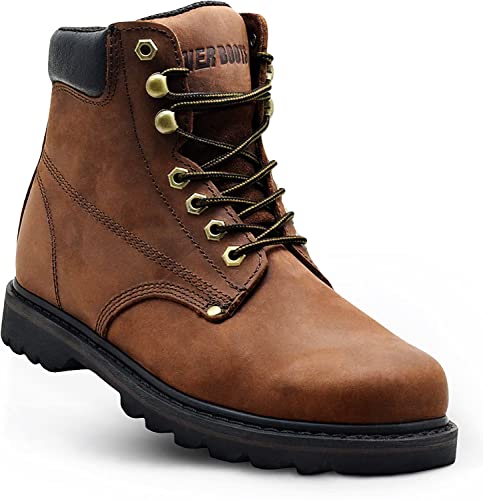
Best for: Budget-minded construction and yard work
The EVER BOOTS Tank is a pull-on work boot with a soft toe, dark brown upper, and wide rubber outsole. This 11 D(M) pair targets men who need coverage for construction, landscaping, contracting, and other physical jobs. The listing describes the upper as nubuck, with reinforced stitching and a padded collar. It also refers to the material as full-grain leather, so shoppers should confirm the exact version before ordering. The price is usually around $65, which places it below many leather work boots.
Its strongest feature is the practical fit system. Removable insoles leave room for custom orthotics, while built-in arch support adds structure underfoot. The tall ankle profile offers more coverage than a low work shoe, and the soft toe avoids the weight and stiffness of a safety toe. Sizing follows common men’s work-boot sizes, but the brand notes that women should order two sizes smaller. For example, a women’s size 9 corresponds to an Ever Boots size 7. The rubber sole should suit general jobsite and outdoor use, though no slip rating is provided.
Pros
- Removable insoles accommodate custom orthotics.
- Nubuck leather and reinforced stitching support routine work use.
- Wide rubber soles provide a stable base on outdoor surfaces.
Cons
- The soft toe does not protect against falling tools or heavy impact.
- No formal slip-resistance rating is listed, so wet or oily floors require caution.
3. Wolverine Overpass 6″ Mid Composite Toe Waterproof Work Boot

Best for: Mixed-weather job-site work
The Wolverine Overpass is a 6-inch work boot with a composite safety toe and waterproof leather upper. This version comes in Summer Brown, size 10 Medium. Its toe meets ASTM F2413-11 standards for M I/75 C/75 and electrical hazard protection. The composite construction avoids metal in the toe, which can help in workplaces with metal detectors or temperature concerns. At around $135, it sits in the mid-priced range for a protective work boot.
A flexible athletic contour welt lets the boot bend at key points instead of feeling completely rigid. Its removable Ortholite footbed adds cushioning and can be taken out for cleaning or replacement. The outsole is rated for slip, oil, water, abrasion, and chemical resistance, giving it broad job-site coverage. The waterproof leather and abrasion-resistant toe should help in wet, rough work areas. Still, these protections do not make the boot indestructible. Fit and comfort will depend on foot shape, socks, and the amount of standing each day.
Pros
- Composite toe meets ASTM F2413-11 M I/75 C/75 standards and includes electrical hazard protection.
- Waterproof leather, plus a resistant toe, suits wet and abrasive work areas.
- Removable Ortholite footbed provides cushioning and allows replacement or cleaning.
Cons
- No insulation is listed, so it may feel cold in winter work conditions.
- The protective outsole and toe can make this 6-inch boot feel heavier than a casual work shoe.
2. NORTIV 8 Men’s Steel Toe Work Boots

Best for: Construction and warehouse shifts
The NORTIV 8 work boot combines a steel toe with a waterproof suede upper and membrane lining. This listing is shown in men’s size 10.5, with other sizes possibly available. The steel toe meets ASTM F2413-18 requirements for protection from compression and falling objects, making it suitable for construction, maintenance, welding, and warehouse work. At around $44, it targets shoppers who need job-site protection without paying premium boot prices.
The rubber toe adds another layer against bumps, while the reinforced heel helps keep the foot steadier on uneven ground. Underfoot, a rubber lug outsole provides grip across muddy or rough surfaces, and the cushioned MD insole is designed for long periods of standing and walking. The waterproof build should help block water, snow, and mud, but these boots still need proper drying after wet shifts. Steel-toe footwear also tends to feel heavier than casual work shoes.
Pros
- ASTM F2413-18 steel toe protects against compression and falling objects.
- Waterproof suede and membrane construction helps keep feet dry.
- Rubber lug outsole and reinforced heel support traction and stability.
Cons
- Steel-toe construction can feel heavier and less flexible than soft-toe boots.
- The waterproof lining may run warm during long shifts or in mild weather.
1. NORTIV 8 Steel Toe Work Boots

Best for: Construction and warehouse workers
The NORTIV 8 work boot combines a steel toe, rubber toe cap, and waterproof upper in a brown, black, or tan design. This listed version is men’s size 9.5. The toe protection meets ASTM 2413-18, which helps guard against falling objects and compression. At around $49, it offers a low-cost option for demanding job sites.
The upper is rated to keep water out for up to four hours under static conditions. That suits rain, wet grass, and occasional puddles, but not extended immersion. A lugged rubber outsole meets ASTM F3445-13 for slip resistance and traction across uneven ground. Inside, a mesh-covered EVA insole adds cushioning, while the lightweight EVA midsole helps reduce fatigue during long periods of standing or walking. The boots fit several work settings, including construction, landscaping, welding, carpentry, warehouses, and mines. Still, steel-toe footwear usually feels heavier than casual boots, and the listed protection does not replace careful job-site practices.
Pros
- ASTM 2413-18 steel toe and rubber cap help protect against impact and compression.
- Four-hour static waterproofing helps handle rain and shallow puddles.
- Lugged rubber outsole meets ASTM F3445-13 for improved grip.
Cons
- Waterproofing is limited to up to four hours under static conditions, so these are not suited to prolonged immersion.
- Steel-toe construction can add weight compared with non-safety work boots.
Buying Guide
The most important factor is compliance with your railroad’s safety rules. A boot that fits well still fails if it lacks the required toe, electrical, slip, or puncture protection.
- Safety ratings: Look for ASTM F2413 certification and confirm the required toe type, such as steel or composite. Add ASTM electrical-hazard protection only when your job requires it.
- Sole protection: Choose an oil-resistant, slip-resistant outsole with a defined tread pattern. If puncture risks exist, select a model with an ASTM-rated puncture-resistant plate.
- Boot height: An 8- to 10-inch shaft gives better ankle coverage around ballast, ladders, and uneven ground. Confirm that it does not restrict knee movement.
- Weather resistance: For wet yards, choose waterproof leather or a waterproof membrane. Insulated models around 200 to 400 grams suit cold shifts, while uninsulated boots work better in mild weather.
- Fit and durability: Leave about ⅜ inch between your longest toe and the front. Try boots with work socks late in the day, and expect to spend roughly $120 to $250 for durable daily-use pairs.
If you cannot have everything, prioritize the safety ratings your employer requires, then choose the best-fitting model that meets them.
Frequently Asked Questions
How should railroad workers choose work boots?
Railroad workers should choose boots with a safety toe, electrical hazard protection, strong ankle support, and slip-resistant outsoles. Look for leather or another durable upper, secure laces, and a heel that stays stable on ballast. A 6- to 8-inch boot usually offers useful ankle coverage without restricting normal walking.
What safety features matter most in railroad work boots?
The most important features are a certified safety toe, slip resistance, electrical hazard protection, and construction that resists punctures and abrasion. Railroad crews often walk on uneven ballast, climb equipment, and work near steel. A boot with a defined heel and oil-resistant rubber sole can improve footing on ladders and platforms.
Can waterproof boots work for railroad jobs?
Yes, waterproof boots can work well for railroad jobs, provided they also offer safety-toe protection, traction, and enough breathability for long shifts. Waterproof membranes help during rain and wet grass, but they can feel warm indoors or during summer work. Choose moisture-wicking socks and allow boots to dry fully between shifts.
Are steel-toe boots safe for railroad work?
Steel-toe boots are safe for railroad work when they meet the job’s required safety standard and fit correctly. Steel protects against heavy impacts, but it may conduct cold more readily than composite material. Compare ASTM-rated options, then choose based on employer rules, climate, and the hazards present on your specific assignment.
Conclusion
NORTIV 8 Steel Toe Work Boots are the top choice for railroad workers who want a sturdy, budget-conscious boot for regular yard, trackside, and maintenance duties. If your priority is lower weight or electrical-hazard protection, choose the reviewed alternative with the safety rating that matches your job, even if it costs more or offers a different toe design. Before ordering, double-check the size chart, toe and electrical-hazard compatibility, required quantity, and current price, since listings and worksite rules can change. Also confirm the boot meets your employer’s policy for slip resistance, puncture protection, ankle coverage, and weather conditions. The right pair should fit securely, leave room for work socks, and support long shifts without pressure points.