
6 Best Work Boots for Flooring Installers for All-Day Wear
Cutecrop Spike Shoes for Epoxy Flooring Coating are the top pick for most buyers seeking the best work boots for flooring installers because their metal spikes let you walk across fresh epoxy with less risk of deep footprints. These are overshoe-style traction tools, not traditional safety footwear, so they fit coating and resin work especially well.
This guide is for flooring installers, contractors, and DIY renovators working with epoxy, resin, or other poured surfaces. The key factors are spike length, sole material, strap adjustability, and fit over existing shoes. A secure fit matters because loose overshoes can shift and damage a finish. The 6 picks below are ranked with clear reasons and honest drawbacks for each, helping you match the footwear to your job.
Quick Comparison
| # | Product | Best For | Price | |
|---|---|---|---|---|
| 1 | Cutecrop Spike Shoes for Epoxy Flooring Coating | DIY Epoxy Floor Coaters | ~$55 | View → |
| 2 | Epoxy Spike Shoes | Contractors Applying Self-Leveling Resin | ~$20 | View → |
| 3 | FIETODK Epoxy Floor Spiked Shoes | Small Garage Flooring Projects | ~$22 | View → |
| 4 | StoneDT Spiked Shoes | Concrete Coating Installation Crews | ~$59 | View → |
| 5 | EVER BOOTS Tank Men's Work Boots | Men Needing Waterproof Work Boots | ~$65 | View → |
| 6 | Carolina Installer 8-Inch Waterproof Steel Toe Work Boot | Tradespeople Requiring Steel Toe Protection | ~$165 | View → |
6 Work Boots for Flooring Pros
These picks are ranked by flooring-friendly comfort, traction, protection, and durability, counting down to the strongest overall choice.
6. Carolina Installer 8-Inch Waterproof Steel Toe Work Boot
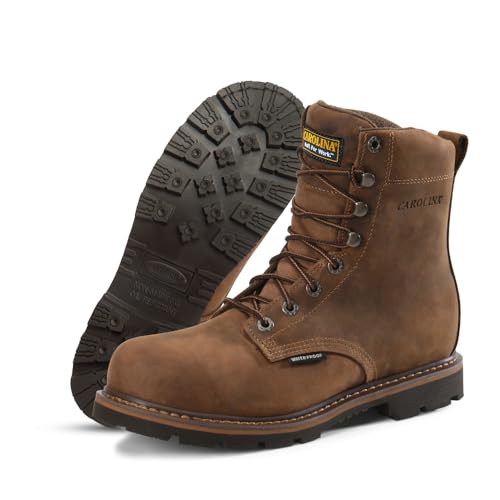
Best for: Construction workers needing waterproof ankle coverage
The Carolina Installer is an 8-inch work boot for men who need protection on industrial or construction sites. This version comes in dark brown waterproof leather and a men’s size 11. Its steel toe adds protection at the front, while the boot meets the ASTM F2413 electrical hazard standard. Around $165, it sits in the midrange for jobsite footwear.
Its strongest feature mix covers wet, slick, and electrically hazardous work areas. The rubber outsole is rated for oil and slip resistance, which can help on dirty concrete or shop floors. Welt construction also gives the boot a traditional, repair-friendly build compared with many cemented shoes. The waterproof upper should help keep feet dry during rain and wet outdoor tasks, though waterproof boots still need proper care around seams and laces. The 8-inch height provides more ankle coverage than a low work shoe, but it may feel warmer and less flexible during long shifts.
Pros
- Waterproof leather helps block rain and surface moisture.
- Steel toe and ASTM F2413 electrical hazard compliance suit demanding work areas.
- Oil- and slip-resistant rubber outsole supports traction on slick jobsite surfaces.
Cons
- Steel-toe construction can weigh more and feel stiffer than soft-toe boots.
- The 8-inch height may feel hot or restrictive for workers who prefer low-cut footwear.
5. EVER BOOTS Tank Men’s Work Boots
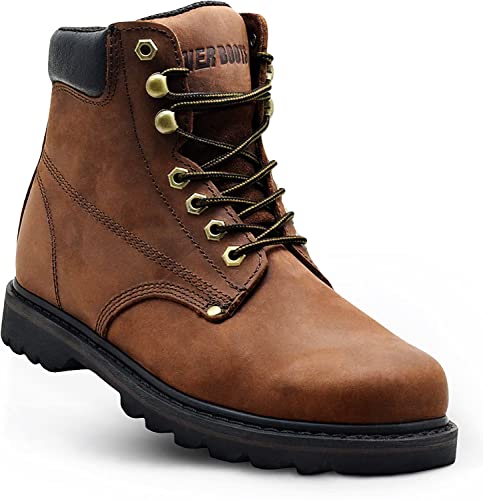
Best for: Budget-conscious construction and yard work
The EVER BOOTS Tank is a men’s pull-on work boot with a dark brown nubuck leather upper, soft toe, padded collar, and rubber outsole. This 6 D(M) pair suits buyers who want ankle coverage without a steel or composite safety toe. The leather construction fits job sites, landscaping, contracting, home repairs, and other manual work. At around $65, it targets shoppers who need a practical boot without moving into premium pricing.
Its wide rubber sole gives the boot a stable base, while built-in arch support can help during long workdays. The removable insoles also leave room for custom orthotics, which adds useful flexibility. Reinforced stitching should help the upper handle regular work use, although long-term durability depends on the job and care routine. Sizing follows common men’s work-boot sizing, but the fit may run large for some feet. Women can use the listed conversion, with a women’s size 9 matching an Ever Boots size 7.
Pros
- Nubuck leather offers a durable upper for construction, landscaping, and household labor.
- Removable insoles accommodate custom orthotics and personal replacements.
- Wide rubber soles and arch support provide a stable platform for extended wear.
Cons
- The soft toe does not provide the impact protection required for many regulated job sites.
- Pull-on construction offers less fit adjustment than laced work boots.
4. StoneDT Spiked Shoes

Best for: DIY garage floor coating projects
These are wearable spiked shoes for walking across wet epoxy resin, garage coatings, and self-leveling cement during finishing work. The package includes one black pair in Large, sized for US 10-11 feet. Each shoe uses an EVA body with reinforced steel spikes arranged across the sole. Those points help spread your weight and provide grip on a freshly coated floor, where ordinary shoes could skid or leave deeper marks.
The main practical benefit is access to the surface during coating work. As you walk, the spikes can puncture small trapped air pockets and help bubbles escape from resin or leveling material. That may support a smoother final coat, but these shoes cannot fix poor mixing, dirty concrete, or incorrect curing conditions. At around $59, they cost more than basic protective footwear. The spikes are removable and reusable, though, and broken points can be replaced. The listing does not say replacement spikes come in the box. Fit is limited to US 10-11, so buyers outside that range need another option.
Pros
- Evenly distributed steel spikes provide traction on wet epoxy and self-leveling cement.
- Spike points can help release trapped air bubbles from freshly applied coatings.
- EVA construction and replaceable spikes support repeated project use.
Cons
- Large sizing only covers US 10-11, limiting fit for smaller or larger feet.
- Replacement spikes may need a separate purchase if the included points break.
3. FIETODK Epoxy Floor Spiked Shoes

Best for: Large-foot garage epoxy installers
The FIETODK Epoxy Floor Spiked Shoes are overshoes for self-leveling epoxy, concrete overlays, and similar floor coatings. The 3/4-inch spikes let you walk across wet material without leaving ordinary shoe prints behind. Each pair arrives assembled, so you only need to adjust the laces and straps before use. At around $22, they offer a low-cost option for occasional garage or workshop projects.
Each shoe plate measures about 13.4 by 5.2 inches and includes 13 short spikes. Nylon locking nuts hold the spikes against the plate, which should reduce loosening during floor work. Adjustable Velcro straps fit over regular shoes, athletic shoes, or work boots. A small wrench is included for tightening or removal. The large size is the main concern. The listing says these shoes are not suitable for sizes below 11, so buyers with smaller feet may need another pair. The broad plates may also feel bulky in tight rooms or around edges. Customer support promises replies within 24 hours, plus refunds or replacements for defective pairs, but that policy depends on the seller.
Pros
- Fully assembled, with laces and a small wrench included.
- Thirteen 3/4-inch spikes per shoe support work across wet floor coatings.
- Adjustable straps fit over many regular shoes and work boots.
Cons
- The large size may not fit users below size 11.
- Wide 13.4-by-5.2-inch plates can feel awkward in confined spaces.
2. Epoxy Spike Shoes
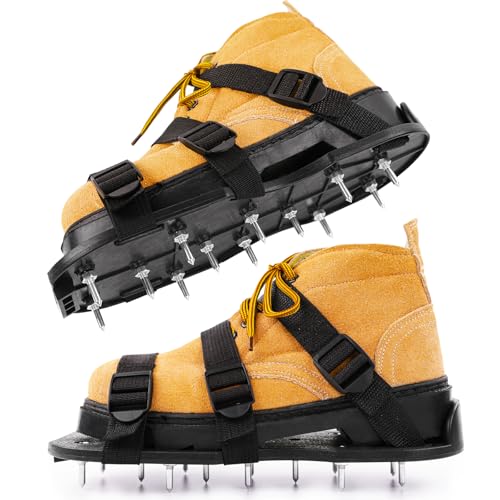
Best for: DIY epoxy floor coating
These spike shoes fit over work boots during epoxy, resin, cement, and concrete finishing jobs. The impact-resistant black PP base uses six adjustable straps, including four short and two long straps, with heavy-duty plastic buckles. They fit listed US men’s sizes 6 through 14. A wide toe guard helps keep the boot from extending past the base, while the heel stopper helps hold it in place.
Each shoe has 3/4-inch stainless steel spikes for traction on wet coatings and fresh cement. The design is meant to reduce wobbling while the surface cures, but users still need controlled footing. The package includes spare spikes and a tightening wrench, which adds useful value at around $20. These are made for coating work, not general walking, and their fit will depend on the shape and bulk of your boots.
Pros
- Six adjustable straps fit a broad range of work boots and include two longer straps.
- 3/4-inch stainless steel spikes provide traction on wet epoxy, resin, and fresh cement.
- Spare spikes and a matching wrench help with basic jobsite maintenance.
Cons
- The listed sizing covers US men’s 6 through 14, so buyers outside that range may not get a secure fit.
- Steel spikes can mark unsuitable surfaces, and the shoes are awkward to wear away from active flooring work.
1. Cutecrop Spike Shoes for Epoxy Flooring Coating

Best for: DIY epoxy floor coating jobs
Cutecrop Spike Shoes are slip-on work overshoes for walking across wet epoxy, resin, and floor-leveling materials. This black, large-size pair fits US shoe sizes 9-11. Iron spikes on the soles help create contact with freshly coated surfaces, so workers can move around without kneeling in the finish. The design also helps keep coating debris away from the shoe area.
The main draw is the pressure-distribution layout. The spikes spread weight across the sole instead of concentrating it in one small spot, which can help with grip on wet or oily floors. The upper is intended for extended work periods, including shifts of 8 hours or more, though comfort will depend on the wearer’s base shoes and fit. At around $55, these are a specialized purchase for coating work, not general-purpose footwear.
Pros
- Fits US sizes 9-11, giving large-foot users a clear sizing target.
- Iron spikes provide traction on wet, oily, or freshly coated floors.
- Overshoe design helps protect regular shoes from floor materials.
Cons
- Only the large 9-11 size is listed, so smaller or larger feet need another option.
- Spiked soles are unsuitable for finished flooring, bare concrete, and normal walking routes.
Buying Guide
A flexible, slip-resistant sole is the most important feature for flooring installers. It helps you kneel, pivot, and walk across dusty subfloors without scuffing finished surfaces or losing balance.
- Sole traction: Choose a rubber outsole with a low-profile tread and a non-marking compound. Look for slip-resistant labeling and grooves about 3 to 5 millimeters deep, rather than an aggressive outdoor lug.
- Kneeling comfort: Select boots with a flexible forefoot and cushioning under the heel and ball of the foot. A removable insole with at least 6 millimeters of foam leaves room for replacement inserts.
- Toe protection: For jobs with heavy boxes or tools, choose ASTM F2413-rated composite or steel toes. Composite models weigh less and do not conduct cold as quickly.
- Fit and mobility: Leave about 1/2 inch in front of the longest toe. A wide toe box and a shaft under 8 inches can make repeated crouching less restrictive.
- Moisture and cleanup: Pick waterproof leather or treated synthetic uppers for adhesive spills and wet underlayment. Sealed seams and a wipe-clean surface reduce cleanup time.
If you can compromise on one feature, prioritize traction, since one slip can damage flooring and cause a serious injury.
Frequently Asked Questions
How should flooring installers choose work boots?
Flooring installers should choose work boots with firm toe protection, slip-resistant soles, stable support, and enough flexibility for kneeling and walking. A low-profile design can reduce snagging around trim and tools. Look for leather or synthetic uppers, cushioned footbeds, and a safety toe rated for the hazards on each job.
What features matter most in boots for flooring work?
Water-resistant, slip-resistant boots are usually best for flooring work, especially when adhesives, spills, or wet subfloors are present. A rubber outsole with defined tread can improve grip, while sealed seams help keep moisture out. No boot stays waterproof forever, so inspect cracks and replace worn soles promptly.
Can steel-toe boots work for flooring installers?
Yes, steel-toe boots can work well for flooring installers, but composite toes may feel lighter and stay less cold on outdoor jobs. Both options can meet the same safety standard when properly rated. Choose a roomy toe box, because tight protection can cause pressure during long periods of kneeling or crouching.
Are lightweight work boots better for flooring installation?
Lightweight work boots are often better for flooring installation when they still provide toe protection, traction, and support. A lighter pair can reduce fatigue during jobs that require hundreds of trips across a room. Avoid thin soles that let nails, staples, or rough subfloors press into your feet.
Conclusion
Cutecrop Spike Shoes for Epoxy Flooring Coating are the top pick for flooring professionals who need traction while walking across freshly applied epoxy. If your priority is all-day comfort and broader jobsite use, choose a cushioned, slip-resistant safety boot instead of spiked overshoes. Before buying, double-check the size chart, confirm compatibility with your coating and work surface, verify the quantity included, and compare the current price across sellers. These shoes make the most sense for planned coating work, not every stage of a flooring installation. Spikes can mark finished floors or create problems on surfaces that are not designed for them. Match the footwear to the coating schedule, floor condition, and time you expect to spend on your feet.