
5 Best Work Boots for Delivery Drivers for Long Shifts
Hogent Steel Toe Work Boots are the top pick for most buyers seeking the best work boots for delivery drivers because their steel-toe construction adds protection during frequent loading and unloading. They suit drivers who need a practical pair for routes that include warehouses, porches, stairs, and uneven pavement. The design focuses on workplace protection rather than casual style, which makes it a sensible starting point for daily delivery work.
This guide is for couriers, parcel drivers, food delivery workers, and anyone who spends hours on foot between stops. The key factors are a secure fit, reliable outsole grip, toe protection, and materials that handle wet or rough conditions. Pay close attention to sizing, since thick work socks can change the fit. The five picks below are ranked with clear reasons and honest drawbacks for each, so you can match the pair to your route and budget.
Quick Comparison
| # | Product | Best For | Price | |
|---|---|---|---|---|
| 1 | Hogent Steel Toe Work Boots | Heavy-Duty Jobsite Protection | ~$35 | View → |
| 2 | EVER BOOTS Tank Men's Soft Toe Work Boots | Indoor Warehouse Workers | ~$65 | View → |
| 3 | TAERDUN Steel Toe Work Boots | Construction Crew Footwear | ~$40 | View → |
| 4 | TAERDUN Steel Toe Safety Shoes | Lightweight Shop-Floor Protection | ~$50 | View → |
| 5 | NORTIV 8 Men's Tactical Work Boots | Outdoor Security Professionals | ~$58 | View → |
5 Top Work Boots for Delivery Routes
These five boots are ranked by comfort, traction, weather protection, and value, counting down to the strongest choice for daily routes.
5. NORTIV 8 Men’s Tactical Work Boots
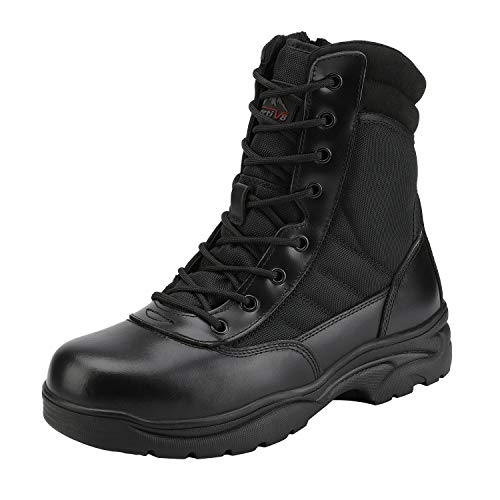
Best for: Worksites and weekend outdoor trips
The NORTIV 8 Men’s Military Tactical Work Boot is a black, ankle-high boot listed here in size 10.5. It costs around $58, though prices may change. The upper combines breathable fabric with high-abrasion-resistant leather. That construction provides airflow while adding coverage for daily work, travel, and outdoor activities. The ankle-high shape supports the area around the ankle without extending up the calf.
A side zipper allows quicker entry than a full lace-up routine, and a hook-and-loop strap helps hold the closure in place. Inside, the removable cushion insole uses shock-absorbing padding for longer periods on your feet. The rubber outsole is rated for slip, oil, and abrasion resistance, which suits worksites, camping, fishing, and uneven outdoor paths. The design is flexible enough for general movement, but it is still a work boot rather than a lightweight running shoe. No waterproof rating is listed, so wet-weather performance remains unclear.
Pros
- Side zipper and hook-and-loop strap make removal and entry faster.
- Removable shock-absorbent insole adds cushioning and can be replaced or removed.
- Rubber outsole resists slipping, oil, and abrasion across varied surfaces.
Cons
- Ankle-high coverage does not protect the lower leg or calf.
- No waterproofing claim appears, so heavy rain and puddles may be a concern.
4. TAERDUN Steel Toe Safety Shoes

Best for: Delivery work and wet job sites
These TAERDUN work boots combine a Chelsea-style slip-on design with steel toe protection. The brand lists them as meeting ASTM F2413 standards, with a Kevlar midsole to help resist punctures. A thicker insole adds sweat absorption and odor control, while padded ankle support helps reduce fatigue during long shifts. The upper is described as waterproof, and the integrated PU sole keeps the boot light compared with many traditional work boots.
The outsole uses tread designed for oily, wet, and uneven surfaces. That makes these shoes a practical option for kitchens, warehouses, construction areas, farms, and delivery routes. The toe cap also helps guard against impacts, kicks, and surface scratches. Around $50, they offer a useful mix of safety features for the price. Still, buyers should check the seller’s sizing chart before ordering, since a snug steel toe can feel restrictive during extended wear.
Pros
- Steel toe and Kevlar midsole provide protection from crushing and punctures.
- Waterproof construction and oil-resistant tread suit wet or greasy floors.
- Slip-on Chelsea styling makes them quicker to put on than lace-up boots.
Cons
- Steel toes add weight and stiffness, which may feel less comfortable than casual shoes.
- Waterproof materials can trap more heat, especially during warm indoor shifts.
3. TAERDUN Steel Toe Work Boots
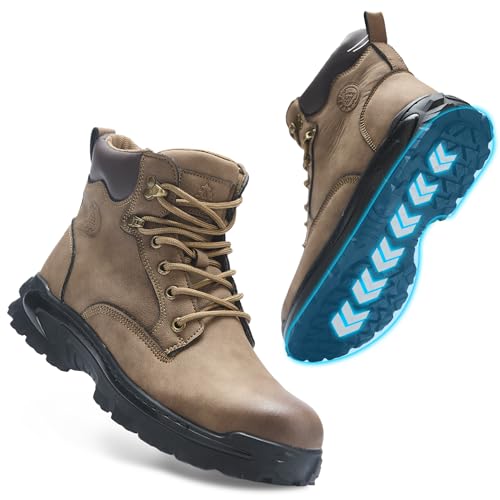
Best for: Delivery workers on wet floors
The TAERDUN Steel Toe Work Boots are Chelsea-style safety shoes for jobs that demand toe protection and steady footing. They use 100% full-grain leather, a steel toe cap, and a Kevlar midsole designed to resist punctures. The listing identifies them with ASTM F2413 safety standards. A thickened insole is intended to manage sweat and odor, while the padded ankle collar adds cushioning during long shifts. At around $40, they offer a low-cost option for warehouse, factory, construction, kitchen, farm, and delivery work.
The main draw is the combination of workplace protection and casual styling. Their integrated PU outsole is designed to resist oil and slipping on wet, oily, or uneven surfaces, and the boot is described as waterproof. The slip-on Chelsea shape makes them quicker to put on than lace-up work boots. Full-grain leather should also handle regular wear better than thin synthetic uppers, though it needs basic care to stay in good condition. The steel toe and puncture-resistant midsole provide useful protection, but they may feel stiffer than everyday shoes.
Pros
- Steel toe and Kevlar midsole help protect against impact and punctures.
- Oil- and slip-resistant outsole suits wet, greasy, or uneven floors.
- Full-grain leather, padded ankle support, and a sweat-managing insole support long shifts.
Cons
- Steel-toe construction can feel heavier and less flexible than casual footwear.
- Slip-on boots offer less fit adjustment than lace-up safety shoes.
2. EVER BOOTS Tank Men’s Soft Toe Work Boots
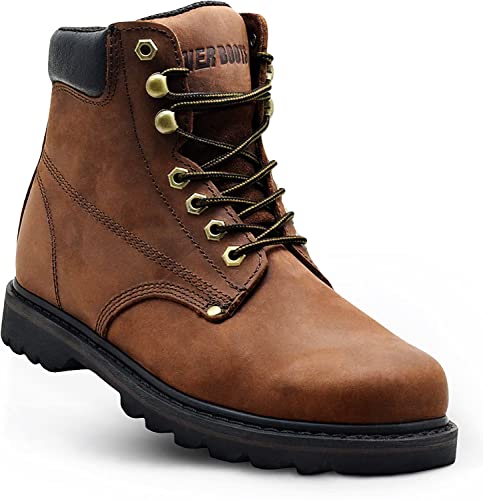
Best for: Budget-conscious construction and landscaping workers
The EVER BOOTS Tank is a pull-on work boot with a soft toe, dark brown leather-style upper, and rubber outsole. The listed size is 6 D(M), with standard men’s sizing intended to match major work-boot brands. The maker also lists a women’s conversion, where women’s size 9 equals Ever Boots size 7. At around $65, it targets buyers who need basic jobsite footwear without paying premium-boot prices.
Its nubuck upper has reinforced stitching and a padded collar around the ankle. That combination should provide more comfort than a stiff, unlined boot during long work shifts. A wide rubber sole adds traction on common work surfaces, while built-in arch support gives the foot more structure. The removable insoles also leave room for custom orthotics. Still, this is a soft-toe design, not a safety-toe boot. Buyers working around falling tools, heavy materials, or strict jobsite rules may need different protection. The pull-on shape is convenient, but fit can be less adjustable than lace-up footwear.
Pros
- Nubuck leather upper with reinforced stitching suits routine construction, landscaping, and manual work.
- Wide rubber outsole provides a stable base for walking and standing.
- Removable insoles accommodate custom orthotics and replacement inserts.
Cons
- Soft toes do not protect against crushing or impact hazards like composite or steel toes.
- Pull-on styling offers less fit adjustment than lace-up work boots.
1. Hogent Steel Toe Work Boots

Best for: Warehouse shifts with nail hazards
Hogent’s steel toe boots combine a high-top shape with several layers of workplace protection. A steel toe cap helps shield the front of the foot, while a lightweight KEVLAR layer is designed to resist punctures from nails and other sharp objects. The ankle-covering design may also provide more support than a low-cut work shoe.
Comfort features make these boots more practical for long shifts. Air cushioning helps reduce impact, and the breathable lining may improve airflow inside the shoe. Flexible EVA soles support easier movement across warehouses, workshops, farms, delivery routes, and construction sites. At around $35, they offer a low-cost option for men or women who need basic protective footwear. Still, the product information does not list a safety certification, waterproof rating, or available size range, so buyers should check those details before ordering.
Pros
- Steel toe caps help protect against front-impact hazards.
- KEVLAR puncture resistance adds a barrier against nails and sharp debris.
- Air cushioning, breathable lining, and EVA soles support long periods on foot.
Cons
- No safety certification or tested impact rating is provided in the listed details.
- Waterproofing is not specified, so these may not suit wet outdoor work.
Buying Guide
Fit is the most important factor because delivery routes often involve 8 to 12 hours of walking, driving, and repeated stair climbs. A boot that pinches or slips can cause pain before the shift ends.
-
Fit and sizing: Choose a snug heel, room for your toes, and about ⅜ inch of space ahead of the longest toe. Try boots with the socks you wear at work.
-
Slip resistance: Look for rubber outsoles with deep, separated lugs and a workplace slip rating, such as ASTM F3445. This matters on wet porches, ramps, and restaurant floors.
-
Toe protection: Select steel or composite toes when packages, hand trucks, or heavy doors create impact risks. Composite toes weigh less and do not conduct cold as quickly.
-
Cushioning and support: Prioritize removable insoles, firm arch support, and midsoles that do not feel flat. A 6- to 8-inch boot can also provide useful ankle stability.
-
Weather protection and durability: Waterproof leather or treated synthetic uppers help in rain, while sealed seams add protection. Expect roughly $90 to $180 for a durable daily pair.
If you cannot have everything, prioritize a secure, comfortable fit, since safety features cannot compensate for painful boots.
Frequently Asked Questions
How should delivery drivers choose boots for long routes?
Choose delivery boots with slip-resistant soles, supportive cushioning, a secure fit, and weather protection for your route conditions. Look for rubber outsoles, removable footbeds, and uppers made from leather or waterproof synthetics. A cushioned midsole matters when a shift includes several miles of walking and repeated stair climbs.
What features matter most in work shoes for package delivery?
The most useful features are slip resistance, ankle stability, cushioning, light weight, and protection from rain and rough pavement. Check for ASTM-rated safety toes if your job requires them, plus outsoles marked for oil or wet surfaces. A wide toe box can also reduce pressure during 8- to 12-hour shifts.
Can waterproof delivery boots stay comfortable in hot weather?
Yes, waterproof delivery boots can stay comfortable in warm weather if they use breathable membranes, moisture-wicking linings, and enough ventilation around the ankle. Choose lighter materials instead of heavily insulated designs. For summer routes above 80°F, thin merino or synthetic socks can help manage sweat without adding much bulk.
Are steel-toe boots necessary for delivery drivers?
Steel-toe boots are not necessary for every delivery driver, but they are useful when routes involve warehouses, heavy packages, or employer-mandated toe protection. Composite toes offer a lighter alternative and do not conduct cold as readily. Check company rules before buying, since safety-toe requirements vary by workplace and cargo.
Conclusion
Hogent Steel Toe Work Boots are the top pick for delivery drivers who need firm toe protection, dependable traction, and a boot that can handle repeated stops on pavement. If lighter weight matters more than maximum protection, choose a comfortable composite-toe or soft-toe option instead, since it can reduce fatigue during long walking routes. Before buying, double-check the size chart, toe-cap compatibility with your workplace rules, available quantity, and current price. Pay attention to return terms, too, because thick work socks can change the fit. Look for cushioning that supports the arch without making the inside feel cramped during a full shift. The right pair should protect your feet without slowing your route.