
5 Best Earphones for Motorcycle Helmet for Riders
Artevive Motorcycle Bluetooth Earbuds are the best earphones for motorcycle helmet for most buyers because their compact Bluetooth earbud format takes up less space than bulky over-ear headsets. That smaller profile can make helmet fit more comfortable, while wireless playback keeps cables away from jacket collars and straps.
This guide is for commuters, touring riders, and anyone who wants music, navigation prompts, or calls on the road. The key factors include earbud size, battery life, button placement, wind-noise control, and how securely each piece stays in place. Helmet space varies, so a model that feels fine under one shell may press against another. The 5 picks below are ranked with clear reasons and honest drawbacks for each, so you can match the audio gear to your riding habits and helmet design.
Quick Comparison
| # | Product | Best For | Price | |
|---|---|---|---|---|
| 1 | Artevive Motorcycle Bluetooth Earbuds | Solo riders wanting discreet audio | ~$100 | View → |
| 2 | JZAQ Motorcycle Helmet Bluetooth Headset | Helmet wearers needing hands-free calls | ~$20 | View → |
| 3 | SUOOKC Bluetooth Motorcycle Helmet Headset | Riders sharing music with passengers | ~$20 | View → |
| 4 | Wireless Motorcycle Helmet Bluetooth Earbuds | Commuters seeking compact wireless listening | ~$59 | View → |
| 5 | Motorcycle Helmet Bluetooth Intercom Headset | Groups needing rider-to-rider communication | ~$17 | View → |
5 Top Earphones for Motorcycle Helmets
These helmet-friendly earphones are ranked from fifth to first, counting down to the top pick.
5. Motorcycle Helmet Bluetooth Intercom Headset

Best for: Budget riders needing basic two-way chat
This helmet Bluetooth headset is a low-cost communication and audio kit for two riders. It includes helmet speakers, a boom microphone, clamp-on and adhesive mounts, and a Type-C connection to the control unit. The 40mm speakers use a 0.3-watt rating, with stereo audio, GPS prompts, FM radio, and CVC/DSP noise reduction. It also supports music sharing, two connected phones, voice assistants, and calls.
The 1,000mAh battery is rated for more than 25 hours of music or talk time. Large buttons should be easier to press with gloves, while automatic call answering after 10 seconds can reduce phone handling. At around $17, the feature list is unusually broad for a budget helmet communicator. Still, sound quality will depend on speaker placement. The speakers need to sit close to the ears, and the Type-C plug must click fully into the host for proper audio.
Pros
- Supports two-way rider communication and music sharing.
- 1,000mAh battery offers a claimed 25-plus hours of use.
- Includes two mounting options for different helmet designs.
Cons
- The listed range is unclear, with 550 yards in the name but 30 meters in the detailed specifications.
- IPX6 water resistance helps with rain, but it does not mean the unit can be submerged.
4. Wireless Motorcycle Helmet Bluetooth Earbuds

Best for: Solo riders using helmet navigation
These wireless earbuds are made for motorcycle riders who want music, podcasts, or GPS directions without bulky speakers. Their soft silicone shells sit close to the ear, while flexible wings help keep each bud in place under helmet padding. The low-profile shape should reduce pressure when putting on or removing a helmet, though ear shapes and helmet fit will affect comfort.
Battery life is rated at 4 to 6 hours per charge. The small charging case adds 2 to 3 full recharges, which can cover a commute or a long day of riding with charging breaks. Bluetooth pairing starts from the case and works with a phone, GPS unit, or compatible bike intercom. At around $59, these cost more than basic wireless earbuds, but the rider-specific shape may justify the price for helmet users. The main catch is the missing microphone. They support listening only, not phone calls or two-way voice chat.
Pros
- Soft silicone shells sit flush under helmet padding, reducing pressure from a tight fit.
- Flexible wings help hold the earbuds in place during helmet use.
- A 4 to 6 hour battery supports most rides, while the case adds 2 to 3 recharges.
Cons
- No microphone means no phone calls, voice commands, or intercom conversations through the earbuds.
- Battery life can drop to about 4 hours, so touring riders may need charging breaks.
3. SUOOKC Bluetooth Motorcycle Helmet Headset

Best for: Riders needing slim helmet audio
The SUOOKC is a low-cost Bluetooth speaker kit for motorcycle and ski helmets. Its 10mm-thick speakers fit inside most helmet liners without taking much ear space. Bluetooth 5.3 handles calls, music, and turn-by-turn directions, while built-in noise cancellation may help reduce some road or wind sound. The headset can connect with two smartphones, which suits riders who carry separate personal and work phones. A button also activates Siri or another phone voice assistant without reaching for the screen.
The 1000mAh battery is rated for up to 32 hours of continuous use and 360 hours on standby. Those figures depend on volume, weather, and connection settings, so actual runtime may vary. USB-C charging makes topping it up easier than older micro-USB designs, and the phone can show the remaining battery level. Its IPX6 rating covers strong water spray, rain, snow, and dust, but this is not a diving-grade waterproof rating. At around $20, it offers useful basics for riders who want navigation and calls without paying for a full intercom system.
Pros
- 10mm speakers fit many helmet interiors with less ear pressure.
- Bluetooth 5.3 supports music, calls, navigation, and two-phone pairing.
- 1000mAh battery offers up to 32 hours of stated playback time.
Cons
- It lacks rider-to-rider intercom features found on dedicated motorcycle communication systems.
- Noise cancellation and speaker clarity may be limited by helmet fit, wind, and road noise.
2. JZAQ Motorcycle Helmet Bluetooth Headset
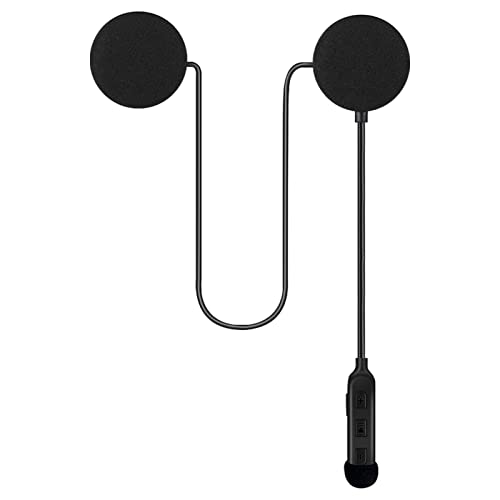
Best for: Budget-conscious motorcycle commuters
The JZAQ helmet headset is a low-cost Bluetooth speaker and microphone setup for motorcycle helmets. It connects to two phones at once, with a claimed wireless range of up to 20 meters. Riders can take calls, control music, use a voice assistant, and enable automatic call answering without reaching for a phone. The speakers attach with detachable Velcro, so installation does not require permanent changes to the helmet.
Its built-in 900mAh lithium-ion battery is rated for up to 60 hours of talk or music playback, 500 hours of standby time, and about two hours to recharge. A phone can show the remaining battery level. DSP noise reduction and wind protection may help keep calls and music clearer, but helmet fit and riding speed will affect sound quality. The headset carries an IPX7 waterproof rating and uses a nano coating, which suits rain and outdoor use. Still, buyers should check the speaker dimensions against their helmet before ordering. At around $20, it offers a lot of basic functions for the price.
Pros
- Dual-phone Bluetooth connection supports calls and music access from two mobiles.
- 900mAh battery offers claimed 60-hour playback and 500-hour standby.
- Detachable Velcro mounts allow installation inside many helmet designs.
Cons
- High-speed wind can overpower the speakers, even with noise reduction.
- Speaker fit depends on helmet space, and the listing does not provide universal sizing.
1. Artevive Motorcycle Bluetooth Earbuds

Best for: Solo riders using music and GPS
Artevive Motorcycle Earbuds are low-profile Bluetooth earbuds made for use beneath a motorcycle helmet. Their silicone shells sit inside the ears, which can reduce contact with helmet padding compared with larger wireless earbuds. They pair directly with a phone, so riders can play music, podcasts, or spoken GPS directions without an app or cable.
The package includes two ear tip sizes for a closer fit. The flexible silicone body is designed to stay in place while putting on a helmet, though ear shape and helmet fit will affect how secure they feel. Battery life reaches up to 6 hours per charge, and the compact case provides two to three additional full recharges. At around $100, these are aimed at riders who want simple phone audio instead of a full helmet communication system. The key limitation is clear: there is no microphone, rider-to-rider communication, or intercom function.
Pros
- Low-profile silicone earbuds are less likely to press against helmet padding.
- Direct Bluetooth pairing supports music, podcasts, and turn-by-turn GPS audio.
- Up to 6 hours of playback, plus two to three case recharges, suits many commutes.
Cons
- No microphone means you cannot use them for calls or rider-to-rider communication.
- Six hours is a maximum estimate, so volume and phone connection may reduce actual playback time.
Buying Guide
Helmet clearance is the most important factor. Earphones that press against your ears can cause pain, break their seal, or shift when you put the helmet on.
- Fit and thickness: Choose low-profile speakers or earbuds with about 10–12 mm of depth. They should sit without touching the helmet liner or creating pressure after 30 minutes.
- Sound and awareness: Prefer models that let outside traffic noise remain audible. Keep volume below roughly 60% and avoid strong noise isolation on busy roads.
- Battery life: Look for at least 8 hours of playback, or 12 hours if you ride long distances. A charging case should provide two or more extra charges.
- Controls: Select large physical buttons that work with gloves. Voice controls help, but skip models that require frequent phone tapping while riding.
- Weather resistance: Choose at least an IPX4 rating for sweat and light rain. IPX5 or higher offers better protection, but no rating makes a device safe for submersion.
- Price and warranty: Budget $30–$80 for basic Bluetooth units and $100–$200 for helmet communication systems. A one-year warranty adds useful protection.
If you cannot get everything, prioritize a secure, pressure-free fit before battery life or extra features.
Frequently Asked Questions
How do I choose earphones for a motorcycle helmet?
Choose low-profile, secure earphones with clear sound, simple controls, and enough battery life for your usual rides. Models with a slim housing are less likely to press against your ears under a helmet, while physical buttons are easier to use with gloves. Aim for at least 6 hours of playback per charge.
What type of earphones work best inside a motorcycle helmet?
Low-profile in-ear monitors or compact Bluetooth earbuds usually work best inside a motorcycle helmet because they leave more space around your ears. Look for soft silicone or foam tips in several sizes, and avoid bulky stems that press against helmet padding. A 10-minute charging option can help before short rides.
Can I use noise-cancelling earbuds while riding a motorcycle?
You can use noise-cancelling earbuds, but active noise cancellation should not remove awareness of horns, sirens, traffic, or engine problems. Keep the volume low or moderate, use ambient mode in busy areas, and follow local laws. Many riders set a 60 to 70 percent volume limit for safer listening.
Are wireless earbuds better than wired earphones for motorcycle riding?
Wireless earbuds are usually more practical for motorcycle riding because they have no cable to snag on clothing or helmet straps. Wired sets avoid charging and often cost less, but their cable may pull when you turn your head. Choose wireless models with at least 6 hours of battery life for longer trips.
Conclusion
Artevive Motorcycle Bluetooth Earbuds are the top recommendation for solo riders who want wireless audio without adding a bulky unit to the helmet. If your priority is rider-to-rider communication, pick a helmet-specific Bluetooth intercom instead, since it is built for calls between riders rather than simple music playback. Before buying, double-check the earbuds’ size, compatibility with your helmet and phone, quantity in the package, and current price. Fit matters because tight cheek pads can press against larger housings during longer rides. Also confirm the controls are usable with gloves and that the battery claim matches your planned trip length. Keep volume low enough to hear traffic, sirens, and nearby riders.