
5 Best Work Boots for Truck Drivers for Long Hauls
NORTIV 8 Steel Toe Work Boots are the top pick for most buyers seeking the best work boots for truck drivers. Their main advantage is a practical mix of steel-toe protection and cushioned support for long hours on concrete, pedals, and loading areas. The design suits drivers who need one pair for the cab, yard, and delivery stops.
This guide is for truckers, fleet workers, and delivery drivers who spend hours driving, climbing, and standing. The key factors are accurate sizing, upper materials, toe protection, outsole grip, and comfort during long shifts. Pay close attention to waterproofing claims and sole patterns if you work around rain, oil, or wet docks. The five picks below are ranked with clear reasons and honest drawbacks for each, so you can compare protection, comfort, and value before buying.
Quick Comparison
| # | Product | Best For | Price | |
|---|---|---|---|---|
| 1 | NORTIV 8 Steel Toe Work Boots | Factory workers needing steel toes | ~$49 | View → |
| 2 | NORTIV 8 Men's Work Boots | Outdoor laborers wanting waterproof boots | ~$64 | View → |
| 3 | SUREWAY 6-Inch Moc Toe Work Boots | Warehouse workers preferring moc toes | ~$60 | View → |
| 4 | Furuian Pioneer Steel Toe Boots | Construction crews needing rugged protection | ~$44 | View → |
| 5 | NORTIV 8 Composite Toe Work Boots | Airport workers avoiding metal detectors | ~$56 | View → |
5 Work Boot Picks for Truckers
These picks are ranked by comfort, durability, traction, and road-ready features, counting down to the top choice.
5. NORTIV 8 Composite Toe Work Boots
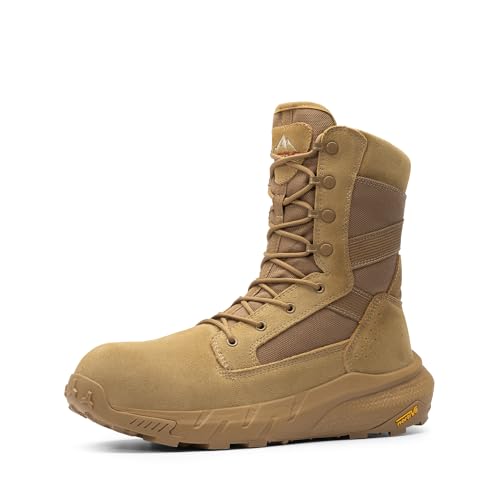
Best for: Construction workers needing lighter toe protection
The NORTIV 8 men’s work boot combines a nano composite toe with a leather and Oxford fabric upper. This size 9 version weighs about 21.83 ounces per boot, which is lighter than many steel-toe designs. Its EVA midsole adds cushioning, while the mesh-covered latex insole provides arch support and airflow. A side zipper also makes these boots quicker to put on than traditional lace-up work footwear. They cost around $56, though prices can change.
Protection is the main draw. The boots meet ASTM F2413-24 I/75 impact standards and the related EH electrical hazard standard. They also carry the ASTM F2413-24 SR slip-resistance rating. A lugged rubber outsole should provide useful traction on slick floors and job-site surfaces. The composite toe offers insulation against heat and cold without adding steel’s extra weight. These boots suit construction, electrical work, driving, security, and shop tasks. Still, buyers should view them as work footwear, not hiking boots or waterproof rain boots.
Pros
- Composite toe meets ASTM I/75 impact and EH electrical hazard standards.
- Side zipper allows faster entry and removal than lace-only boots.
- EVA cushioning, a latex insole, and a lugged rubber outsole support long shifts.
Cons
- No waterproof rating is listed, so wet conditions may require another boot.
- The listed safety standards do not include puncture protection for sharp debris.
4. Furuian Pioneer Steel Toe Boots

Best for: Budget-conscious workers needing toe protection
The Furuian Pioneer Series is a low-cost work boot for jobs that call for safety footwear. It uses a steel toe cap listed as meeting ASTM F2413-18 standards, plus a multilayer sole with an anti-puncture midsole. The upper combines suede with a microfiber lining. At around $44, it targets shoppers who need basic protection without paying premium boot prices.
A patterned outsole aims to improve grip on everyday work surfaces. The suede upper may also hide minor dirt better than smooth leather, while the brand says the material is easy to clean. Furuian includes a 360-day customer-care period, although the product details do not explain exactly what that coverage includes. There is no stated waterproof rating, insulation level, boot weight, or sizing information, so buyers should check the listing carefully before ordering. These boots may fit construction, warehouse, yard, and general maintenance work, but demanding outdoor jobs may require more specialized footwear.
Pros
- Steel toe cap is listed with ASTM F2413-18 compliance for impact protection.
- Anti-puncture midsole adds a protective layer beneath the foot.
- Around $44, the price suits buyers on a tight work-boot budget.
Cons
- Steel toes usually weigh more and feel less flexible than soft-toe designs.
- The listing does not claim waterproofing or provide a specific slip-resistance rating.
3. SUREWAY 6-Inch Moc Toe Work Boots

Best for: Light-duty work and daily wear
The SUREWAY 6-inch Moc Toe is a soft-toe work boot in tobacco full-grain leather. This size 10 version uses a wedge-style PU outsole with a Goodyear welt. That construction gives the boot a traditional workwear shape while allowing some flex at the forefoot. The soft toe keeps weight and bulk below a capped safety boot, so it suits jobs that do not require impact protection.
Its strongest feature is the mix of work-ready materials and casual styling. Full-grain leather can develop character with use and should resist early deformation when maintained properly. The tread is designed for traction on flat wet or greasy surfaces, plus loose gravel, though no outsole replaces careful footing. A 180-day warranty covers material or workmanship problems with repair or replacement. At around $60, it offers a lower-cost entry into welted leather footwear, but buyers should confirm the fit and job requirements before ordering.
Pros
- Full-grain leather offers a durable upper with a natural finish.
- Wedge PU outsole provides cushioning and a flexible feel.
- 180-day warranty adds coverage for material or workmanship defects.
Cons
- Soft toe does not protect against dropped objects or compression.
- Wedge soles may collect mud and debris more easily than lugged work outsoles.
2. NORTIV 8 Men’s Work Boots

Best for: Long shifts in slippery workplaces
The NORTIV 8 men’s work boot combines a nano composite toe with a lightweight build. This black, size 9.5 model uses a wear-resistant nylon upper, reinforced TPU sections, and a corrosion-resistant toe cap. It meets ASTM F2413-24 I/75 impact standards, ASTM F2413-24 EH electrical hazard standards, and ASTM F2413-24 SR slip-resistance standards. The toe material also limits heat and cold transmission compared with metal safety toes.
Each boot weighs about 21.27 ounces in size 9, so the weight may change slightly in size 9.5. An EVA midsole supplies cushioning and rebound, while the synthetic leather insole adds arch support. The smooth side zipper makes quick changes easier for drivers, factory staff, and other workers who remove their boots often. At around $64, these boots offer several job-site safety features without reaching premium work-boot pricing. Still, the product details do not list waterproofing, so wet-weather workers may need another option or added protection.
Pros
- Composite toe meets ASTM impact and electrical hazard standards.
- EVA midsole helps reduce ground shock during long shifts.
- Side zipper allows faster on-and-off changes.
Cons
- The nylon upper is not advertised as waterproof.
- Weight varies by size, and the listed 21.27-ounce figure applies to size 9.
1. NORTIV 8 Steel Toe Work Boots

Best for: Construction and warehouse shifts
The NORTIV 8 steel toe boots are built for demanding work areas, including construction sites, warehouses, landscaping, welding, and carpentry. This brown, black, and tan version is listed in men’s size 10.5 and costs around $49, though prices can change. A steel toe works with a rubber toe cap and meets ASTM 2413-18 for protection from falling objects and compression.
The waterproof upper can help keep feet dry for up to four hours in wet conditions. That limit makes these boots better for short exposure to rain or puddles than for standing in water all day. Underfoot, a lugged rubber outsole meets ASTM F3445-13 for slip resistance and traction. The insole combines mesh with EVA foam, while the EVA midsole aims to reduce fatigue during long periods of walking or standing. The feature set is strong for the price, but buyers should remember that steel toe boots usually feel less flexible than casual footwear.
Pros
- Steel toe and rubber cap meet ASTM 2413-18 for impact and compression protection.
- Lugged rubber outsole meets ASTM F3445-13 for traction across uneven surfaces.
- Mesh-covered EVA insole and EVA midsole provide cushioning for long shifts.
Cons
- Waterproof protection is rated for up to four hours, not continuous immersion or all-day wet work.
- Steel toe construction can add weight and reduce flexibility compared with soft-toe work shoes.
Buying Guide
Fit and all-day comfort matter most when choosing footwear for truck driving. A secure heel, roomy toe box, and flexible upper can reduce fatigue during 8- to 12-hour shifts.
- Fit and toe room: Choose your usual size with about ⅜ inch of space beyond the longest toe. Your heel should stay planted without pinching when walking or operating pedals.
- Sole traction: Look for oil- and slip-resistant rubber outsoles with a tread depth of roughly 3 to 5 millimeters. This helps on wet loading docks and fuel-station pavement.
- Pedal control: Pick a sole that bends near the ball of the foot. Avoid very stiff, bulky platforms that limit ankle movement or make clutch and brake pedals harder to feel.
- Protection level: For freight yards, construction stops, or heavy cargo, select ASTM F2413 safety-toe boots. Composite toes weigh less, while steel toes offer strong impact protection.
- Weather and break-in: Waterproof leather or a waterproof membrane suits rain and snow, but may feel warmer. Plan for 3 to 7 days of break-in, and compare models in the $100 to $200 range.
If you cannot have everything, prioritize a precise fit and comfortable pedal control over extra insulation or heavy-duty protection.
Frequently Asked Questions
How should truck drivers choose work boots for long shifts?
Choose work boots with supportive midsoles, slip-resistant soles, and enough room for swelling during long driving shifts. Look for full-grain leather or durable synthetic uppers, padded collars, and moderate ankle support. A heel between 1 and 1.5 inches can improve stability without making pedal control awkward.
What type of sole is safest for truck driving?
A slip-resistant rubber sole with a low, stable heel is usually safest for truck driving. Choose tread that grips wet pavement but does not feel bulky around pedals. Many drivers prefer soles about 1 inch thick, with a defined heel and a flexible forefoot for climbing steps and walking on uneven lots.
Can steel-toe boots work for truck drivers?
Yes, steel-toe boots can work well for truck drivers when the toe box fits comfortably and the boot does not restrict pedal movement. They add protection during loading and unloading, but they may weigh more than composite-toe models. A pair with a roomy toe box and flexible upper reduces pressure during 10-hour routes.
Are waterproof work boots a good choice for delivery routes?
Waterproof work boots are a good choice for wet delivery routes, especially when drivers walk through rain, snow, or muddy yards. They can feel warmer and less breathable than standard leather boots, so check the lining and socks you use. A waterproof membrane helps, but no boot replaces a secure fit and grippy outsole.
Conclusion
NORTIV 8 Steel Toe Work Boots are the top recommendation for truck drivers who need toe protection, ankle coverage, and a boot suited to demanding loading and delivery routes. If your priority is quick changes at stops, pick a pull-on waterproof work boot instead, since it avoids laces and handles wet ground with less fuss. Before buying, double-check the size chart, toe-box room, compatibility with your pedals and truck setup, the listed quantity, and the current price. A secure fit matters during long drives, but it should not squeeze your toes. Look for forefoot flex, reliable traction, and insulation that matches your climate. The right pair should protect your feet without making every shift harder.