
5 Best Bike Lock for Kids for School Commutes
Titanker Bike Cable Lock, 4-Foot Combination is the best bike lock for kids for most buyers because its key-free combination design keeps school rides simple. The 4-foot cable offers useful reach for looping through a frame and wheel, while its flexible shape is easy to carry between rides. It fits short stops and supervised outings, but cable locks are not the strongest choice against determined thieves.
This guide is for parents choosing a simple lock for school, park, and neighborhood rides. Cable length, lock materials, and the opening method matter most. A longer cable can secure more parts of a bicycle, while a combination lock removes the need to carry a key. The five picks below are ranked with reasons and honest drawbacks for each.
Quick Comparison
| # | Product | Best For | Price | |
|---|---|---|---|---|
| 1 | Titanker Bike Cable Lock, 4-Foot Combination | Short Commutes and Quick Stops | ~$8 | View → |
| 2 | NDakter Bike Chain Lock | High-Theft Area Parking | ~$13 | View → |
| 3 | Büchel Combination Bike Cable Lock | Lightweight Bike Owners | ~$14 | View → |
| 4 | Master Lock 8143D Combination Cable Bike Lock | School and Campus Riders | ~$9 | View → |
| 5 | 2-Pack Bike Cable Combination Locks | Couples Sharing Bike Locks | ~$10 | View → |
5 Top Bike Locks for Kids
These five kid-friendly bike locks are ranked by security, ease of use, and fit, counting down to the top pick.
5. 2-Pack Bike Cable Combination Locks

Best for: Short stops and low-risk parking
This two-pack includes two self-coiling cable locks, each measuring 2 feet long and 1/2 inch thick. Braided steel provides a basic barrier against opportunistic theft, while the PVC coating helps protect bike frames from scratches and shields the cable from outdoor moisture. Each lock uses a four-digit combination, so there are no keys to lose. The default code is 0000, and you can reset it as needed.
The 2-foot length can secure one bike to a railing, fence, tree, or thick post. It may also connect two or three bikes, depending on their frame sizes and the anchor point. The coiled design stores more neatly than a straight cable, though it can take some effort to stretch into place. Around $10 for two locks is useful for casual parking, scooters, strollers, grills, gates, and tool boxes. Still, this is a deterrent, not a serious solution for expensive bikes in high-theft areas.
Pros
- Two locks cover two bikes, or provide a spare for another item.
- Four-digit resettable codes remove the need to carry keys.
- PVC-coated, self-coiling steel cables resist scratches and store compactly.
Cons
- The 2-foot length may not reach wide posts or large frame setups.
- Cable locks offer less security than hardened chain or U-lock designs, and this set lacks a mounting bracket.
4. Master Lock 8143D Combination Cable Bike Lock
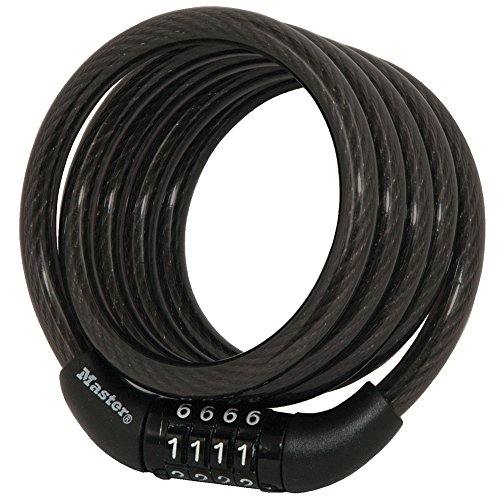
Best for: Short stops with basic theft deterrence
The Master Lock 8143D is a compact cable lock for bicycles, e-bikes, scooters, strollers, grills, kayaks, and other outdoor equipment. Its 4-foot cable gives enough reach for many bike racks and fixed posts, while the 5/16-inch, or 8 mm, diameter keeps the lock relatively easy to carry. A four-digit preset combination removes the need for keys, which is useful for quick errands and shared household gear.
The cable uses braided steel for flexibility and basic resistance against casual theft attempts. A vinyl coating covers the metal, helping reduce scratches on painted frames and other surfaces. At around $9, this lock is priced for simple daily security rather than high-risk parking. It can also secure two nearby bikes or accessories if the cable can pass through both items and the anchor point. Still, its thin cable makes it better suited to brief stops in familiar areas than overnight storage or unattended public parking.
Pros
- Four-digit combination means no key to carry or lose.
- Four-foot length reaches many racks, posts, and outdoor items.
- Vinyl coating helps protect bike frames from contact marks.
Cons
- The 5/16-inch cable provides limited protection against determined thieves with cutting tools.
- The preset combination may be less convenient than a user-selected code, especially for shared use.
3. Büchel Combination Bike Cable Lock

Best for: Children’s bikes, scooters, and strollers
The Büchel Kids Bike Lock is a coiling cable lock for children’s bikes and other small wheeled gear. It can also secure balance bikes, skateboards, bike trailers, scooters, and strollers. The keyless design uses a resettable four-digit combination, giving families more than 10,000 possible codes. At around $14, it offers a low-cost way to give kids their own lock without adding a key to manage.
The colorful design may appeal to children and can make locking up feel like part of their routine. The combination controls are intended for both adults and children, though younger users may need help setting or remembering the code. Büchel has more than 100 years in the cycling industry, but that history does not replace smart parking habits or a secure locking point. A cable lock is best for short stops and basic deterrence, not high-risk locations. Its flexible shape also makes it practical for looping around stroller frames, trailer parts, or compact bike racks.
Pros
- Four-digit resettable code eliminates the need for a key.
- Works with bikes, scooters, skateboards, trailers, and strollers.
- Colorful styling may help children take part in locking up.
Cons
- Cable locks generally provide less resistance against cutting than hardened chain or U-lock designs.
- Children may forget the combination, especially if they use the lock only occasionally.
2. NDakter Bike Chain Lock

Best for: Everyday bike and gate security
The NDakter Bike Chain Lock uses a five-digit resettable combination instead of a key. Its chain is made from 0.24-inch alloy steel, while the lock cylinder uses zinc alloy. A polypropylene fabric sleeve covers the chain to reduce frame scratches and shield hands from hot or icy metal. The default code is 00000, and users can set a personal combination.
Available lengths include 3.2, 4.27, and 5 feet. The 3.2-foot version weighs about 1.45 pounds and can secure two or three bikes together, depending on their frames and the anchor point. It can also wrap around a railing, fence, gate, tree, scooter, or motorcycle. Around $13, it offers useful flexibility for casual outdoor locking. Still, this is a deterrent, not a guarantee against theft. The lock head measures about 1.25 inches across, so narrow wheel openings may not accept it. For those vehicles, wrapping the chain around the frame may work better.
Pros
- Five-digit resettable code removes the need to carry a key.
- Steel chain and zinc alloy cylinder provide a stronger setup than a lightweight cable.
- Fabric covering helps protect painted frames from chain scratches.
Cons
- A 1.25-inch lock head may not fit through some scooter or e-bike wheel gaps.
- At about 1.45 pounds for the 3.2-foot model, it adds noticeable weight to a bike.
1. Titanker Bike Cable Lock, 4-Foot Combination

Best for: Short stops and kids’ bikes
The Titanker is a 4-foot, self-coiling bike cable lock with a 5/16-inch, or 8 mm, steel cable. It uses four number wheels instead of a key, so there is no small key to carry or lose. A PVC cover helps limit frame scratches and protects the cable’s surface. The included mounting bracket gives you a way to carry the lock on the bike when it is not in use. At around $8, it fits the budget end of the market.
The resettable combination is the main convenience feature, but setup needs care. To change the code, enter the current combination, press the shackle fully down, and hold it while choosing four new digits. Test the new code several times before riding. The cable has enough reach for many bike racks, railings, gates, and fences, while its coil keeps the loose length more compact. It can also secure scooters, strollers, skateboards, grills, and lawn equipment. This is better suited to brief stops and low-risk areas than overnight protection.
Pros
- Four-digit resettable code removes the need for keys.
- 4-foot length works with many racks, railings, and fences.
- PVC coating helps reduce scratches on bike frames.
Cons
- An 8 mm cable can be cut with suitable tools, so it is not a high-security lock.
- Four feet may be too short for thick posts or multiple bikes.
Buying Guide
The key factor is a lock’s security level, because a child’s bike may sit outside school or a park for hours. Choose hardened steel protection with a published security rating, not a toy-style cable.
- Security type: Pick a compact U-lock or chain at least 8 mm thick. A basic cable works only for quick stops or as a secondary lock.
- Size and fit: Measure the bike frame and rack first. A 6- to 8-inch shackle usually fits a child’s frame, wheel, and parking rail without excessive space.
- Weight: Keep the lock under 2 pounds for younger riders. A 1- to 1.5-pound model is easier to carry in a backpack or basket.
- Locking method: Choose a four-digit combination for children who lose keys. Keyed models can offer stronger protection, but buy one with at least two spare keys.
- Weather and price: Look for a covered keyway or corrosion-resistant finish. Expect to pay $15 to $40 for a practical children’s bike lock, and avoid novelty models under $10.
If you cannot have everything, prioritize security first, then choose the lightest model your child can open without help.
Frequently Asked Questions
How do I choose a bike lock for a child?
Choose a child’s bike lock by matching its security level, weight, size, and locking method to the riding area. For neighborhood use, a compact 3-foot cable or lightweight chain may work, while school racks and public paths call for a sturdier U-lock or folding lock. Check that the child can operate it.
What type of lock is safest for a child’s bicycle?
A small U-lock usually gives stronger theft resistance than a thin cable, but it adds weight and may not fit every frame or rack. A 6- to 8-inch shackle can secure many small bikes, yet parents should confirm the frame, wheel, and rack fit before buying.
Can kids use combination locks on their bikes?
Yes, children can use combination locks if they can set, read, and remember the code without help. A four-digit model offers 10,000 possible codes, but lost combinations cannot be reset on many basic locks. Choose large number wheels and a short cable for easier handling.
Are cable locks secure enough for children’s bicycles?
Cable locks are suitable for low-risk stops, but they offer less resistance to cutters than U-locks or hardened chains. A 10-millimeter cable may deter casual grabbing at a busy playground, yet it should not protect an expensive bike left outside for several hours.
Conclusion
The Titanker Bike Cable Lock, 4-Foot Combination, is the top recommendation for children who need a simple, key-free lock for short stops at school, parks, or a neighbor’s house. If your priority is stronger security for longer rides or unattended bikes, pick a heavier U-lock instead, because cable locks are easier to cut with basic tools and may not deter theft in busy public areas. Before buying, double-check the lock’s size, frame and wheel compatibility, the number of locks included, and the current price, since listings, package contents, and discounts can change quickly between retailers; also check the cable’s reach, because four feet may not wrap around thick racks, posts, or two bikes.