
5 Best Work Boots for Tow Truck Drivers for Rain
For most buyers, the Furuian Pioneer Series Steel Toe Work Boots are the top pick among the best work boots for tow truck drivers. Their main advantage is straightforward: a steel toe adds a layer of protection when feet work near heavy vehicles, chains, and tools. The Pioneer Series also fits the basic role of a practical roadside work boot, without pushing the review toward specialized footwear that many drivers may not need.
This guide is for tow truck drivers who need footwear for roadside repairs, loading, and long shifts. For this kind of work, check the toe material, outsole grip, and fit, since uneven ground and heavy equipment leave little room for poor support. The five picks below are ranked with clear reasons and honest drawbacks for each, so you can compare protection, comfort, and practicality before choosing a pair.
Quick Comparison
| # | Product | Best For | Price | |
|---|---|---|---|---|
| 1 | Furuian Pioneer Series Steel Toe Work Boots | Heavy-Duty Jobsite Workers | ~$44 | View → |
| 2 | Golden Fox 12" Pull-On Work Boot | Workers Wanting Easy Pull-On Boots | ~$115 | View → |
| 3 | Irish Setter Ashby Aluminum Toe Work Boot | Buyers Seeking Aluminum Toe Protection | ~$180 | View → |
| 4 | ANGRYRAM Steel Toe Work Boots | Steel-Toe Budget Shoppers | ~$50 | View → |
| 5 | NORTIV 8 Men's Composite Toe Work Boots | Workers Preferring Composite Toe Boots | ~$65 | View → |
5 Top Work Boots for Tow Operators
These picks are ranked by traction, durability, comfort, and roadside protection, counting down to the strongest overall choice.
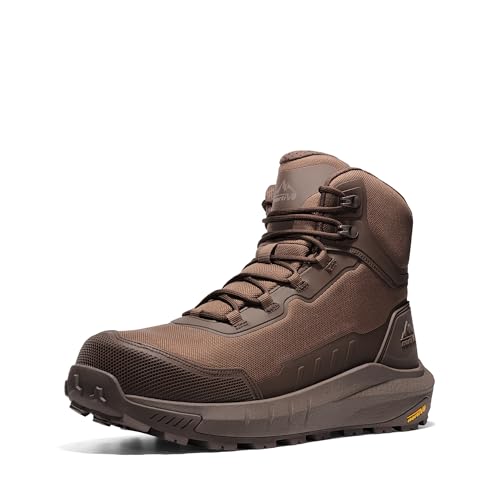
5. NORTIV 8 Men’s Composite Toe Work Boots
Best for: Warehouse and delivery shifts
The NORTIV 8 men’s work boot combines a dark brown, wear-resistant nylon upper with TPU reinforcement and a nano composite toe. It uses a lace-up fit plus a side zipper, so you can adjust the boot once and put it on faster later. Each boot weighs about 22.5 ounces in size 9, though the listed pair is size 10. The thick E-TPU midsole is designed to return energy during long periods of standing or walking.
Safety ratings are the main reason to consider this pair. The toe meets ASTM F2413-24 I/75 impact standards, while the boots also meet ASTM F2413-24 EH SR requirements for electrical hazard and slip resistance. A synthetic leather insole adds contoured arch support. Around $65, they offer a practical mix of protection and comfort for construction, warehouse, delivery, and electrical work. Still, composite toes do not provide the same crush protection as steel in every situation, so check your workplace rules before buying.
Pros
- Composite toe helps protect against workplace impacts.
- E-TPU midsole can reduce fatigue during long shifts.
- ASTM EH SR rating adds electrical and slip resistance.
Cons
- Nylon, TPU, and synthetic materials may feel warmer than breathable leather.
- Side zippers can limit fine fit adjustments compared with laces alone.
4. ANGRYRAM Steel Toe Work Boots

Best for: Wet job sites and warehouse shifts
The ANGRYRAM work boot is a slip-on safety shoe for jobs that need toe and underfoot protection. It uses a steel toe cap advertised as meeting ASTM F2413-18 standards, plus a waterproof upper for wet conditions. The pull-on design skips laces, which can save time during repeated changes. At around $50, it targets buyers who want basic job-site protection without paying for premium work boots.
Its outsole combines PU and TPU, with tread intended to improve grip on wet or slippery floors. A puncture-resistant midsole adds another protective layer beneath the foot. That setup suits construction areas, warehouses, farms, and maintenance work where sharp debris may be present. The brand says it has made boots for more than 20 years, but the listing does not provide independent safety-test results or details about insulation thickness. Fit also deserves care. The company invites buyers to ask about sizing, yet the supplied information does not list available sizes, widths, or a size chart.
Pros
- Steel toe cap is advertised to meet ASTM F2413-18 safety requirements.
- Slip-on shaft makes quick changes easier than lace-up boots.
- PU and TPU outsole includes tread for wet-floor traction.
Cons
- Slip-on construction may feel less secure than laces on steep or uneven ground.
- The listing lacks clear size, width, breathability, and waterproof-testing details.
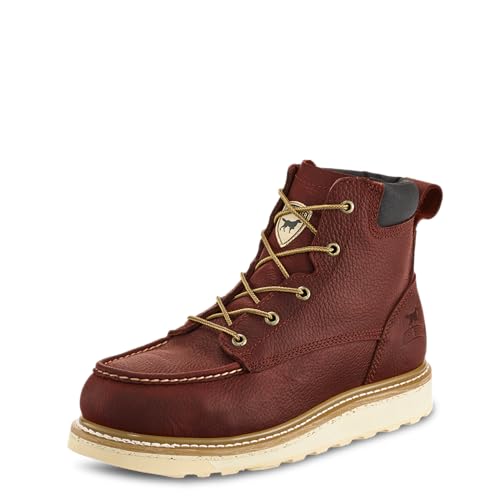
3. Irish Setter Ashby Aluminum Toe Work Boot
Best for: Hot, demanding worksite floors
The Irish Setter Ashby is a 6-inch men’s work boot with a brown, oiled full-grain leather upper and an aluminum safety toe. This size 10.5 version uses a removable polyurethane footbed for cushioning and a Goodyear welted sole that can be resoled. At around $180, it sits in the midrange for a safety-toe boot, but its replaceable sole may help extend its service life.
Its rubber-EVA Traction Tred outsole carries HRO heat resistance for surfaces up to 475°F. The boot also meets ASTM F2413-18 requirements for impact, compression, and electrical hazards, along with ASTM F3445-21 SR slip resistance. That combination suits construction, fabrication, and other jobs where hot floors and slick surfaces are regular concerns. The aluminum toe adds protection without using steel, while the full-grain leather should handle daily wear. Still, a 6-inch shaft provides less ankle coverage than taller work boots, and the leather may require a break-in period.
Pros
- Aluminum toe protects against workplace impact and compression hazards.
- HRO outsole resists melting on surfaces up to 475°F.
- Goodyear welt construction allows future resoling and helps limit water entry.
Cons
- Six-inch height offers less ankle support and coverage than 8-inch boots.
- Full-grain leather can feel stiff initially and needs regular conditioning.
2. Golden Fox 12″ Pull-On Work Boot

Best for: Farmers working through muddy fields
The Golden Fox is a 12-inch pull-on Wellington work boot with a wedge-style, lightweight outsole. This version comes in brown leather, size 8 D(M) US, and is imported. Around $115, it targets construction workers, farmers, ranchers, and welders who need a simple boot for long days on hard or uneven ground. Leather pull tabs make the boot easier to put on, while the wedge tread has fewer deep channels that can hold mud.
Its dual-density insole is designed to absorb shock and reduce strain through the feet, legs, and lower back. A steel shank supports the arch and adds structure when climbing ladders, standing on rigid surfaces, or pushing a shovel. The minimal stitching may appeal to welders because it leaves fewer stitched areas exposed to sparks. Still, the listing does not identify a safety toe, electrical hazard rating, or waterproof membrane, so buyers should not treat this as a fully certified safety boot without checking the product documentation.
Pros
- The 12-inch pull-on design offers coverage without laces.
- The dual-density insole supports long work shifts.
- The steel shank adds arch support on uneven ground.
Cons
- The listed option is size 8 D(M), which limits fit choices unless other sizes are available.
- No safety toe, waterproofing, or electrical hazard rating is specified.
1. Furuian Pioneer Series Steel Toe Work Boots

Best for: Warehouse and light construction shifts
The Furuian Pioneer Series is a budget work boot with a steel toe, suede upper, and microfiber lining. It is listed with an ASTM F2413-18 steel toe cap, which gives the boot a defined safety standard for toe protection. A layered sole adds a puncture-resistant midsole, while the outsole uses a slip-resistant tread pattern. At around $44, it targets shoppers who need basic job-site protection without paying premium boot prices.
The upper should be easier to wipe clean than untreated fabric, though suede still needs regular care. The microfiber lining may also feel less rough against socks during long shifts. Furuian lists a 360-day customer-care policy, but buyers should confirm what that coverage includes before ordering. There is no stated waterproof rating, electrical hazard rating, or weight, so these boots may suit indoor work and moderate outdoor duties better than wet or highly demanding sites.
Pros
- ASTM F2413-18 steel toe cap provides a recognized safety specification.
- Puncture-resistant midsole adds protection from sharp objects underfoot.
- Slip-resistant tread pattern supports steadier footing on work surfaces.
Cons
- Steel-toe construction can feel heavier and less flexible than casual work shoes.
- No waterproof or electrical hazard rating is listed, limiting confidence in wet areas or electrical job sites.
Buying Guide
The most important factor is reliable traction. Tow operators work on wet pavement, gravel, oil, and uneven shoulders, so a slip-resistant outsole can prevent serious falls around moving traffic and heavy equipment.
- Slip resistance: Choose rubber outsoles marked slip-resistant, with lugs about 3 to 5 millimeters deep. A defined heel can also help on ladders and truck beds.
- Toe protection: Look for ASTM F2413-rated steel or composite toes. Composite caps weigh less, while steel offers strong impact protection but may feel colder.
- Ankle support: Pick a 6- to 8-inch boot with firm heel control. This height supports ankles when stepping over cables, curbs, and rough ground.
- Weather protection: For frequent rain or snow, choose waterproof leather or a waterproof membrane. Sealed seams and a gusseted tongue help keep water out during long roadside calls.
- Fit and durability: Leave about ⅜ inch of space beyond the longest toe, and try boots with your work socks. Expect to spend roughly $100 to $220 for durable leather, reinforced stitching, and replaceable insoles.
If you cannot get every feature, prioritize traction first, then choose the strongest toe protection that fits comfortably.
Frequently Asked Questions
How do I choose work boots for tow truck driving?
Choose tow truck work boots with slip-resistant soles, toe protection, waterproofing, and enough flex for driving. Look for a cushioned footbed, ankle support, and a heel that stays secure on pedals. A 6- to 8-inch boot often gives useful coverage without feeling too tall inside the cab.
What boot features matter most for roadside towing?
The most useful features for roadside towing are a slip-resistant outsole, protective toe cap, waterproof upper, and secure ankle fit. Choose tread with deep lugs for wet pavement, plus reflective details if you work near traffic. A boot rated for electrical hazards can add protection around damaged vehicles and cables.
Can waterproof boots still stay comfortable during long shifts?
Yes, waterproof boots can stay comfortable during long towing shifts when they have breathable lining, adequate cushioning, and a roomy toe box. Check the insulation level before buying, since heavily insulated footwear may feel hot in a cab. For mild weather, uninsulated waterproof leather often works better than winter-lined models.
Are steel-toe or composite-toe boots better for tow operators?
Neither toe type is always better: steel-toe boots usually cost less, while composite-toe boots weigh less and do not conduct cold as quickly. Both can protect against falling equipment when they meet the required safety standard. A composite pair may suit drivers who spend eight to twelve hours between the truck and cab.
Conclusion
Furuian Pioneer Series Steel Toe Work Boots are the top pick for tow truck drivers who need a protective, supportive pair for long shifts around traffic, tools, and damaged vehicles. If your priority is easier on-and-off during roadside calls, choose a waterproof pull-on pair instead, since it saves time and avoids fuss with laces. Before buying, double-check the size chart, toe protection, electrical-safety compatibility with your job, the listed quantity, and the current price, since listings and discounts can change. A good pair should leave room for work socks without letting your heel slide. Also confirm that the sole suits your usual surfaces, from wet pavement to gravel and shop floors. The right fit matters as much as the safety rating.