
4 Best Skydiving Goggles for Clear Vision
Birdz Eyewear Wing Goggles is the top pick for most buyers because its wraparound design gives broad eye coverage in a lightweight frame. For most people searching for the best skydiving goggles, that balance matters more than extra styling.
This guide is for first-time jumpers, frequent skydivers, and anyone replacing worn eye protection. Focus on fit, lens coverage, and frame materials. Goggles should sit securely without pressure, shield your eyes from wind, and hold up through repeated use. The four picks below are ranked by their strengths, with clear reasons to consider each one and honest drawbacks for each. That makes it easier to match a pair to your face, jump schedule, and budget.
Quick Comparison
| # | Product | Best For | Price | |
|---|---|---|---|---|
| 1 | Birdz Eyewear Wing Goggles | Best For Casual Outdoor Riders | ~$15 | View → |
| 2 | Birdz Eyewear Wing Skydiving Goggles | Best For Tandem Skydiving Jumps | ~$29 | View → |
| 3 | Birdz Eyewear Wing Skydiving Goggles | Best For Experienced Solo Skydivers | ~$14 | View → |
| 4 | Birdz Eyewear Wing Skydiving Goggles | Best For High-Altitude Flight Training | ~$23 | View → |
4 Top Goggles for Skydiving
These picks are ranked by fit, lens coverage, and retention, counting down to the top skydiving goggle choice.
4. Birdz Eyewear Wing Skydiving Goggles

Best for: Skydivers needing wide peripheral vision
Birdz Eyewear Wing goggles are made for air and water sports, including skydiving, hang gliding, parasailing, skiing, and snowboarding. The package includes a light-blue reduced-glare lens and a clear lens, giving buyers two viewing options for changing conditions. Both lenses use shatterproof polycarbonate and provide 100% UVA and UVB protection.
The single-lens shape creates a broad field of view, which helps when checking nearby equipment, terrain, or other jumpers. Anti-fog coating supports clearer vision during cold-weather activities, though no coating stays perfect in every temperature or humidity level. Neoprene foam padding and an adjustable strap help hold the goggles in place without adding much weight. They also float, a useful detail for parasailing, boating, and other water activities. At around $23, this pair offers a practical feature mix for recreational use. The wide aerodynamic frame may suit active sports better than casual everyday wear.
Pros
- Two lenses cover bright, reduced-glare conditions and low-light use.
- Polycarbonate lenses provide impact resistance and full UVA/UVB protection.
- Floating construction and adjustable padding suit water sports and airborne activities.
Cons
- The wide frame may fit loosely on smaller faces.
- The product listing does not provide a lens tint rating or a stated size range.
3. Birdz Eyewear Wing Skydiving Goggles

Best for: Water sports and airborne adventures
The Birdz Eyewear Wing goggles use a single shatter-resistant polycarbonate lens with a ReflecTech red mirror finish. The lens has an anti-fog coating and blocks 100% of UVA and UVB rays. Its wide, aerodynamic shape gives a broad view, which helps when you need to watch your surroundings during skydiving, hang gliding, or parasailing. They also suit skiing and snowboarding.
A lightweight neoprene foam frame adds cushioning around the eyes, while the adjustable head strap keeps the goggles in place. They float, so dropping them into a lake or pool should not mean losing them. At around $14, they offer useful protection for occasional outdoor trips without a high price. The design is simple, though. You get one lens rather than a set of interchangeable options, and the red mirror tint may not suit every lighting condition.
Pros
- Polycarbonate lens provides impact resistance and full UVA and UVB protection.
- Wide, single-lens design supports peripheral vision during airborne activities.
- Floating construction works well for parasailing, boating, and other water sports.
Cons
- The fixed red mirror lens gives you no alternate tint for cloudy or low-light conditions.
- One adjustable strap may not provide an ideal fit for every face shape or helmet setup.
2. Birdz Eyewear Wing Skydiving Goggles
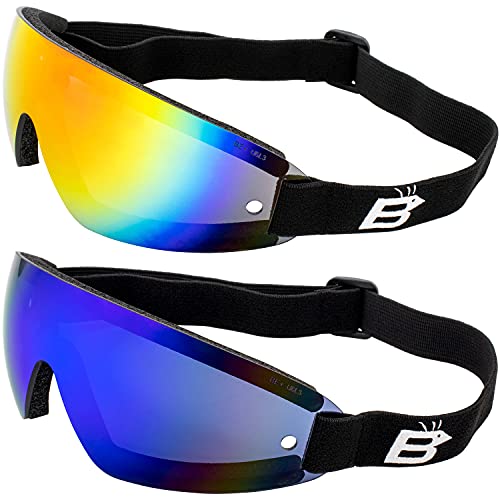
Best for: Skiers needing spare lenses
The Birdz Eyewear Wing set includes two black-frame goggles, one with a blue ReflecTech mirror lens and one with a red mirror lens. Both use one-piece shatterproof polycarbonate lenses with UV400 filtering, giving them a useful safety edge for skiing, snowboarding, parasailing, and water sports. At around $29, the two-lens setup also gives buyers a backup pair.
The goggles combine indirect side vents with anti-fog lens coatings to reduce moisture buildup during active use. Neoprene foam padding cushions the face, while the elastic strap helps keep the frame in place. The mirror finishes may reduce glare, but the product does not list visible light transmission ratings, so it is hard to predict how each lens performs in changing light. A microfiber pouch handles basic cleaning and storage. The goggles float, which can help during water activities.
Pros
- Two complete pairs provide a spare or let users switch between blue and red mirror lenses.
- Polycarbonate lenses add impact resistance, while UV400 filtering blocks ultraviolet rays.
- Side ventilation, anti-fog coatings, and neoprene padding support active outdoor use.
Cons
- No stated size range or face measurements make the fit uncertain for some buyers.
- The lenses lack published light-transmission ratings, so their performance in low light is unclear.
1. Birdz Eyewear Wing Goggles

Best for: skydivers needing affordable eye coverage
Birdz Eyewear Wing Goggles use a single shatterproof polycarbonate lens for skydiving, hang gliding, parasailing, skiing, snowboarding, and other high-wind activities. The smoke tint includes 100% UVA and UVB protection, while the anti-fog coating helps maintain a clearer view during changing conditions. Their wide, aerodynamic shape also leaves more room for peripheral vision than many close-fitting protective glasses.
The fit focuses on comfort and security. Neoprene foam padding cushions the face, and the adjustable strap helps keep the goggles in place over a helmet or bare head. They are also designed to float, which adds useful protection for boating, parasailing, and other water activities. A microfiber storage bag is included, according to the product listing. At around $15, these goggles offer a low-cost option for occasional use, though buyers should keep expectations realistic about long-term durability at this price.
Pros
- Single polycarbonate lens provides shatter resistance and full UVA and UVB protection.
- Wide lens design supports peripheral vision during flight or downhill sports.
- Floating construction and adjustable strap suit water activities and parachute use.
Cons
- The fixed smoke lens may be too dark for dusk, heavy cloud cover, or indoor use.
- One lens design does not allow buyers to swap tints for different lighting conditions.
Buying Guide
A secure, pressure-free fit is the most important factor when choosing goggles for skydiving. A loose frame can shift during a 120-mph freefall, while excess pressure can cause painful marks or distraction.
- Fit and seal: Choose a frame that touches your face evenly without gaps. Try it with your helmet, and wear it for 10 minutes to find pressure points.
- Lens clarity: Select impact-resistant polycarbonate lenses with no visible distortion. UV400 protection, or 100% UVA and UVB blocking, adds useful protection at altitude.
- Fog control: Look for anti-fog treatment plus ventilation channels. Double-lens designs can help during temperature changes, but keep a microfiber cloth in your gear bag.
- Tint and light level: Use clear lenses for cloudy days, smoke or gray lenses for bright sunlight, and yellow lenses for overcast conditions. Avoid very dark lenses near sunset.
- Retention and durability: Pick a flexible frame with a fully adjustable strap. Confirm it fits under your helmet and stays secure during head movement. A replaceable lens can reduce long-term costs.
If you cannot have everything, prioritize a stable, comfortable seal, since poor fit can affect vision throughout the jump.
Frequently Asked Questions
How do I choose skydiving goggles?
Choose skydiving goggles with a snug seal, clear peripheral vision, secure strap, and ventilation suited to your jump conditions. Soft silicone or foam edges should sit flat without pressing your eyelids. Look for an adjustable strap and lenses rated for strong sunlight; many models use polycarbonate lenses that resist impact better than ordinary sunglasses.
What lens color is best for skydiving?
Clear or lightly tinted lenses usually work best for skydiving because they preserve detail during changing light. Gray lenses reduce glare in bright sun, while yellow or amber lenses can improve contrast under cloud cover. Avoid very dark lenses for low-light jumps, and check that the frame blocks wind around the sides.
Can I wear prescription glasses under skydiving goggles?
Yes, some skydiving goggles fit over prescription glasses, but dedicated prescription inserts usually provide a safer, closer fit. Measure your glasses before ordering, since bulky frames may press against the goggle seal. An insert made for your prescription can reduce fogging and keep the outer lens stable during freefall.
Are anti-fog goggles worth buying for skydiving?
Yes, anti-fog goggles are useful for skydiving, especially when temperature changes, breathing, or face coverings create condensation. Choose a model with built-in vents and an anti-fog lens treatment, then keep a small microfiber cloth in your gear bag as backup. Many coatings need replacement after 6 to 12 months.
Conclusion
Birdz Eyewear Wing Goggles are the top pick for skydivers who want a versatile pair with broad coverage and a secure fit for regular jumps. If your priority is the lowest possible profile under a helmet, choose a slimmer, helmet-focused model instead, since it may reduce pressure and fit better with your headgear. Before buying, double-check the listed size, frame and lens compatibility with your helmet, the number of goggles included, the current price, lens tint, strap adjustment, and return policy, since listings and fit details can vary. A clear lens may suit cloudy days, while darker tints work better in bright sunlight.