
7 Best Snow Goggles Under 100 for Skiers
ROMRLD Cylindrical Ski Goggles is the top pick for most buyers. The main reason is its cylindrical lens design, which provides useful peripheral coverage at a low price. For shoppers comparing the best snow goggles under 100, that balance makes it a strong starting point.
This guide is for skiers and snowboarders who want clear coverage without paying premium prices. Lens coverage and fit matter most: a wider view helps on the slope, while a secure seal limits cold air and shifting. The seven picks below are ranked with reasons and honest drawbacks for each, so you can compare budget-friendly options without guessing. Each selection suits a slightly different mix of comfort, visibility, and value.
Quick Comparison
| # | Product | Best For | Price | |
|---|---|---|---|---|
| 1 | ROMRLD Cylindrical Ski Goggles | Budget-conscious resort skiers | ~$15 | View → |
| 2 | findway OTG Ski Goggles | Skiers wearing prescription glasses | ~$29 | View → |
| 3 | YLKJSWIM Ski Goggles | Riders wanting bright lens contrast | ~$25 | View → |
| 4 | GlaRid Ski Goggles | Casual weekend snow riders | ~$12 | View → |
| 5 | POPOACTI Polarized Cylindrical Ski Goggles | Sunny-slope glare seekers | ~$13 | View → |
| 6 | Innerking HD28 OTG Ski Goggles | Glasses-wearing powder day riders | ~$17 | View → |
| 7 | findway OTG Ski Goggles | Helmeted skiers needing OTG fit | ~$28 | View → |
7 Snow Goggles Worth Buying
The list is ranked by lens clarity, fit, weather protection, and value, counting down to the top pick.
7. findway OTG Ski Goggles

Best for: Glasses wearers on ski trips
The Findway Ski Goggles OTG are made to fit over prescription glasses while covering the eyes and upper face. They use a spherical double lens with a reflective coating, 100% UV protection, and claimed anti-scratch and impact resistance. A TPU frame, three foam layers, and a wide adjustable strap support comfort under a helmet. The goggles fit men, women, and children over age 10.
The strongest feature is the oversized OTG shape. It gives eyeglass wearers more room than standard ski goggles, though the fit will depend on your frames. Vent openings help move warm, damp air away from the inner lens, while the Italian-made inner lens material is designed for longer-lasting fog resistance. The frameless lens also provides a broad view. Around $28, these goggles offer useful features for casual skiing, snowboarding, and other cold-weather activities. Findway includes a one-year guarantee with refunds or replacements for defects and quality issues.
Pros
- OTG design leaves space for prescription glasses beneath the goggles.
- Double lens and ventilation system help reduce fog buildup.
- Three-layer foam, silicone strap backing, and helmet compatibility support a secure fit.
Cons
- The oversized frame may feel bulky, especially with large eyeglass frames.
- Anti-fog performance can still vary with weather, face heat, and ventilation habits.
6. Innerking HD28 OTG Ski Goggles

Best for: Prescription-glasses wearers on snowy slopes
These Innerking ski goggles are designed for skiing, snowboarding, snowmobiling, and other winter sports. Their OTG frame fits over prescription glasses, with two sponge notches that make room for frames. A three-layer breathable foam border adds cushioning around the face. The flexible TPU frame and adjustable buckle should also help the goggles sit securely with most helmets. They sell for around $17, though prices can change.
The dual-layer Italian cylindrical lenses use ventilation channels and an anti-fog coating to help reduce moisture buildup. They provide a wide field of view, while the UV400 rating shields eyes from bright sunlight and snow glare. The lenses are also described as scratch-resistant. A triple silicone strap helps prevent slipping against a helmet or hat. SGS and CE EN174 certifications add useful safety information, but the listing does not provide a lens tint rating or visible-light transmission percentage. That makes it harder to judge performance during flat light or storms.
Pros
- OTG notches allow room for prescription glasses.
- Dual-layer lenses, vents, and anti-fog coating help limit fogging.
- UV400 lenses protect against sunlight and reflected snow glare.
Cons
- The listing does not state a VLT rating, so low-light performance is unclear.
- The OTG frame may feel bulky over large eyeglass frames.
5. POPOACTI Polarized Cylindrical Ski Goggles

Best for: Budget-conscious resort skiers and snowboarders
The POPOACTI Polarized Cylindrical Ski Goggles offer a low-cost option for youth and adults who need basic snow protection. They use a dual-layer lens with 100% UV protection, water resistance, impact resistance, and a scratch-resistant outer surface. The reflective silver lens can reduce glare, while the cylindrical shape provides a straightforward field of view. At around $13, they cost far less than many established snow-sports brands.
Fog control is the strongest feature on paper. An anti-fog inner lens works with built-in ventilation channels that move warm, damp air away from the lens. A TPU frame and triple-layer face foam add cushioning around the eyes. The wide elastic strap has a silicone backing and an adjustable buckle, so it should stay in place over a compatible helmet. The OTG design leaves room for many prescription glasses, though “fits most” does not guarantee comfort with every frame. Their affordable price makes them practical for occasional trips, school ski programs, or backup use.
Pros
- Dual-layer lenses provide 100% UV protection and anti-fog treatment.
- Triple-layer foam and a flexible TPU frame cushion the face.
- OTG construction, an adjustable buckle, and a silicone-backed strap support helmet and glasses use.
Cons
- The cylindrical lens may provide less peripheral coverage than larger spherical designs.
- OTG space varies by eyeglass frame, and the listing does not provide lens tint or visible-light transmission details.
4. GlaRid Ski Goggles
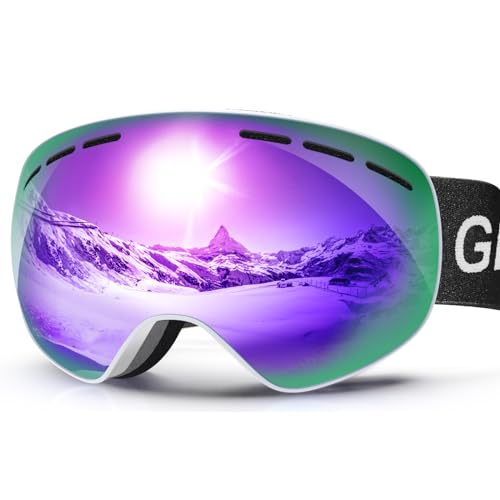
Best for: Budget-conscious skiers wearing glasses
The GlaRid Ski Goggles are low-cost snow goggles for adults and teens, with an OTG shape that leaves room for prescription glasses. Their large, spherical, frameless lens gives a broad view with less visible frame around the edges. A soft TPU frame and triple-layer foam add cushioning around the face, while the adjustable elastic strap fits over helmets.
The dual-layer lens has an anti-fog coating, scratch-resistant treatment, and stated 100% UV400 protection. Built-in vents should help move air through the goggles, though fog control can still depend on weather, fit, and activity level. At around $12, the package offers useful extras: one pair of goggles, a portable storage bag, and a cleaning cloth. The pink finish adds a clear style choice, but buyers seeking a neutral look may prefer another color. Lens tint details are not provided, so these may be less versatile across changing light conditions.
Pros
- OTG construction leaves space for many prescription glasses.
- Triple-layer foam and a soft TPU frame improve face comfort.
- Includes a storage bag and cleaning cloth at around $12.
Cons
- The pink color may not suit buyers wanting a neutral design.
- No lens tint or light-transmission rating is listed, making changing-weather performance harder to judge.
3. YLKJSWIM Ski Goggles

Best for: Budget-minded weekend snow riders
The YLKJSWIM ski goggles are made for skiing, snowboarding, snowmobiling, and other cold-weather activities. They use a double-layer lens system with a 20mm reinforced polycarbonate spherical lens, a flexible TPU frame, and a three-layer face foam. The foam is designed to manage moisture, block drafts, and cushion the fit around the eyes. Around $25, they target shoppers who want basic snow protection without paying premium-goggle prices.
The outer lens has an anti-glare REVO coating and added scratch resistance, while the inner lens uses an anti-fog design. Built-in airflow channels help move moisture out of the goggle area. The lens also provides UV400 protection against UVA, UVB, and UVC rays. An adjustable strap works with many ski and snowboard helmets, and the grippy backing helps limit strap movement. The OTG shape leaves room for many prescription glasses, though fit will depend on frame size and face shape.
Pros
- Double-layer lenses combine anti-fog treatment with UV400 eye protection.
- Flexible TPU construction and three foam layers support a softer face seal.
- OTG clearance and an adjustable, non-slip strap improve everyday usability.
Cons
- The listing does not specify lens tint, visible-light transmission, or low-light performance.
- It does not mention interchangeable lenses, a replacement-lens system, or a storage case.
2. findway OTG Ski Goggles

Best for: Glasses wearers on ski trips
The Findway Ski Goggles OTG are designed to fit over prescription glasses for skiing and snowboarding. Their oversized shape suits adults and children over 10, while the adjustable strap is made to work with helmets. A TPU frame, triple-layer foam, and silicone backing help create a secure, cushioned fit around the face.
The double spherical lens uses an anti-fog inner coating, ventilation channels, and a reflective mirror finish. It also provides 100% UV protection and impact resistance. The frameless design gives a broad view, and the outer lens has an anti-scratch treatment. These features make the goggles practical for changing mountain conditions, though fog control can still depend on humidity, fit, and how much you move. At around $29, they offer a low-cost option for occasional winter trips. Findway includes a one-year guarantee with refunds or replacements for defective products.
Pros
- OTG space allows many prescription glasses to fit underneath.
- Double lenses, vents, and an anti-fog inner coating help limit condensation.
- Helmet-friendly strap, triple-layer foam, and a TPU frame support comfortable wear.
Cons
- The oversized shape may feel bulky with larger eyeglass frames or smaller faces.
- Mirror lenses can reduce brightness in flat, overcast conditions, depending on the chosen lens color.
1. ROMRLD Cylindrical Ski Goggles

Best for: Budget-conscious skiers who wear glasses
The ROMRLD ski goggles use a cylindrical, dual-layer lens with a REVO mirrored finish. The design aims to provide a wide view while reducing glare in bright snow. A hydrophilic anti-fog coating and built-in vents help limit moisture buildup, though fog can still appear during hard exercise or sudden temperature changes. The lenses also claim UV400 protection against UVA, UVB, and UVC rays.
These are OTG goggles, so the frame has extra room for most prescription glasses. A flexible TPU frame and triple-layer face foam should reduce pressure around the eyes. The foam also adds a soft seal against cold air. An adjustable strap with a silicone grip works with ski helmets and helps keep the goggles in place. At around $15, they offer useful features for occasional resort trips without the cost of premium eyewear. Fit remains personal, and larger frames may not sit comfortably inside the opening.
Pros
- OTG cutouts accommodate most prescription glasses.
- Dual-layer lenses, vents, and an anti-fog coating help maintain visibility.
- UV400 protection and a mirrored finish suit bright, reflective slopes.
Cons
- The cylindrical lens may show more edge distortion than higher-end spherical lenses.
- Anti-fog performance can vary with humidity, exertion, and poor ventilation.
Buying Guide
Lens fit and visibility matter most when choosing snow goggles because gaps, pressure points, or a poor tint can hurt comfort and slope awareness. A secure seal also helps keep cold air and snow outside.
- Lens tint and VLT: Choose 20% to 40% VLT for sunny conditions, or 40% to 80% for cloudy days and storms. Photochromic lenses offer wider coverage.
- Face and helmet fit: Measure the bridge and cheek area, then check the brand’s size chart. The frame should touch your face without leaving gaps or squeezing your nose.
- Anti-fog setup: Look for double-pane lenses, anti-fog coating, and at least two upper and two lower vents. Do not wipe the inside while wet, since that can damage the coating.
- UV and lens protection: Require 100% UVA and UVB protection. Polycarbonate lenses offer useful impact resistance for falls, branches, and kicked-up ice.
- Price and included parts: Set a $50 to $100 budget, then check for a microfiber bag, spare lens, or removable strap. A second lens can cost $30 to $70 alone.
If you cannot get everything, prioritize a proper face seal and a lens tint suited to your usual weather.
Frequently Asked Questions
How can I choose affordable snow goggles that fit well?
Choose an affordable snow goggle by checking lens coverage, UV protection, anti-fog treatment, helmet fit, and the return policy. Look for a cylindrical or toric lens, double-layer foam, and a spare lens only if the package stays below $100. A medium fit usually suits smaller adult faces, while large frames offer more peripheral vision.
What features matter most in snow goggles under $100?
Prioritize a double lens, full UV protection, anti-fog coating, and a comfortable face seal when comparing snow goggles under $100. A lens rated VLT around 20% to 30% works well for mixed sun and cloud, while 50% or higher helps in flat light. Check that the strap adjusts over your helmet.
Can goggles under $100 prevent fogging?
Yes, snow goggles under $100 can resist fogging, but performance depends on ventilation, fit, and how you use them. Choose a double lens with vents, keep the inner lens dry, and avoid wiping it with gloves. Many budget models use a dual-pane lens and include vents across the top and bottom.
Are cheap snow goggles good enough for skiing?
Yes, inexpensive snow goggles can work well for casual resort days if they fit securely and provide UV protection. They may use simpler cylindrical lenses, fewer lens options, or less durable foam than premium pairs. For example, a $60 to $90 model can cover regular weekend use, but heavy storm riding may justify spending more.
Conclusion
ROMRLD Cylindrical Ski Goggles are the top pick for skiers and snowboarders who want broad coverage, a simple cylindrical lens, and useful features without spending much. If your priority is a different fit or lens setup, choose the alternative that offers the right frame size, lens tint, or helmet pairing for your usual conditions. Before buying, double-check the goggles’ measurements, helmet compatibility, included quantity, and current price, since listings and bundles can change. Keep your expectations realistic at this price. Lens clarity, anti-fog performance, and strap hardware may not match premium models. Still, a well-fitting pair can improve wind protection and visibility on casual resort days, especially when the lens suits the weather.