
5 Best Mechanical Alarm Clock for Quiet Bedrooms
The MARATHON Mechanical Wind-Up Alarm Clock is the best mechanical alarm clock for most buyers because its wind-up mechanism works without batteries. It offers a simple way to wake up, with a traditional analog face and controls that do not depend on a screen, charger, or app.
This guide is for shoppers who want a classic alarm for a bedside table, travel bag, or backup wake-up routine. For this type of clock, the key factors are its size, case materials, winding method, and alarm duration. A loud alarm and easy-to-read hands also matter, especially for deep sleepers. The 5 picks below are ranked by practical strengths, with clear reasons and honest drawbacks for each. That makes it easier to match a traditional timekeeper to your room and morning habits.
Quick Comparison
| # | Product | Best For | Price | |
|---|---|---|---|---|
| 1 | MARATHON Mechanical Wind-Up Alarm Clock | Battery-free bedside setups | ~$25 | View → |
| 2 | KEYPOWER Mechanical Wind Twin Bell Alarm Clock | Heavy sleepers needing twin bells | ~$20 | View → |
| 3 | AYRELY Loud Analog Alarm Clock | Shoppers wanting loud alarms | ~$10 | View → |
| 4 | Vintage Twin Bell Alarm Clock | Retro bedroom decor fans | ~$17 | View → |
| 5 | Westclox Keywound Analog Alarm Clock | Classic clock collectors | ~$14 | View → |
5 Top Mechanical Clock Picks
These five mechanical clocks are ranked from fifth to first, counting down to the top pick for different rooms, sleepers, and budgets.
5. Westclox Keywound Analog Alarm Clock

Best for: Heavy sleepers without reliable power
This Westclox alarm clock uses a manual wind-up movement, so it needs no batteries or wall outlet. The compact white case measures 4.5 by 4.25 inches, making it suitable for a bedside table, dorm room, cabin, or travel bag. Its analog face uses clearly marked dials and a traditional clock layout. At around $14, it offers a simple backup for anyone tired of replacing batteries.
The main feature is the loud bell alarm. It produces a sharp ring that can cut through sleep more effectively than many phone alerts, although that volume may disturb anyone sharing the room. You must wind the clock and alarm by hand, so it requires a regular routine. That trade-off also makes it useful during power outages or in spaces without electrical access. The classic white design looks at home with minimalist or vintage decor, while the straightforward controls may suit adults and seniors who prefer fewer settings.
Pros
- Runs without batteries or electricity, useful for outages, cabins, and off-grid spaces.
- Loud bell sound can help wake heavy sleepers.
- Compact 4.5-by-4.25-inch size and simple dials fit small bedside areas.
Cons
- Requires manual winding for both the clock and alarm, which can become easy to forget.
- The sharp bell may be too loud for shared bedrooms, light sleepers, or early risers.
4. Vintage Twin Bell Alarm Clock

Best for: Heavy sleepers who want battery-free waking
This vintage-style alarm clock uses a manual wind-up mechanical movement, so it runs without batteries. Its twin-bell alarm is designed for a strong, noticeable ring, which may help deep sleepers, children, teens, and adults get up on time. The large numerals make the dial easier to read from a bedside table, desk, or kid’s room.
A gold-colored finish gives the clock a traditional look, while the metal housing adds more protection than a lightweight plastic case. A glass cover sits over the face and keeps the numerals visible. The design feels more decorative than a basic digital alarm, making it suitable for bedrooms where appearance matters. At around $17, it offers a low-cost way to add a classic alarm clock without buying batteries. Keep in mind that the mechanical movement needs regular winding, and the product details do not state how long one wind operates the clock or alarm.
Pros
- Twin bells produce a strong alarm sound for heavy sleepers.
- Manual winding eliminates battery purchases and replacements.
- Metal housing, glass cover, and large numerals support everyday bedside use.
Cons
- The clock must be wound by hand, which is less convenient than battery-powered models.
- Its loud bell may disturb a nearby partner, roommate, or sleeping child.
3. AYRELY Loud Analog Alarm Clock

Best for: Heavy sleepers needing a compact alarm
The AYRELY® 4.5-inch analog alarm clock uses a traditional dial with mechanical bells and a quartz movement. Its bells can reach up to 100 dB, giving deep sleepers a much stronger wake-up signal than a soft phone alarm. The clock measures 4.5 × 3.7 × 2.6 inches, so it fits on a nightstand, desk, shelf, or dorm-room table without taking much space. It runs on one AA battery, which is not included.
Its most useful feature is the push-button night light. Press the oval button once, and the dial glows for about 10 seconds without requiring you to hold it down. The hour and minute hands also glow after exposure to light, although their visibility will fade. The quartz movement is designed to stay quiet while you sleep, study, or work. At around $10, this is a simple option for shoppers who want a loud bedside alarm without paying for digital extras.
Pros
- Mechanical bells produce an alarm rated up to 100 dB.
- One-button dial light stays on for about 10 seconds.
- Compact 4.5 × 3.7 × 2.6-inch size fits small surfaces.
Cons
- The AA battery is not included, so you need one before use.
- A 100 dB alarm may sound harsh in shared bedrooms or small rooms.
2. KEYPOWER Mechanical Wind Twin Bell Alarm Clock
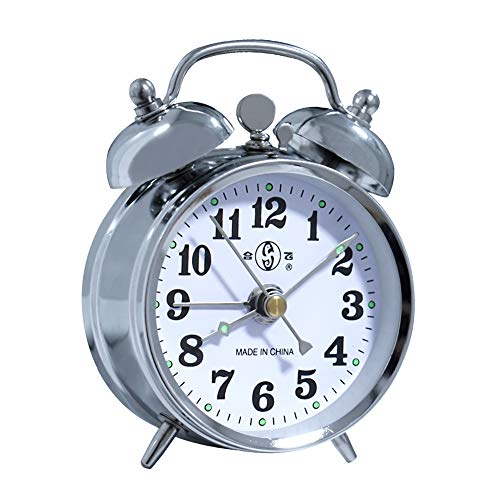
Best for: Buyers wanting a battery-free bedside clock
The KEYPOWER Alarm Clock is a compact mechanical timepiece with a classic antique-style look. It measures 4 by 2.75 by 1.57 inches, so it takes up little room on a nightstand, desk, or shelf. Its timekeeping movement runs after you wind it by hand, with no batteries or electrical outlet required. Easy-to-read Arabic numerals make the main dial clear at a glance.
Two smaller, offset dials show the seconds and alarm settings. The clock also uses glow-in-the-dark hour markers and hands, which can help you check the time after the room goes dark. Its twin bells produce a loud alarm, making this a practical choice for people who sleep through softer digital alerts. At around $20, it offers a simple alternative to electronic alarm clocks. The trade-off is that you must remember to wind it, and the mechanical format will not provide the convenience or precision of a modern digital model.
Pros
- Works without batteries or electricity, using a hand-wound mechanical movement.
- Twin bells create a loud alarm for sleepers who need a stronger alert.
- Glow-in-the-dark hands and hour markers improve nighttime visibility.
Cons
- Requires regular winding, unlike quartz or digital clocks.
- The compact 4-inch size leaves less room for large, highly visible numerals.
1. MARATHON Mechanical Wind-Up Alarm Clock

Best for: Bedrooms without reliable power
The MARATHON Mechanical Wind-Up Alarm Clock is a traditional analog alarm that runs without electricity or batteries. Its large display should be easy to read from across a room, which helps when you need to check the time without reaching for your phone. The black case gives it a simple look that fits most bedrooms, guest rooms, or travel setups.
Its main strength is independence from outlets and battery replacements. The wind-up design also keeps the controls straightforward, though it requires regular winding. The alarm is loud and clear, with a progressive interval ring that can help wake heavy sleepers. Luminescent markings on the hands make the time easier to see in dim light, but they do not replace a powered backlight. At around $25, this clock offers a practical backup for sleepers who want fewer electronic distractions and a dependable alarm during outages.
Pros
- Works without electricity or batteries, making it useful during power failures.
- Large analog display is readable from across the room.
- Luminescent hands help with quick time checks in dim spaces.
Cons
- The mechanical design requires regular winding, so it is less convenient than a digital clock.
- The loud alarm may disturb light sleepers or anyone sharing the room.
Buying Guide
Choose the movement’s accuracy first, because a clock that gains or loses several minutes can disrupt your schedule. A dependable wind-up alarm clock should keep reasonably consistent time between adjustments.
- Timekeeping accuracy: Look for a stated tolerance near ±1 minute per day, and read reviews for reports of larger gains or losses.
- Power reserve: Choose a model that runs for at least 24 hours after one full wind, so it does not stop overnight.
- Alarm volume: Look for a loudness description such as “strong” or “high volume,” and favor clocks with a bell design for bedrooms.
- Dial visibility: Select a 3.5- to 5-inch face with bold numerals and contrasting hands. Glow-in-the-dark markings help, but they may fade after several hours.
- Winding and setup: Check whether the clock needs daily winding, separate alarm winding, or two keys. A compact 4- to 6-inch case fits most nightstands, while metal cases often cost $30 to $80.
If you cannot have everything, prioritize movement accuracy, since a loud alarm and attractive case cannot correct unreliable timekeeping.
Frequently Asked Questions
How do mechanical alarm clocks work?
Mechanical alarm clocks use a wound spring, gears, and an escapement to measure time without batteries. Turning the winding key stores energy, while the escapement releases it in regular steps. A separate alarm mechanism triggers the bell at the set time. Most require winding once every 24 to 48 hours.
What should I look for in a mechanical alarm clock?
Look for a readable dial, a reliable winding movement, a loud alarm, and a snooze-free design if you want a simple wake-up routine. Check the clock’s size and wind duration before buying. A 4-inch face is easier to read from bed than a compact 2.5-inch travel model.
Can a mechanical alarm clock wake heavy sleepers?
Yes, a mechanical alarm clock can wake many heavy sleepers when its bell is loud and placed near the bed. Its sound lacks phone-style volume controls, so the result varies by model and room. Look for twin bells or a metal case, and position it within about 3 feet of your pillow.
Are mechanical alarm clocks accurate enough for daily use?
Mechanical alarm clocks are accurate enough for casual daily use, but they usually need more frequent correction than quartz or phone clocks. Temperature, wear, and winding consistency can affect timekeeping. If a schedule depends on exact minutes, compare the clock with a phone every few days and adjust it when needed.
Conclusion
MARATHON Mechanical Wind-Up Alarm Clock is the top pick for buyers who want a battery-free bedside alarm with simple, old-school operation. If quiet operation matters more than a wind-up mechanism, choose a quartz or digital alarm instead, since mechanical clocks can produce a steady ticking sound. Before buying, double-check the clock’s size, whether its winding and alarm controls match your routine, the quantity included in the listing, and the current price, since marketplace offers can change. Also consider where you will place it, as a compact nightstand may not leave room for a larger case. This style suits shoppers who value basic controls, replaceable power through winding, and a familiar analog display.