
6 Best Safety Glasses for Pickleball for Eye Protection
NoCry Safety Glasses are the best safety glasses for pickleball for most buyers because their wraparound lenses provide broad eye coverage in a lightweight frame. They are built as ANSI-rated protective eyewear, with clear lenses suited to indoor courts and changing light.
This guide is for players who want protection from fast balls, racquet contact, and stray debris without wearing bulky goggles. Fit and coverage matter most, especially at the sides, while lens clarity, anti-fog performance, UV protection, and impact rating affect play outdoors. Prescription compatibility can also decide which frame works. The 6 picks below are ranked with clear reasons and honest drawbacks for each, so you can compare protection, comfort, and court visibility before buying.
Quick Comparison
| # | Product | Best For | Price | |
|---|---|---|---|---|
| 1 | NoCry Safety Glasses | Workshop Dust Protection | ~$14 | View → |
| 2 | 2Hands Pickleball Lens-Free Glasses | Pickleball Players Avoiding Lens Glare | ~$45 | View → |
| 3 | TICONN Anti-Fog Safety Glasses | Humid Jobsite Eye Protection | ~$12 | View → |
| 4 | NoCry Clear Safety Glasses | Everyday Indoor Safety Tasks | ~$17 | View → |
| 5 | Lensless Classic Pickleball Glasses | Casual Pickleball Court Play | ~$25 | View → |
| 6 | NoCry Clear Safety Glasses | Budget Backup Safety Glasses | ~$15 | View → |
6 Top Pickleball Safety Glasses
These six pickleball safety glasses are ranked by lens coverage, comfort, and court visibility, counting down to the top pick.
6. NoCry Clear Safety Glasses
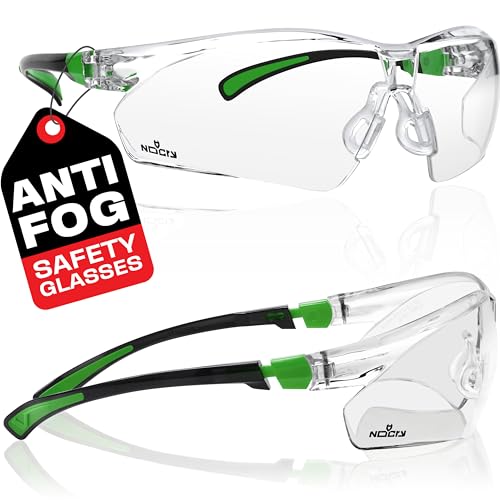
Best for: DIY projects and workshop tasks
These clear safety glasses use wraparound polycarbonate lenses to cover the front and sides of your eyes. They carry an ANSI Z87.1 certification and block 100% of UV radiation. That makes them suitable for woodworking, construction, lab work, and other tasks where flying debris or dust may pose a risk. The clear lenses preserve natural color, but they do not darken bright surroundings.
Fit is more flexible than on basic shop eyewear. The temples extend, while the soft nose pad adjusts to different faces. Rubber grips help keep the frame in place during movement. NoCry says its lens coating provides five times more fog resistance and twice the scratch resistance of standard clear protective glasses. Those figures come from the manufacturer, so real results can depend on cleaning and storage. A lifetime warranty adds useful backup if the glasses develop a covered problem. At around $15, they offer several fit adjustments without moving into a higher price range.
Pros
- Wraparound polycarbonate lenses help protect against front and side impacts.
- Adjustable temples, nose pad, and rubber grips support a more secure fit.
- Clear lenses block 100% of UV radiation and work in low-light areas.
Cons
- Clear lenses do not reduce glare or visible brightness like tinted safety glasses.
- Anti-fog and scratch-resistant coatings can wear down with abrasive cleaners or rough storage.
5. Lensless Classic Pickleball Glasses

Best for: Court players wanting lens-free protection
This gray, classic-style eyewear uses an open, lensless design for pickleball, tennis, squash, racquetball, and badminton. Without lenses, there is less material to fog or create glare and visual distortion. The open layout also keeps peripheral court movement easy to track during quick exchanges. At around $25, it offers a lower-cost way to add basic eye protection to a sports bag.
The frame uses flexible, impact-resistant TR90 plastic, which helps it handle stray-ball contact without adding much weight. Adjustable nose pads and temple tips let you fine-tune the fit, while the non-slip design aims to keep the glasses steady during side-to-side movement and dives. A rigid-shell case comes with the eyewear for storage and transport. Still, the product has no lenses or shields across the eye area, so coverage is more limited than sealed sports goggles. The listing also gives no frame dimensions, making fit harder to predict before purchase.
Pros
- Lensless construction reduces common fog, glare, and distortion concerns.
- Adjustable nose pads and temple tips support a more secure fit.
- Rigid case protects the frame inside a gym bag or luggage.
Cons
- The open design leaves more eye area exposed than wraparound goggles.
- No frame measurements are listed, so the fit may be uncertain for some faces.
4. NoCry Clear Safety Glasses

Best for: Nursing, lab, and dental work
NoCry’s clear safety glasses use a wraparound polycarbonate frame to cover the front and sides of the eyes. They carry an ANSI Z87.1 rating and provide UV380 protection, which the manufacturer says blocks 100% of harmful ultraviolet radiation. At around $17, they offer a low-cost option for clinical work, home projects, and construction tasks.
The fit is more adjustable than many basic protective glasses. Each arm extends, while the soft nose pad can be repositioned for better comfort. Rubber grips help keep the frame from sliding during movement. The lenses also have anti-fog and anti-scratch coatings. NoCry claims the fog resistance is five times better and scratch resistance twice as strong as its comparison standard. Those figures come from the manufacturer, not independent testing. The clear lenses are designed to avoid optical distortion, but the glasses do not replace prescription eyewear.
Pros
- Wraparound polycarbonate construction protects against front and side hazards.
- Adjustable arms, a soft nose pad, and rubber grips support a more secure fit.
- ANSI Z87.1 rating and UV380 protection suit work, medical, and outdoor tasks.
Cons
- Anti-fog coating can still struggle in humid conditions or during prolonged mask use.
- The glasses are protective eyewear, not prescription safety glasses, so users needing vision correction may need another option.
3. TICONN Anti-Fog Safety Glasses

Best for: Dusty job sites and outdoor shooting
The TICONN 1PK safety glasses use polycarbonate lenses with an ANSI Z87.1 rating for impact protection. They are designed to guard against flying particles and debris in construction areas, workshops, labs, and outdoor tasks. A wraparound shape also adds side coverage, which suits airsoft, target practice, cycling, and gardening. The lenses block 99.9% of harmful UV rays, helping reduce glare in bright conditions.
The main draw is the adjustable fit. The temples change in angle and length, while rubber nose pads and temple tips help keep the frame in place. An anti-fog coating is intended for humid, hot, and cold conditions, so the lenses should stay clearer than basic protective eyewear. Buyers can choose clear, yellow, or gray lenses for different lighting needs. At around $12, this single-pair option offers useful coverage for routine work and outdoor activities, though fit and fog resistance can vary by face shape and conditions.
Pros
- ANSI Z87.1-rated polycarbonate lenses provide impact protection from particles and debris.
- Adjustable temples, rubber nose pads, and soft tips support a more secure fit.
- Wraparound lenses and 99.9% UV protection suit bright outdoor work and shooting activities.
Cons
- The package contains one pair, so there is no backup if the glasses are misplaced or damaged.
- A wraparound frame may feel tight or leave gaps on some face shapes, despite the adjustable temples.
2. 2Hands Pickleball Lens-Free Glasses

Best for: Pickleball players needing eye coverage
The 2Hands Pickleball Lens-Free Glasses use a protective frame instead of traditional lenses. That open design avoids fogging, smudges, and lens distortion while keeping airflow around the eyes. The extended wrap-around shape covers the sides, and its hollowed-out structure helps shield against pickleballs, wind, and loose court debris. A wider opening and thinner frame improve sightlines during quick rallies.
The frame combines high-impact polycarbonate, or PC, with flexible TR90 material. Rubber arms and adjustable nose pads help keep the glasses in place without adding much weight. The lens-free build also makes them easier to wipe clean, though it does not provide tinted glare reduction or a prescription option. The product is listed as meeting ASTM F3164 specifications and passing ANSI Z87 high-velocity impact testing. At around $45, it costs more than basic sports eyewear but focuses on open visibility and impact protection.
Pros
- Lens-free construction avoids fogging, smudges, and visual distortion.
- Wrap-around PC and TR90 frame provides side coverage and impact resistance.
- Adjustable nose pads and flexible rubber arms support a steadier fit.
Cons
- No lenses means no built-in sun tint, UV claim, or prescription correction.
- The open frame may not block fine dust as fully as sealed protective eyewear.
1. NoCry Safety Glasses

Best for: Workshops, yardwork, and lab tasks
NoCry safety glasses use clear polycarbonate lenses with a wraparound shape. That design covers the front and part of each side, while ANSI Z87.1 certification supports their use for many workplace and home projects. The lenses also block 100% of UV radiation, which helps during outdoor work. At around $14, they cost less than many specialized protective eyewear options.
The standout feature is adjustability. The temples extend, and the soft nose pad moves to help create a more stable fit. Rubber grips on the arms can reduce slipping during movement. NoCry says its lens coating provides five times more fog resistance and twice the scratch resistance of standard clear protective glasses, though real results can vary with cleaning and storage. The glasses come with a lifetime warranty that covers replacement or a refund for product issues.
Pros
- Polycarbonate wraparound lenses help cover front and peripheral areas.
- Adjustable temples, nose pad, and rubber grips support a more secure fit.
- Clear lenses provide 100% UV protection and ANSI Z87.1 certification.
Cons
- The clear lenses do not provide sun tint or strong glare reduction outdoors.
- Wraparound frames may feel tight or fail to fit comfortably over some prescription glasses.
Buying Guide
The most important factor is impact protection. A pickleball can travel fast enough to injure an eye, so choose eyewear with full coverage and a recognized safety rating.
- Impact rating: Look for ANSI Z87.1 marking in the United States or EN166 certification in Europe. Avoid casual sunglasses with no safety standard.
- Coverage and fit: Choose lenses at least 2 inches wide, with side protection and a frame that stays within 1/4 inch of your face. Adjustable nose pads and temple arms help limit movement.
- Lens clarity: Pick clear or lightly tinted lenses for indoor courts. Outdoor players can use gray or brown lenses, ideally with 100% UVA and UVB protection. Avoid dark lenses indoors.
- Fog control: Select anti-fog lenses with ventilation gaps or channels. A replaceable anti-fog coating is useful if you play for 2 or more hours per session.
- Comfort and value: Keep the frame under 1.5 ounces when possible, and check for soft rubber contact points. Basic certified pairs cost about $15 to $30, while prescription-ready models often cost $40 to $100.
If you must compromise, prioritize certified impact protection and a secure fit over tint, styling, or the lowest price.
Frequently Asked Questions
How do I choose protective glasses for pickleball?
Choose protective glasses with impact-rated lenses, a secure fit, and full eye coverage for pickleball. Look for polycarbonate lenses, wraparound side protection, and an adjustable nose bridge that stays in place during quick rallies. A lightweight frame under 30 grams can feel more comfortable during a two-hour session.
What should pickleball safety eyewear have?
Pickleball safety eyewear should have shatter-resistant lenses, side coverage, a snug fit, and clear vision without distracting glare. Polycarbonate is a common lens material, while rubber nose pads or temple grips can reduce slipping. Check that the frame does not block peripheral vision when tracking shots near your shoulder.
Can regular sunglasses protect my eyes during pickleball?
No, regular sunglasses may reduce glare, but they are not designed to stop a fast pickleball from reaching your eye. Choose sports eyewear with impact-rated lenses and side protection instead. A ball can cross the court quickly, so thin fashion lenses provide less protection during close play.
Are clear or tinted lenses better for pickleball?
Clear lenses work best in low light, while tinted lenses suit bright outdoor courts, so neither option is always better for pickleball. Gray or brown tints can reduce glare without heavily changing colors. For indoor play, clear lenses usually work better, while a light tint can help under bright midday sun.
Conclusion
NoCry Safety Glasses are the top pick for pickleball players who want affordable, clear protective eyewear with a practical fit for regular recreational games. If your priority is maximum coverage during fast rallies, choose a wraparound pair with side protection and an adjustable nose piece instead. Before buying, double-check the frame size, compatibility with prescription lenses or face coverings, package quantity, and current price. Good court eyewear should stay secure when you move, avoid distracting glare, and cover the eyes without pressing against your cheeks. Look for impact-rated lenses, not simple fashion sunglasses. A clear or lightly tinted lens often works best indoors, while darker lenses can help outside. Pick the pair you will actually wear every match.