
6 Best Steel Toe Boots for Mechanics on a Budget
ANGRYRAM Slip-On Steel Toe Work Boots are the best steel toe boots for mechanics for most buyers because their slip-on design makes them quick to put on while still adding steel-toe protection. They suit garage work, shop floors, and short trips between tasks without the fuss of laces.
This guide is for mechanics who need work shoes for concrete floors, dropped tools, oil, and long shifts. Fit matters first, especially toe-room and heel hold. The upper material and outsole matter too, since grease, metal scraps, and repeated bending can wear down weak construction. Comfort also affects how practical a pair feels after eight or more hours. The 6 picks below are ranked with reasons and honest drawbacks for each, so you can compare protection, fit, upkeep, and daily wear before choosing.
Quick Comparison
| # | Product | Best For | Price | |
|---|---|---|---|---|
| 1 | ANGRYRAM Slip-On Steel Toe Work Boots | Slip-On Worksite Commuters | ~$50 | View → |
| 2 | 6" Moc Steel Toe Work Boots | Moc-Toe Workshop Workers | ~$56 | View → |
| 3 | Timberland PRO Pit Boss 6-Inch Steel Toe Work Boot | Heavy-Duty Construction Crews | ~$110 | View → |
| 4 | NINGO Steel Toe Work Boots | Budget-Conscious Warehouse Staff | ~$70 | View → |
| 5 | NOLINSHIELD Steel Toe Work Boots | Outdoor Utility Workers | ~$63 | View → |
| 6 | DRKA 19977 Steel Toe Work Boots | Everyday Industrial Shift Workers | ~$43 | View → |
6 Top Steel Toe Boots for Mechanics
These ranked steel toe boots are listed from sixth down to the top pick, with mechanic-focused features and trade-offs noted.
6. DRKA 19977 Steel Toe Work Boots

Best for: construction crews needing budget protection
The DRKA 19977 is a 6-inch work boot with a steel toe, full-grain leather upper, and rubber lug outsole. It carries an EH rating under ASTM F2413-18, offering secondary protection from open electrical circuits up to 600 volts in dry conditions. That makes it suited to construction, utility, warehouse, and general industrial work. At around $43, it targets buyers who need core safety features without a high price.
Its strongest combination is protection and basic weather resistance. The leather and constructed seams help block puddles and light rain, while the breathable lining can reduce trapped moisture during long shifts. Heavy-duty stitching at high-stress areas should help with routine job-site wear. The lug pattern also provides useful traction across common work surfaces, though grip can still vary with mud, oil, ice, or smooth floors. This is a practical boot, not a replacement for job-specific footwear or electrical safety procedures.
Pros
- EH-rated protection meets ASTM F2413-18 requirements for dry electrical hazards up to 600 volts.
- Full-grain leather and sealed seams help resist puddles and light rain.
- Steel toe and slip-resistant rubber lugs suit construction and industrial work.
Cons
- Water resistance does not make these boots waterproof for heavy rain, deep puddles, or prolonged exposure.
- Steel-toe boots can feel heavier and less flexible than non-safety work shoes.
5. NOLINSHIELD Steel Toe Work Boots

Best for: Warehouse and mechanic work
NOLINSHIELD’s brown work boots combine a steel toe cap with a puncture-resistant Kevlar midsole. The listed size is 9.5, and the slip-on design avoids laces when you need to change footwear quickly. Microfiber leather forms the upper, giving these boots a lighter feel than many traditional leather safety shoes. The material is water-repellent, slip-resistant, and designed to resist aging.
The standout feature is the layered protection. The steel toe helps guard against dropped tools and other heavy objects, while the Kevlar layer helps block sharp hazards such as nails and steel fragments. A soft, breathable insole adds comfort during long shifts, although the listing does not provide a specific cushioning rating or wear duration. The boots fit construction, manufacturing, warehouse, and mechanic settings. At around $63, they cost more than basic casual work shoes but include protection for both impact and puncture risks.
Pros
- Steel toe protection helps shield feet from falling equipment.
- Kevlar midsole resists punctures from nails and metal debris.
- Slip-on construction and a soft, breathable insole support quick changes and longer workdays.
Cons
- Slip-on boots offer less fit adjustment than lace-up designs.
- Water-repellent microfiber leather is not the same as waterproof construction, so wet-condition protection may be limited.
4. NINGO Steel Toe Work Boots
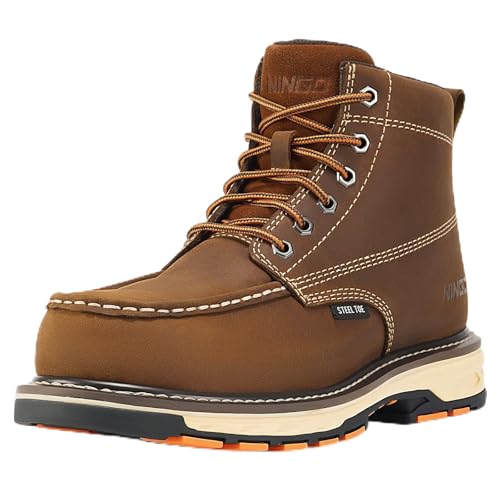
Best for: Construction and warehouse workers
The NINGO Steel Toe Work Boots combine a classic moc-toe shape with job-site protection. Their ASTM F2413-24 steel toe cap helps guard against heavy impacts, while a built-in puncture-resistant plate blocks hazards such as nails, metal shards, and broken glass. The black leather upper resists rain and spills, but it is not fully waterproof. At around $70, these boots offer a practical mix of protection and everyday comfort.
A multi-directional lug rubber outsole provides traction on wet or greasy floors, which suits warehouses, farms, roofing jobs, and workshops. The boots also include electrical hazard protection to reduce the risk of shock and static buildup near live equipment. Goodyear welt stitching supports long-term wear and easier repair than many cemented soles. Inside, a memory foam insole softens the feel during long shifts. Still, the steel toe and protective plate add weight and stiffness compared with regular work shoes.
Pros
- ASTM F2413-24 steel toe cap protects against workplace impacts.
- Puncture-resistant plate shields feet from nails and sharp debris.
- Lugged rubber outsole grips wet and oily surfaces.
Cons
- Steel-toe construction may feel heavier and less flexible than soft-toe boots.
- Water-resistant leather helps repel moisture, but heavy rain can still reach the feet.
3. Timberland PRO Pit Boss 6-Inch Steel Toe Work Boot

Best for: Daily construction and warehouse shifts
The Timberland PRO Pit Boss is a six-inch brown work boot with a steel safety toe and electrical hazard protection. Its toe cap uses an asymmetrical shape and meets ASTM F2412-18a and ASTM F2413-18 impact and compression standards. The electrical hazard rating adds secondary underfoot protection around energized circuits and meets ASTM F2412-18a, ASTM F2413-18, and ASTM F2892-18 standards. At around $110, it targets buyers who need certified protection without moving into premium pricing.
The built-in comfort system supports the arch and cushions each step during long workdays. Timberland says its design aims to reduce foot fatigue across 24-hour, seven-day work demands. A heat-resistant rubber outsole adds slip, oil, and abrasion resistance for industrial floors. The boot also uses ReBOTL material in some components, with at least 50% recycled PET, excluding trace materials. These details make it practical for demanding job sites, but the steel toe and six-inch build may feel substantial compared with lighter safety shoes.
Pros
- Steel toe meets ASTM impact and compression standards.
- Electrical hazard protection adds secondary underfoot coverage.
- Rubber outsole resists heat, oil, slipping, and abrasion.
Cons
- Steel construction can weigh more than composite-toe footwear.
- The six-inch boot may feel stiff during the break-in period.
2. 6″ Moc Steel Toe Work Boots

Best for: Budget-conscious construction and outdoor work
These 6-inch black moc work boots combine a leather upper with a steel toe cap for jobs that involve wet ground, falling objects, and rough surfaces. This listing is for men’s size 10.5, with other sizes possibly available. At around $56, they target buyers who want several safety features without paying premium work-boot prices.
The safety package includes a Kevlar midsole and a polyester sandwich layer to help resist punctures and crushing hazards. A rubber outsole uses a tread designed for grip on wet or dirty ground, while an EVA layer adds cushioning underfoot. Inside, the memory foam massage insole and soft fabric lining should make long shifts more manageable. The leather is described as waterproof, but no water-depth rating or test duration is provided, so these boots are better suited to splashes and wet work areas than extended submersion. The listed ASTM F2413-24 compliance is useful, though buyers should confirm the seller’s documentation if formal job-site certification matters.
Pros
- Steel toe, Kevlar midsole, and protective polyester layer cover several common job-site hazards.
- Waterproof leather helps block dust and water splashes during outdoor tasks.
- Rubber outsole and EVA cushioning combine traction with softer step-in comfort.
Cons
- The listing gives no waterproof test rating, so prolonged exposure to deep water remains uncertain.
- Steel-toe boots can feel heavier and less flexible than ordinary leather work shoes.
1. ANGRYRAM Slip-On Steel Toe Work Boots

Best for: Quick-change worksite and farm footwear
The ANGRYRAM Slip on Steel Toe Work Boots are safety shoes for jobs that involve wet floors, falling objects, and ground hazards. They use a steel toe cap built to the ASTM F2413-18 standard, plus a puncture-resistant midsole beneath the foot. The design is waterproof, making it useful for outdoor work, maintenance, landscaping, and warehouse tasks.
The slip-on shaft removes the need to tie laces during every change. That saves time, but it also gives you less control over fit than a laced boot. The outsole combines PU and TPU materials with a patterned tread for traction on slick surfaces. At around $50, these boots offer several jobsite-focused features for a modest price. Still, buyers should check the size chart carefully. A steel toe must fit securely without pressing against the toes, and the brand’s fit can vary by foot shape.
Pros
- ASTM F2413-18 steel toe protection helps guard against impact and compression hazards.
- PU and TPU outsole materials, plus patterned tread, support traction on wet floors.
- Slip-on construction allows faster changes than traditional lace-up work boots.
Cons
- Slip-on styling provides less fit adjustment around the ankle and instep.
- Steel toe construction may feel heavier and less flexible than casual work shoes.
Buying Guide
Choose fit first when buying steel-toe work boots for a shop. A secure heel, roomy toe box, and 12–15 mm of space ahead of your longest toe can reduce fatigue during 8–12-hour shifts and limit pressure on your feet.
- Safety rating: Look for ASTM F2413 compliance and a clearly marked steel toe. If sharp scrap is common, choose a pair with an ASTM-rated puncture-resistant plate.
- Slip protection: Select oil- and slip-resistant rubber outsoles with deep tread, especially for shops where coolant, grease, or brake fluid reaches the floor.
- Boot height: An 6–8-inch shaft offers useful ankle coverage without the bulk of taller logger boots. A padded collar can reduce rubbing against coveralls.
- Materials and build: Full-grain leather handles abrasion better than thin synthetic uppers. A stitched or welted sole can also be easier to resole than a bonded design.
- Comfort and fit: Choose removable insoles, moderate arch support, and enough width for work socks. Keep total boot weight near 2.5–4 pounds per pair if you walk frequently.
If you cannot have everything, prioritize correct fit and certified toe protection, since comfort cannot compensate for a poor safety rating.
Frequently Asked Questions
How should steel toe boots fit for mechanic work?
Steel toe boots for mechanic work should fit snugly at the heel and midfoot, with about half an inch of room beyond your longest toe. Try them with work socks and check that the toe cap does not press your toes when kneeling. A wide-size option can help if your feet swell during long shifts.
What features matter most in work boots for mechanics?
Mechanics should prioritize a protective toe, slip-resistant outsole, firm heel support, and materials that tolerate oil and water. An oil-resistant rubber outsole, padded collar, and reinforced stitching can improve daily durability. Look for a heel with a stable base and enough tread depth for wet shop floors. For kneeling, flexible uppers and a cushioned insole often matter more than height.
Can steel toe boots be comfortable for all-day garage work?
Yes, steel toe boots can be comfortable for all-day garage work when the size, footbed, and cushioning suit your feet. Look for a removable insole, breathable lining, and enough flex at the ball of the foot. A 10-hour shift puts pressure on the heel and forefoot, so stable support and moisture control matter as much as the toe rating.
Are waterproof safety boots a good choice for mechanics?
Yes, waterproof safety boots are a good choice for mechanics who work around coolant, rain, or wet floors, but they can feel warmer than unlined leather boots. Choose a pair with sealed seams, a gusseted tongue, and an oil-resistant outsole. If your shop stays dry and hot, water-resistant leather may provide better airflow than a fully waterproof design.
Conclusion
ANGRYRAM Slip-On Steel Toe Work Boots are the top pick for mechanics who want quick changes, straightforward protection, and a practical boot for shop or garage work. If long-shift comfort matters more than fast entry, choose a fitted lace-up work boot instead, since its closure can hold your heel more securely. Before buying, double-check the size chart, toe-cap compatibility with workplace rules, the number of boots included, and the current price. Check your work socks and toe room, too, especially if feet swell during long shifts. Steel toes protect against impact and compression, but they do not replace careful lifting habits or safe shop procedures. Pick the pair that matches your tasks, foot shape, and budget.