
5 Best Ear Protection for Chainsaws on a Budget
The DeWalt DPG62-C Interceptor Safety Earmuff is the best ear protection for chainsaws for most buyers because its adjustable fit and 25 dB noise reduction provide solid coverage without batteries or complicated controls. This over-the-head model keeps the design simple, which suits yard work, storm cleanup, and occasional firewood cutting. Its main tradeoff is bulk. It may feel warm during long sessions and can interfere with some hard hats or eyewear.
This guide is for homeowners, property managers, and occasional saw users who need hearing protection that stays comfortable during noisy outdoor work. The most important factors are a secure ear seal, a suitable noise-reduction rating, and enough adjustment for your head and other safety gear. The five picks below are ranked with clear reasons and honest drawbacks for each, so you can choose a suitable pair for your work routine.
Quick Comparison
| # | Product | Best For | Price | |
|---|---|---|---|---|
| 1 | DeWalt DPG62-C Interceptor Safety Earmuff | Best For General Jobsite Hearing Protection | ~$23 | View → |
| 2 | Husqvarna Professional Headband Hearing Protectors | Best For Forestry Professionals | ~$31 | View → |
| 3 | NoCry 6-in-1 Industrial Chainsaw Helmet | Best For Chainsaw Safety Gear | ~$40 | View → |
| 4 | Oregon Chainsaw Earmuffs | Best For Outdoor Cutting Tasks | ~$15 | View → |
| 5 | Floriogra Noise Reduction Ear Muffs | Best For Budget Noise Reduction | ~$10 | View → |
5 Top Ear Protectors for Chainsaw Work
This ranked list counts down from solid budget options to the top pick for louder, longer chainsaw sessions.
5. Floriogra Noise Reduction Ear Muffs

Best for: Lawn work, fireworks, and study
Floriogra’s noise reduction ear muffs provide passive hearing protection for loud, short-term environments. The manufacturer lists a 34dB NRR and says the design meets ANSI safety standards. An ABS outer shell, steel-wire adjustment band, and padded ear cups form the main structure. The red finish adds visibility, while the foldable frame makes storage easier in a backpack or gym bag.
The ear cushions use high-density foam with synthetic PU leather covering. Large cups are designed to fit different ear shapes, and a bottom vent may reduce pressure during longer sessions. The adjustable band is intended for both children and adults, though fit will depend on head size. At around $10, these are a low-cost option for mowing, construction areas, shooting ranges, flights, sports events, or fireworks. They reduce outside noise, but they do not provide electronic noise cancellation or music playback.
Pros
- A listed 34dB NRR offers substantial passive noise reduction for loud activities.
- Adjustable steel wiring and spacious cups support a wider range of head and ear sizes.
- Folding hinges make the muffs easier to carry and store.
Cons
- These are passive protectors, so they cannot play audio or actively cancel changing sounds.
- Thick foam ear cups may feel warm during extended wear, especially in hot weather.
4. Oregon Chainsaw Earmuffs
Best for: Homeowners using chainsaws and yard tools
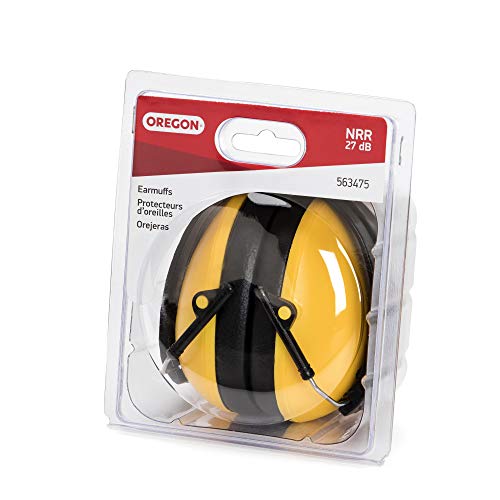
The Oregon Chainsaw Earmuffs are over-ear hearing protectors for loud outdoor equipment, including chainsaws, trimmers, and leaf blowers. Their yellow finish makes them easy to spot in a garage or tool shed. The headband adjusts for a secure fit, while the sliding ear cups help align each cap over your ears. This design suits users who prefer earmuffs over disposable earplugs.
The main specification is an adjustable 27 dB noise reduction rating. Oregon says the earmuffs were tested under ANSI S12.42-2010, a standard for hearing protection performance. They fold down for compact storage, which helps when space is limited in a toolbox or vehicle. Around $15, they offer a low-cost option for occasional yard work. Still, the rating does not mean every sound becomes 27 dB quieter, and proper ear coverage matters.
Pros
- Adjustable ear cups help create a better fit around different ear positions.
- The 27 dB noise reduction rating suits many loud yard tools.
- Folding construction takes up less room during storage or transport.
Cons
- Over-ear cups can become warm during long outdoor sessions, especially in hot weather.
- They may make conversation and environmental sounds harder to hear while worn.
3. NoCry 6-in-1 Industrial Chainsaw Helmet

Best for: Homeowners clearing brush and firewood
This NoCry forestry helmet combines head, face, and hearing protection in one setup. It includes a hard hat, metal mesh visor, clear polycarbonate shield, and adjustable ear muffs rated at 25.9 dB SNR. The headgear fits head sizes from 21.2 to 24.4 inches, and it can fit over glasses or a mask.
The standout feature is its six configuration options. You can change visor type, angle, and depth, then rotate the ear cups behind your head when they are not needed. The hard hat is ANSI Z89.1 Type I certified for Class E, G, and C settings. The visors carry ANSI Z87.1 ratings, while the ear protection meets ANSI S3.19 standards. At around $40, it offers broad coverage for occasional chainsaw work, landscaping, trimming, and construction tasks.
Pros
- Six configurations let you switch between mesh and clear visors.
- The 21.2-to-24.4-inch adjustment range fits many adult head sizes.
- Ear muffs rotate out of the way and provide 25.9 dB SNR protection.
Cons
- The mesh visor is not sealed, so dust and fine debris can still reach the face.
- The combined helmet, visor, and ear muffs may feel bulky during long work sessions.
2. Husqvarna Professional Headband Hearing Protectors

Best for: Chainsaw and mower users
The Husqvarna Professional Headband Hearing Protectors are over-ear muffs for outdoor power equipment. This package includes one pair in a one-size-fits-most design. The flexible, padded headband keeps the weight spread across the top of your head, while the clamshell ear cups cover both ears. They are made for use with chainsaws, trimmers, blowers, and lawn mowers.
The main feature is the 25 dB(A) noise reduction rating. That level can reduce exposure to loud equipment, but it does not block every sound or replace safe operating habits. The lightweight build should work well for longer yard jobs, though comfort will still depend on head size and fit. Around $31, these protectors cost more than basic foam earplugs but offer reusable, full-ear coverage. The black finish is simple and suited to work gear.
Pros
- 25 dB(A) NRR helps reduce noise from chainsaws, mowers, blowers, and trimmers.
- Padded, flexible headband provides a more comfortable fit than rigid headbands.
- Clamshell ear cups cover the ears for reusable outdoor hearing protection.
Cons
- One-size-fits-most sizing may not fit every head equally well.
- The 25 dB(A) rating reduces noise but does not make loud equipment quiet or replace other safety gear.
1. DeWalt DPG62-C Interceptor Safety Earmuff

Best for: Yard work and shop noise
The DeWalt DPG62-C Interceptor is an adult safety earmuff for loud tasks around the home, workshop, or jobsite. Its Noise Reduction Rating is 29, which provides strong protection against many common equipment sounds. The yellow and black finish is easy to spot, while the lightweight build helps reduce pressure during long work sessions. Padded ear cups add a softer contact point around the ears.
Its folding design is the main practical advantage. Folded cups take up less room in a toolbox or storage bin, and the closed shape helps keep dust and debris away from the cushions. That makes this pair more convenient to store than a fixed-frame hearing protector. At around $23, it offers a low-cost option for people who need hearing protection for mowing, woodworking, or basic construction tasks. Still, an NRR of 29 does not make loud equipment harmless. Fit matters, and users should follow proper hearing-safety practices around high-noise tools.
Pros
- NRR 29 provides substantial noise reduction for many household and workshop tasks.
- Lightweight construction supports longer wear than heavier earmuffs.
- Folding ear cups make storage easier and help shield the cushions from dust.
Cons
- Earmuffs can feel warm around the ears during extended use, especially in hot conditions.
- They take more space than disposable earplugs, even when folded.
Buying Guide
The most important factor is verified noise reduction, measured by the product’s NRR. Chainsaws can produce about 100 to 115 dBA near the operator, so a poor fit can leave hearing at risk even when muffs look substantial.
- Noise rating: Choose earmuffs with an NRR of 25 to 31 dB, or pair them with foam plugs rated at 30 dB or higher for especially loud work.
- Fit and adjustment: Look for a padded, adjustable headband that fits head sizes from roughly 20 to 24 inches. Cushions should fully surround both ears without gaps.
- Helmet compatibility: If you wear a forestry helmet, choose clip-on muffs made for helmet slots, typically 30 mm mounts. Headband models can interfere with the brim or straps.
- Weather resistance: Pick sealed, sweat-resistant cushions and corrosion-resistant hardware for outdoor use. Replace cracked cushions after 6 to 12 months, or sooner if they lose their seal.
- Communication and power: Bluetooth models suit users who need calls or audio, but check for at least 20 hours of battery life. Basic passive muffs often cost $15 to $40 and need no charging.
If you can choose only one factor, prioritize a close, comfortable fit, because the printed rating means little when sound leaks around the ears.
Frequently Asked Questions
How much noise reduction do chainsaw ear protectors need?
Choose hearing protection rated at least NRR 25 dB for routine chainsaw use, with higher-rated options helpful around louder saws or long sessions. A chainsaw can produce roughly 100 to 115 dB near the operator, so earmuffs with an NRR of 25 to 31 dB offer a practical starting point.
What is better for chainsaw work, earmuffs or earplugs?
Earmuffs are usually better for chainsaw work because they are easier to fit correctly and cover both ears at once. Foam earplugs can provide strong protection, but poor insertion reduces their benefit. A practical setup uses correctly fitted plugs with muffs around loud saws, while keeping the seal clear of hair, glasses, and hat bands.
Can I use regular earbuds as hearing protection for a chainsaw?
No, regular earbuds are not a safe substitute for certified hearing protection because they usually lack an NRR or SNR rating. Choose passive plugs, earmuffs, or electronic defenders marked for hearing protection. For example, an electronic pair may block hazardous noise while allowing speech, but its rating still matters.
Are Bluetooth ear protectors safe around chainsaws?
Bluetooth ear protectors can be safe for chainsaw work when they have a published hearing-protection rating, fit securely, and do not distract you from nearby hazards. Check the battery before cutting. A model rated NRR 25 dB or higher can provide wireless audio without relying on music volume to mask noise.
Conclusion
The DeWalt DPG62-C Interceptor Safety Earmuff is the strongest fit for chainsaw users who want a straightforward, over-the-ear option for routine cutting, trimming, and property work. If your priority is hearing conversations, alerts, or audio while working, pick an electronic earmuff with amplification and a listed noise-reduction rating instead, since passive muffs block sound without separating speech from louder equipment. Before buying, double-check the size range, helmet or face-shield compatibility, package quantity, and current price, since listings can vary and some bundles show one pair while others include multiple units. A snug seal matters most, so avoid any model that leaves gaps around your ears or feels loose during movement.