
6 Best Chainsaw Helmet Forum Picks for Safe Buying
For readers searching for the best chainsaw helmet forum, Oregon Chainsaw Safety Helmet with Visor is the top pick for most buyers. Its main advantage is simple: one setup combines head, face, and hearing protection for routine chainsaw work. That broad coverage can reduce the need to buy and adjust separate safety gear, while the visor keeps flying chips away from the face.
This guide is for homeowners, property managers, and occasional tree-cutting users who need practical protection without sorting through dozens of models. The key factors are a secure, adjustable fit, useful visor coverage, durable helmet materials, and hearing protection that stays comfortable during longer jobs. Weight matters too, since a bulky shell can become tiring when clearing branches. The six picks below are ranked with reasons and honest drawbacks for each.
Quick Comparison
| # | Product | Best For | Price | |
|---|---|---|---|---|
| 1 | Oregon Chainsaw Safety Helmet with Visor | Home Firewood Cutting | ~$26 | View → |
| 2 | Forestry Chainsaw Safety Helmet | Professional Forestry Crews | ~$55 | View → |
| 3 | NoCry 6-in-1 Industrial Chainsaw Helmet | Multi-Tasking Yard Workers | ~$40 | View → |
| 4 | NoCry Arborist Helmet | Tree Climbing Arborists | ~$55 | View → |
| 5 | Husqvarna 592752602 Chainsaw Helmet | Husqvarna Tool Owners | ~$60 | View → |
| 6 | GREEN DEVIL Chainsaw Safety Helmet | Budget-Conscious Property Owners | ~$42 | View → |
6 Top Chainsaw Helmet Picks
This ranked list moves from solid alternatives to the top chainsaw helmet pick, helping you compare protection, comfort, and useful features.
6. GREEN DEVIL Chainsaw Safety Helmet

Best for: Homeowners doing seasonal tree work
The GREEN DEVIL forestry helmet combines head, face, eye, and hearing coverage in one setup. Its impact-resistant ABS shell includes a six-point suspension system, chin strap, ventilation holes, and adjustable sizing from 53 to 63 cm. That range should fit many adults, though head shape still affects comfort. Around $42, it costs less than buying each protection piece separately.
The main standout is the two-layer face protection. A flip-up metal mesh shield helps block branches, wood chips, and larger debris, while the clear inner visor adds eye coverage. Both sections move up or down. Built-in ear muffs complete the kit for chainsaw, hedge trimmer, and brush-cutter work. A sweat-wicking liner and drawstring storage bag add useful extras for outdoor jobs. The listing says the helmet meets ANSI/ISEA Z89.1-2014 Type I, Class C requirements. It also lists ANSI S3.19 for the ear muffs and ANSI Z87.1-2015 and CE EN 1731 for the face protection.
Pros
- Combines a helmet, mesh shield, clear visor, and ear muffs in one purchase.
- Six-point suspension, vents, liner, and chin strap support longer work sessions.
- Adjustable 53–63 cm fit covers many adult head sizes.
Cons
- Metal mesh does not seal around the face, so fine dust and small particles may pass through.
- The one-size design cannot provide a tailored fit for every head shape.
5. Husqvarna 592752602 Chainsaw Helmet

Best for: Homeowners cutting firewood and brush
The Husqvarna 592752602 combines head, face, and hearing protection in one forestry helmet. It has an HDPE shell, a metal mesh face shield, adjustable ear muffs, and a sun peak. The package does not include a neck guard, so that accessory requires a separate purchase. At around $60, it costs more than basic hard hats but less than many complete professional forestry setups.
Fit adjustment is a strong point. Its six-point textile suspension offers three depth settings, while the slip ratchet changes the overall fit quickly. The vertical and sideways ear-muff adjustments help position the cups without excessive pressure. They carry a 24dB NRR rating under ANSI S3.19-1974. An etched, lightweight visor supports visibility, and the Egyptian cotton sweatband uses a porous coating to absorb moisture. The materials are pH neutral and dermatologically tested. The helmet is rated Class E and listed to meet ANSI Z89.1-2014 Type I requirements for industrial head protection.
Pros
- Six-point suspension and three depth settings allow a more precise fit.
- Adjustable 24dB NRR ear muffs provide hearing protection during cutting work.
- Metal mesh shield, visor, and sun peak cover several common outdoor hazards.
Cons
- The neck guard is not included, adding cost for fuller coverage.
- A metal mesh shield can limit fine visual detail compared with clear face protection.
4. NoCry Arborist Helmet
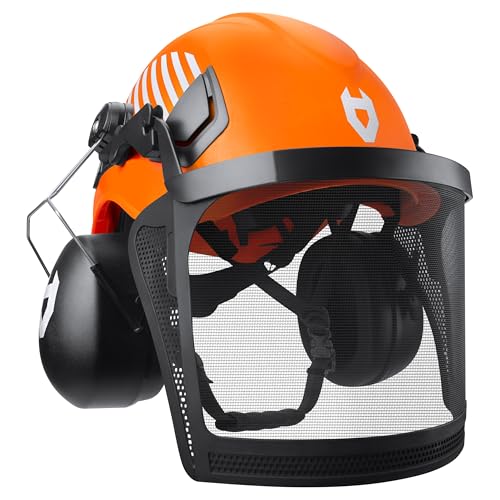
Best for: Homeowners pruning and cutting firewood
The NoCry arborist helmet combines an ABS hard shell, six-point suspension, face protection, and hearing protection in one setup. It carries an ANSI/ISEA Z89.1 Type 1 Class C rating. The steel mesh visor and side guards meet ANSI/ISEA Z87.1, helping shield the face from branches and flying debris while allowing airflow. Around $55, it costs less than buying each piece separately.
A rear vent opens or closes with a gloved hand, which helps manage heat and dust. The rear ratchet adjusts the fit, while the quick-release chin strap, forehead padding, and under-chin padding help keep the helmet steady. Built-in ear muffs provide a 22 dB NRR and flip behind the shell when you need to hear more. Headlamp holders and reflective details add useful extras for low-light work. The limited lifetime warranty is another reason to consider it for occasional property maintenance.
Pros
- Combines head, face, and hearing protection in one helmet.
- Six-point suspension, ratchet adjustment, and chin strap help prevent shifting.
- Adjustable rear ventilation and flip-up 22 dB ear muffs suit changing job conditions.
Cons
- The Class C rating does not provide electrical protection, so it is unsuitable for work near energized wiring.
- Steel mesh blocks larger debris but does not replace sealed goggles for fine dust, chemical splashes, or liquid particles.
3. NoCry 6-in-1 Industrial Chainsaw Helmet

Best for: Home firewood and brush clearing
The NoCry 6-in-1 Industrial Chainsaw Helmet combines a hard hat, face protection, and hearing protection in one setup. It includes a metal mesh visor for airflow and a clear polycarbonate shield for blocking chips and debris. The visor angle and depth can be adjusted, while the ear cups rotate behind the helmet when not needed. The headgear fits heads from 21.2 to 24.4 inches and can sit over glasses or a mask.
Its safety ratings cover the main components: ANSI Z89.1 for the Type I hard hat, ANSI Z87.1 for the visors, and ANSI S3.19 for the ear muffs. The muffs provide a listed 25.9 dB SNR reduction, useful around saws, trimmers, and other loud tools. Six configurations give this forestry helmet flexibility for logging, pruning, mowing, and DIY cleanup. At around $40, it costs less than buying separate head, eye, and ear protection. Still, demanding jobs may require task-specific gear.
Pros
- Six configurations let you switch between mesh and clear visors.
- Adjustable headgear fits 21.2- to 24.4-inch head sizes.
- Integrated ear muffs provide 25.9 dB SNR protection.
Cons
- Type I certification focuses on top impact, not side impact.
- The 25.9 dB hearing reduction may not cover every high-noise task.
2. Forestry Chainsaw Safety Helmet

Best for: Chainsaw and brush-clearing work
The GREEN DEVIL forestry helmet combines head, face, and hearing protection in one kit. It includes an ABS hard hat, metal mesh visor, removable earmuffs, and a chinstrap with a molded cup. The visor flips up for a clearer view and helps block branches and larger debris. The earmuffs carry a 25 dB NRR rating, which can reduce some chainsaw, trimmer, and engine noise. At around $55, it costs more than a basic hard hat but includes several job-specific accessories.
Fit adjustment is one of this helmet’s stronger points. Its six-point suspension fits heads from 53 to 63 cm, or about 20.86 to 24.80 inches. A one-handed dial lets users adjust the fit while wearing gloves. The replaceable Egyptian cotton sweatband adds a softer contact point, and sliding vents allow airflow changes in different weather. Orange coloring and reflective-style visibility panels help the helmet stand out in dim areas. The manufacturer lists ANSI Z89.1-2014 Type I compliance and CE approval, though buyers should confirm local workplace requirements before use.
Pros
- Includes a mesh visor, earmuffs, chinstrap, and hard hat in one package.
- Six-point suspension fits a wide 53 to 63 cm head range.
- Sliding vents and a removable sweatband support longer work sessions.
Cons
- Mesh protects against larger debris, but it does not replace safety glasses or a respirator.
- A 25 dB NRR rating may not provide enough protection for every high-noise worksite.
1. Oregon Chainsaw Safety Helmet with Visor

Best for: Homeowners cutting firewood and storm debris
This Oregon combo set pairs an impact-resistant helmet with a stainless steel mesh visor and cap-mounted ear cups. Six ventilation holes allow airflow around the head, while the six-point harness helps create a snug fit. The harness adjusts easily, and the sun peak detaches when you do not need it. Articulated ear cups can move into a more comfortable position around the ears.
The wider visor flips up or down, giving you a clear view when you need to inspect a cut or move between tasks. The helmet meets ANSI Z89.1-2009 Type I, Class C requirements. Class C helmets do not provide electrical protection, so this is not the right choice for utility work near live wiring. At around $26, it offers a practical three-piece setup for occasional chainsaw use. Still, the product information does not list an ear-muff noise reduction rating, which makes hearing protection harder to compare with dedicated earmuffs.
Pros
- Six ventilation holes improve airflow during longer cutting sessions.
- The stainless steel mesh visor flips up or down and covers more of the face.
- A six-point harness and adjustable ear cups help fine-tune the fit.
Cons
- Class C protection does not guard against electrical hazards.
- No noise reduction rating is listed for the included ear cups.
Buying Guide
Certification is the most important factor when choosing a chainsaw helmet. Look for recognized standards, because a helmet, visor, and ear defenders protect different areas.
- Safety standards: Choose a helmet marked EN 397 or ANSI Z89.1. The face screen should meet EN 1731, while ear defenders should carry EN 352 approval.
- Fit range: Measure head circumference and match the listed range, often 20.5 to 24.5 inches. The adjustment wheel should hold the shell firmly without pressure points.
- Face protection: Pick a metal-mesh visor with clear sightlines and a close-fitting seal or brow guard. A flip-up screen lets you inspect cuts without removing the helmet.
- Hearing protection: Select ear cups with an SNR rating of about 25 to 31 decibels, or an NRR near 22 to 25 decibels. Replace cracked cushions before noise leaks in.
- Weight and service life: Aim for a complete kit under 2.5 pounds if you work for several hours. Check shell replacement guidance, and replace the helmet after a hard impact, even without visible damage. Prices commonly range from $40 to $150.
If you cannot have everything, prioritize certified protection and a secure fit over comfort features or a lower price.
Frequently Asked Questions
How do I choose the best chainsaw helmet for my needs?
Choose a chainsaw helmet by checking its safety ratings, fit, visor, hearing protection, and replacement-part availability. Look for a secure six-point suspension, adjustable sizing, and markings for standards such as EN 397, EN 352, and EN 1731. A forum can help compare comfort, but certification should guide the final choice.
What should I look for in chainsaw helmet forum reviews?
The most useful chainsaw helmet forum discussions compare complete helmet kits, not shell color or brand popularity. Search for comments about visor fogging, earmuff pressure, balance, and fit with gloves. Pay attention to posts that mention several hours of wear, since a helmet comfortable for 30 minutes may feel different after a full work period.
Can a forestry helmet protect me during occasional chainsaw work?
Yes, a forestry helmet can work for occasional cutting, but only if its helmet, eye, hearing, and face protection meet the task’s requirements. A typical combination includes a vented shell, mesh visor, and earmuffs rated around 22 to 30 dB. Check local rules and replace damaged parts before use.
Are chainsaw helmets worth replacing after a few years?
Yes, replace a chainsaw helmet after a hard impact, visible damage, or the manufacturer’s stated service period. Many makers recommend replacing the shell after five years, even when it looks intact, because plastics and suspension parts age. Replace cracked visors, stretched straps, and damaged earmuffs sooner.
Conclusion
Oregon Chainsaw Safety Helmet with Visor is the top pick for homeowners and occasional users who want face, hearing, and head protection in one setup. If your priority is longer work sessions or a more adjustable fit, choose a model with a larger visor, replaceable parts, or a broader size range instead. Before buying, double-check the helmet size, compatibility with your saw and other protective gear, the package quantity, and the current price, since listings can change. Also confirm that the set includes the visor, earmuffs, and chin strap you expect. A helmet can reduce exposure to flying debris, but it cannot replace safe cutting technique, proper clothing, or routine equipment checks. Pick the set that matches your work.