
7 Best Wrist Alarm Clock for Heavy Sleepers
For most buyers, the TEERAVD Vibrating Wristband Alarm Clock is the best wrist alarm clock because it wakes you with vibration instead of sound. Its wrist-worn design suits sleepers who share a room, dislike loud alarms, or need a quieter wake-up option.
This guide is for anyone seeking a personal alarm for sleep, travel, work, or hearing-related needs. Focus on battery life, vibration strength, and strap size, since these factors affect how reliably the device wakes you and how comfortably it stays on overnight. A clear display and simple controls also help when setting alarms in low light or while half awake. The 7 picks below are ranked with reasons and honest drawbacks for each, so you can compare comfort, daily convenience, and fit before choosing a wrist-worn alarm.
Quick Comparison
| # | Product | Best For | Price | |
|---|---|---|---|---|
| 1 | TEERAVD Vibrating Wristband Alarm Clock | Sleepers Needing Silent Wakeups | ~$24 | View → |
| 2 | RITHEM Vibrating Alarm Clock Watch | Watch Wearers Needing Discreet Alerts | ~$24 | View → |
| 3 | TEERAVD Vibrating Alarm Wristband Clock | Travelers Sharing Hotel Rooms | ~$24 | View → |
| 4 | Tabtime Vibrating Alarm Wristband | Kids With Hearing Loss | ~$22 | View → |
| 5 | histrips Onyx Vibration Alarm | Minimalist Bedside Alarm Users | ~$39 | View → |
| 6 | NLCCLTQ Vibrating Alarm Clock with Wristband | Users Wanting Wrist And Bedside Alarms | ~$24 | View → |
| 7 | REACHER Vibrating Alarm Clock Watch | Heavy Sleepers Needing Vibration Alerts | ~$45 | View → |
7 Top Wrist Alarm Clock Picks
These picks are ranked and count down from practical wrist alarm clocks to the top pick.
7. REACHER Vibrating Alarm Clock Watch

Best for: Quiet wake-ups in shared bedrooms
This wrist-worn alarm clock uses vibration instead of sound, so it can wake one person without disturbing a partner or roommate. The vibration begins gently and builds for up to 15 minutes, giving sleepers more time to respond. It may also suit users with hearing loss who need a physical alert. At around $45, it costs more than basic bedside alarms, but it combines the clock, alarm, and wearable band in one compact device.
The zinc alloy case has a fabric-covered face that limits glare and fingerprints. A woven, hook-and-loop strap fits wrists from 5.1 to 9.8 inches, covering children, teens, and adults. The band is lightweight and breathable, while the IPX4 rating covers sweat, hand washing, and light splashes, not swimming or showering. Battery life reaches up to seven days per charge, and the magnetic connector makes charging simple. One key restriction remains: only one alarm can be set at a time.
Pros
- Silent wrist vibrations wake the wearer without disturbing nearby sleepers.
- A 5.1 to 9.8-inch adjustable strap fits many wrist sizes.
- Up to seven days of battery life reduces frequent charging.
Cons
- Only one alarm can be programmed at a time.
- Vibration-only alerts may not wake every heavy sleeper.
6. NLCCLTQ Vibrating Alarm Clock with Wristband

Best for: heavy sleepers sharing a bedroom
The NLCCLTQ is a wrist-worn alarm that uses vibration instead of sound. Set it beside your bed or wear it overnight, then let the wristband provide a quiet wake-up alert. Its digital screen shows the time and date, so it can also act as a basic watch. Around $24, it costs less than many specialized alarm clocks, though prices change.
The round buckle helps keep the band in place during sleep, workouts, and travel. The slim design is intended for extended wear, while sweat and splash resistance covers hand washing, light rain, and exercise. It is not described as waterproof, so swimming or showering would be a poor fit. The vibrating alert may suit people with hearing loss, shared bedrooms, or anyone who needs discreet reminders for school, work, commuting, or fitness sessions. Battery life, charging time, and the wristband’s exact size range are not provided.
Pros
- Silent vibration can wake one person without disturbing a nearby sleeper.
- The adjustable buckle helps prevent movement during sleep and exercise.
- Time and date appear on the digital display for quick schedule checks.
Cons
- Vibration alone may not wake every heavy sleeper, especially without a sound backup.
- Splash resistance does not make it suitable for swimming or prolonged water exposure.
5. histrips Onyx Vibration Alarm

Best for: Couples sharing different wake times
The histrips Onyx is a wrist alarm for people who sleep through phone alerts. It uses physical vibration instead of sound, so your partner, roommate, or child can keep sleeping. The food-grade silicone strap adjusts around the wrist and keeps the alert against your skin. At around $39, it costs more than a basic alarm clock but adds wearable convenience.
Onyx begins with a gentler vibration and moves through two intensity levels. You can program up to three alarms, which helps with changing shifts, travel, or separate weekday schedules. The maker describes the vibration as 0 dB, and third-party lab testing covers the silent design. Fast charging supports up to 14 days per charge, though actual battery life may vary with alarm use. Its light, adjustable design should suit overnight wear, but vibration alone may not wake every very deep sleeper.
Pros
- Silent wrist alerts can avoid waking a nearby partner or roommate.
- Two vibration levels provide a stronger option for deep sleepers.
- Up to three alarms support varied work and sleep schedules.
Cons
- Vibration may still fail to wake some heavy sleepers.
- The wrist device needs regular charging, even with its claimed 14-day maximum.
4. Tabtime Vibrating Alarm Wristband

Best for: Adults needing quiet daily reminders
The Tabtime Vibrating Alarm Wristband gives adults and kids up to 10 silent alerts each day. Use them for medication, hydration, wake-up times, potty training, or routine changes. Its vibration can help people who need an alarm without sound, including those with hearing loss. The simple two-button layout supports quick adjustments, and a setup video is available at amazon.com/tabtime.
The band uses a rechargeable battery and includes a USB charging cable. The listing describes long battery life but does not provide a specific runtime, so charging needs will vary. A silicone strap and classic buckle provide an adjustable fit. The listed large size fits wrists from 6.3 to 8.3 inches around. At around $22, it costs less than many specialized reminder watches, though it focuses on alerts rather than broader smartwatch features.
Pros
- Supports up to 10 separate vibrating reminders per day for medication, routines, or alarms.
- Silent alerts avoid disturbing people nearby, making it useful at school, work, or bedtime.
- Rechargeable battery and included USB cable reduce the need for disposable batteries.
Cons
- The large 6.3- to 8.3-inch fit may be too loose for small wrists or younger children.
- It does not include a countdown timer or stopwatch, limiting its use for timed activities.
3. TEERAVD Vibrating Alarm Wristband Clock

Best for: Heavy sleepers in shared bedrooms
The TEERAVD Vibrating Alarm Wristband is a compact digital watch that uses wrist vibrations instead of a ringing alarm. It can help with wake-up routines, naps, dorm rooms, shared bedrooms, and travel. The screen shows the time and date, while multiple daily alarms cover tasks such as meetings, meals, study breaks, and workouts. At around $24, it costs less than many smartwatches, though it offers fewer connected features.
Its main strength is the combination of silent alerts and basic activity tracking. The motion sensor records steps, walking distance, and estimated calories. Users can switch between a single activity and an all-day step count, then review recent records. Personal settings include height, weight, and distance preferences, which may improve the usefulness of those estimates. The built-in USB charging design avoids a separate charging cable. The bracelet comes in multiple color options and suits school, office, errands, light exercise, and travel.
Pros
- Wrist vibration avoids loud alarms in shared spaces.
- Multiple daily alarms support different reminders.
- Step, distance, and calorie estimates add basic activity tracking.
Cons
- Vibration may not wake every extremely heavy sleeper.
- Activity and calorie figures are estimates, not medical-grade measurements.
2. RITHEM Vibrating Alarm Clock Watch
Best for: Shared bedrooms and heavy sleepers
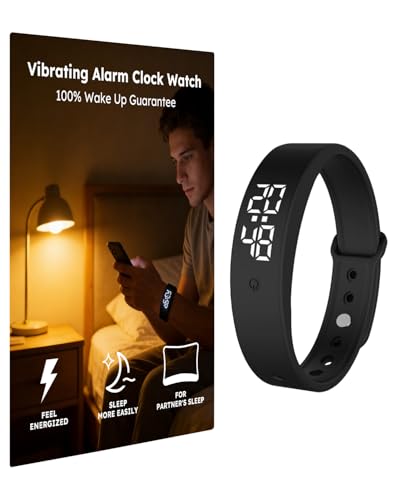
RITHEM is a black wearable wristband with a vibrating alarm. It targets heavy sleepers who need a tactile alert instead of an audible clock. The bracelet supports multiple customizable alarms, so users can set more than one wake-up time. Its non-audible operation suits shared bedrooms, dorm rooms, and partners with different schedules. The vibration stays focused on the wearer rather than filling the room with sound.
The IP68 water-resistance rating helps protect the band from sweat, rain, and everyday spills. That makes it practical for daily wear, though the listing does not provide a battery duration, exact alarm count, wrist-size range, or construction material. At around $24, it costs less than many full-featured smartwatches while focusing on one job. The main appeal is privacy. A partner can keep sleeping while the wearer receives a wrist alert. Still, vibration strength and comfort will vary from person to person.
Pros
- Silent alerts avoid disturbing partners or roommates.
- Multiple alarm settings support staggered wake-up times.
- IP68 protection helps handle sweat, rain, and spills.
Cons
- Strong vibration may not wake every deep sleeper.
- Missing battery, sizing, and alarm-count details make planning harder.
1. TEERAVD Vibrating Wristband Alarm Clock
Best for: Heavy sleepers sharing a room
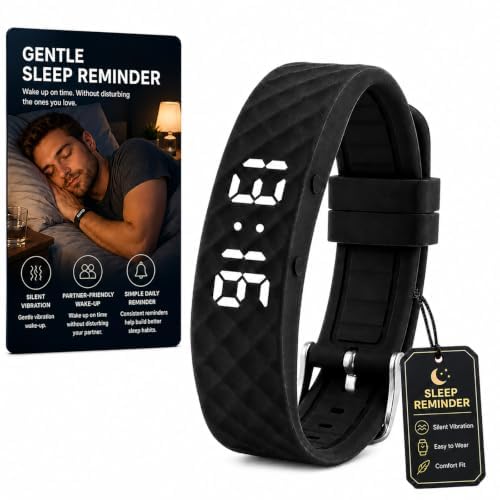
This TEERAVD wearable alarm uses wrist vibrations instead of sound, making it useful for bedrooms, classrooms, offices, and other shared spaces. It supports up to eight separate alarms, so one device can handle wake-ups, medication, meals, workouts, or study breaks. The loop countdown timer also supports repeated intervals for exercise, cooking, or Pomodoro sessions.
The diamond-pattern silicone strap has multiple buckle holes for an adjustable fit, and its soft material suits overnight wear. A Micro USB connection charges from an adapter, computer, or power bank. The watch records steps and keeps up to 30 days of activity data. Its automatic sleep tracking covers 11:00 PM to 7:00 AM, with calorie estimates and a sleep rating. The display shows time, date, and weekday, with 12- or 24-hour formatting. Raise-to-wake lighting helps with quick nighttime checks. Around $24, it offers more reminder options than a basic vibrating alarm band.
Pros
- Eight independent alarms support different daily reminders.
- Silent wrist vibrations avoid disturbing nearby sleepers or coworkers.
- Step, calorie, and sleep data add basic activity tracking.
Cons
- IP65 protection covers sweat, handwashing, and light rain, but it is not designed for swimming or showering.
- Micro USB charging is less convenient than newer USB-C devices.
Buying Guide
The most important factor is reliable alarm delivery. A wrist-worn timer should wake you through vibration you can feel, even when sound is muted or another person is sleeping nearby.
- Vibration strength: Choose a model with at least three intensity levels and a vibration cycle lasting 10 seconds or longer. Multiple alarms can help heavy sleepers.
- Battery life: Look for at least five days of use per charge, or a replaceable battery that lasts six months or more. A low-battery alert prevents missed alarms.
- Fit and comfort: Measure your wrist and choose an adjustable band that fits 5.5 to 8 inches. A slim case under 0.5 inches thick feels less bulky overnight.
- Controls and alarms: Favor large buttons, readable numbers, and simple setup. Support for at least two daily alarms is useful for workdays, medication, or travel.
- Water resistance and price: For showers or workouts, choose at least an IPX4 rating, while swimming requires a product specifically rated for immersion. Most basic models cost $20 to $60, while feature-rich options often reach $100.
If you cannot have everything, prioritize strong, dependable vibration over display size or extra features.
Frequently Asked Questions
How does a wrist alarm clock work?
A wrist alarm clock wakes you with vibration, sound, or both at a preset time. Most models use a small rechargeable battery and let you set one or more alarms through buttons or a phone app. A vibrating alert can suit shared bedrooms because it avoids waking someone nearby.
What should I look for in a wrist alarm clock?
Look for a comfortable fit, clear controls, dependable battery life, and an alarm strong enough for your needs. For example, a 7-inch adjustable strap, a five-minute snooze option, and at least 24 hours of battery life cover basic daily use without frequent adjustments.
Can wrist alarm clocks wake heavy sleepers?
Yes, some wrist alarms can wake heavy sleepers, but no model guarantees success for everyone. Choose a device with adjustable vibration and a backup sound alarm. Three to five vibration levels can help you find a stronger setting, while placing a phone alarm nearby adds extra security.
Are wrist alarm clocks safe to wear overnight?
Yes, most wrist alarm clocks are safe to wear overnight when the band feels comfortable and the device is used as directed. Choose a breathable silicone or fabric strap, leave room for one finger beneath it, and remove the watch if you notice redness, numbness, or irritation.
Conclusion
TEERAVD Vibrating Wristband Alarm Clock is the top pick for sleepers who want a discreet, vibration-based wake-up without disturbing a partner. If your priority is a louder alert or a larger display, pick a traditional bedside alarm clock instead, since it may be easier to hear and read across the room. Before ordering, double-check the band size, phone or device compatibility, package quantity, and current price, since listings can change. Consider how you wake up, where you wear the device, and how often you need charging. A wrist alarm works best when it feels comfortable overnight and delivers a clear alert at the right time. Check the return policy, especially when sizing information looks limited or unclear.