
6 Best Ranch Work Gloves for Daily Chores
WZQH Leather Work Gloves is the top pick for most buyers seeking the best ranch work gloves because its leather construction offers a practical balance of hand protection, flexibility, and everyday durability. This pair suits routine ranch chores such as handling fencing, tools, feed bags, and rough lumber. Its straightforward design also makes it easier to choose than specialty options built for welding, cold weather, or heavy brush.
This guide is for ranchers, homesteaders, farm workers, and anyone who needs dependable hand coverage outdoors. The key factors are leather quality, palm and finger reinforcement, cuff length, and accurate sizing, since poor fit can reduce control or leave gaps at the wrist. The six picks below are ranked by their strengths, intended use, and likely limitations, with clear reasons and honest drawbacks for each. That makes it easier to match a pair to daily chores, seasonal conditions, and the protection level required.
Quick Comparison
| # | Product | Best For | Price | |
|---|---|---|---|---|
| 1 | WZQH Leather Work Gloves | Everyday Construction Hand Protection | ~$10 | View → |
| 2 | Ironclad Ranchworx RWG2 Work Gloves | Heavy-Duty Ranch Chores | ~$26 | View → |
| 3 | Ironclad Ranchworx RWG2 Leather Work Gloves | Tough Outdoor Leather Tasks | ~$24 | View → |
| 4 | Wells Lamont Men's Work Gloves | Budget-Friendly Jobsite Coverage | ~$12 | View → |
| 5 | WZQH Leather Work Gloves | Backup Pair For Workshops | ~$10 | View → |
| 6 | Wells Lamont Men's Leather Work Gloves | General-Purpose Yard Maintenance | ~$16 | View → |
6 Ranch Gloves Worth Considering
These picks are ranked by protection, durability, comfort, and fit, counting down to the strongest overall choice.
6. Wells Lamont Men’s Leather Work Gloves

Best for: Ranch and farm maintenance
These Wells Lamont work gloves use grain cowhide leather for demanding jobs around ranches, farms, construction sites, and homes. This Large pair is designed to resist abrasion and punctures, with a leather shell that should handle rough lumber, fencing, tools, and building materials better than thin fabric gloves. A ball-and-tape wrist closure helps keep the gloves secure while limiting dirt and debris at the cuff.
The design also gives hand movement some attention. A Gunn cut and keystone thumb create a more natural shape for gripping tools and carrying materials. Grain leather often starts firm, then softens and conforms to the wearer’s hands over time. That break-in period is the main trade-off. Wells Lamont has made gloves for more than 100 years, but the practical appeal here is straightforward: traditional leather coverage, a close wrist fit, and useful flexibility. At around $16, they offer a low-cost option for routine outdoor work.
Pros
- Grain cowhide provides strong abrasion and puncture resistance.
- Gunn cut and keystone thumb support tool handling.
- Adjustable ball-and-tape closure helps block dirt and debris.
Cons
- Leather may feel stiff at first and limit fine finger movement.
- Grain leather can absorb water and become stiff after drying.
5. WZQH Leather Work Gloves

Best for: Thorny yard work and hauling
These work gloves use 100% split cowhide leather with a cotton-fiber lining. The coffee-grey finish looks less traditional than brown leather, while the reinforced palm adds another layer where tools and materials create pressure. An adjustable wrist strap helps keep dirt and small debris out. The listing offers six sizes, from XS through 2XL, though measurements are taken by hand and may vary slightly. At around $10, they target buyers who need basic protection without spending much.
The gloves are listed for gardening, construction, farm work, welding, woodworking, and warehouse jobs. They may also help when handling rose bushes, cactus, blackberry vines, barbed wire, firewood, or rough materials. The leather is described as resistant to abrasion, punctures, cuts, and heat, but those claims should not replace task-specific protective gear. The cotton lining may improve comfort during longer jobs, yet leather gloves can still feel warm. They also provide more coverage than lightweight garden gloves, but fine finger control may suffer when using small tools.
Pros
- Split cowhide leather helps protect against rough surfaces and thorny plants.
- Reinforced palms add protection during hauling, digging, and tool use.
- Six sizes, XS to 2XL, support a broader range of hand sizes.
Cons
- Thick leather can limit dexterity for detailed or precision work.
- The listing gives no waterproof rating or specific heat limit, so wet jobs and high-heat tasks need caution.
4. Wells Lamont Men’s Work Gloves
Best for: Ranch chores and construction tasks
These Wells Lamont work gloves use grain cowhide leather for protection during ranching, farming, construction, and home maintenance. The medium size fits buyers who need a traditional leather glove with an adjustable ball-and-tape wrist closure. That closure helps keep the gloves in place and limits dirt from entering around the wrist. At around $12, they offer a low-cost option for routine outdoor and workshop tasks.
The Gunn cut and keystone thumb give the fingers more room to move than a flat-cut glove. You can grip tools, lumber, fencing, and garden equipment with better control. The leather should soften and conform to your hands after repeated use, though it may feel stiff at first. Grain cowhide handles abrasion and punctures better than many lightweight fabric gloves, but these are still work gloves, not a substitute for task-specific protective gear. Their long history of glove production adds some confidence, but fit and leather thickness can vary between pairs.
Pros
- Grain cowhide resists abrasion and minor punctures during demanding chores.
- Gunn cut and keystone thumb support tool handling and finger movement.
- Adjustable wrist closure helps keep out dirt and loose debris.
Cons
- Leather can feel stiff until it breaks in.
- These gloves are less flexible than thin synthetic options and may not suit fine-detail work.
3. Ironclad Ranchworx RWG2 Leather Work Gloves
Best for: Construction, ranch, and repair work
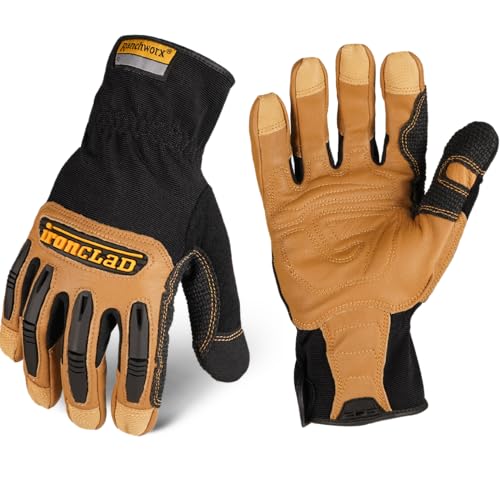
These Ironclad Ranchworx RWG2 gloves come as one pair, listed in medium, with brown and black panels. Genuine goatskin leather makes up the main glove material. The gloves can go in a washing machine on a cool cycle, and the maker says the leather should not dry out or shrink when wet. That gives them an advantage over work gloves that need hand washing or careful cleaning.
The design adds protection in high-wear areas without ignoring finger movement. Roll-top fingertips use two layers for coverage, while Kevlar reinforces sections that take extra abuse. A thermoplastic rubber cuff puller helps you put the gloves on and adjust them quickly. The back of the thumb includes a terry cloth panel for wiping sweat. Ironclad bases the fit on up to 16 measurements, though comfort still depends on your hand shape. At around $24, this pair costs more than basic coated fabric gloves. It makes the most sense for repeated work where leather, washable construction, and reinforced fingertips matter.
Pros
- Goatskin leather is machine washable on a cool cycle.
- Double-layer fingertips and Kevlar add protection in high-wear areas.
- Terry cloth thumb and a TPR cuff puller improve job-site convenience.
Cons
- This listing is medium, so buyers need another size for smaller or larger hands.
- Leather gloves can feel warmer and less flexible than lightweight synthetic options.
2. Ironclad Ranchworx RWG2 Work Gloves
Best for: Ranch work, landscaping, and hauling
The Ironclad Ranchworx RWG2 is a leather work glove made for jobs that put steady wear on the hands. This listing includes one brown-and-black pair in size Large. The gloves are machine washable, which helps with muddy or dusty work, although care instructions should still be followed. At around $26, they cost more than basic fabric or thin leather gloves.
The main draw is the mix of protection and finger control. Patented rolltop fingertips remove bulky seams from key contact points while adding a second protective layer. Kevlar reinforcement covers high-wear areas, giving the glove extra support where tools and rough materials can cause damage. A thermoplastic rubber cuff puller helps you position the glove faster, especially when your hands are dirty. The terry cloth panel on the thumb also provides a quick way to wipe sweat without removing the glove. These details suit repeated handling, lifting, and outdoor work better than light-duty household gloves.
Pros
- Seamless rolltop fingertips improve finger movement while adding double-layer protection.
- Kevlar reinforcement helps protect high-wear areas during rough work.
- TPR cuff puller and thumb sweat wipe add useful job-site convenience.
Cons
- Leather construction can feel warmer and less breathable than lightweight fabric gloves.
- The size Large listing may not fit workers with smaller or larger hands, so check the manufacturer’s sizing chart before ordering.
1. WZQH Leather Work Gloves
Best for: Thorny yard work and heavy chores
These WZQH work gloves use 100% split cowhide leather with a soft cotton-fiber lining. The leather construction targets abrasion, punctures, cuts, and contact with rough materials, while the reinforced palm adds another protective layer. An adjustable wrist helps block dirt and loose debris. The coffee-gray color looks less traditional than standard tan work gloves, and the price is around $10, making them an inexpensive option for occasional projects.
Their strongest fit is outdoor work involving thorns, rough wood, wire, soil, or tools. They suit gardening, landscaping, farm chores, construction, woodworking, hauling, and some welding tasks. The gloves come in six sizes, from XS through 2XL, so buyers have more room to match hand dimensions. Still, the listing does not provide a sizing chart, and the seller warns that measurements can vary slightly. These are protective work gloves, not a replacement for task-specific safety equipment. Check heat ratings and welding requirements before using them around high temperatures.
Pros
- Split cowhide leather helps resist abrasion from wood, wire, tools, and rough materials.
- Reinforced palms add protection during digging, hauling, pruning, and construction work.
- Six available sizes, XS through 2XL, support a broader range of hand sizes.
Cons
- No detailed sizing chart is provided, so fit may require careful measurement or exchanges.
- Leather gloves can feel bulky for precision tasks and may reduce fingertip control.
Buying Guide
The most important factor is task-matched protection, because fencing, livestock handling, and brush work expose hands to different cuts, punctures, and abrasion. Choose ranch hand protection that shields your palms while preserving the grip needed for gates, rope, and tools.
- Leather thickness and reinforcement: Choose 1.0 to 1.3 mm cowhide or goatskin for general ranch work. Double-layer palms and reinforced thumbs help with fencing and rough lumber.
- Fit and sizing: Measure around the widest part of your palm, then compare that number with the manufacturer’s chart. Fingertips should reach within about ⅛ inch of the glove ends.
- Cuff design: Pick a 2.5 to 4-inch gauntlet cuff for brush, hay, and wire work. A hook-and-loop closure should fit over or under a shirt sleeve without slipping.
- Grip and dexterity: Look for textured leather or a coated palm if you handle smooth tools. Flexible fingers matter for knots, buckles, and small hardware.
- Weather and care: For cold mornings below 40°F, consider lined gloves, but avoid bulky insulation for detailed tasks. Check washing instructions, and budget about $15 to $40 per pair.
If you cannot have everything, prioritize protection matched to your main task, then select the closest comfortable fit.
Frequently Asked Questions
How do I choose ranch work gloves for daily chores?
Choose ranch work gloves with a snug fit, reinforced palms, and protection suited to your daily tasks. For fencing and livestock chores, look for cowhide or goatskin, adjustable wrist closures, and a palm patch. A glove should leave about 1/4 inch of space beyond each fingertip without sliding when you grip a gate latch.
What materials make a ranch work glove durable?
Leather usually gives the best balance of abrasion resistance, grip, and repairability for ranch chores. Cowhide handles rough handling, goatskin stays flexible, and synthetic blends often dry faster. For regular fence work, choose gloves with leather at least 1 millimeter thick and double-layer patches across the palm and fingertips.
Can I use insulated gloves for winter ranch work?
Yes, insulated ranch gloves work well for cold chores, but they should still allow finger movement and a firm grip. Choose 40 to 100 grams of insulation for outdoor tasks, depending on temperature. Waterproof or water-resistant backs also help when handling wet gates, feed buckets, or snow-covered equipment.
Are machine-washable gloves suitable for ranch chores?
Yes, some ranch gloves are machine washable, but leather pairs usually need hand cleaning and air-drying instead. Check the care label before washing, and avoid high heat, which can shrink leather or damage synthetic coatings. Fabric gloves made from nylon or polyester often wash at 30 to 40 degrees Celsius.
Conclusion
WZQH Leather Work Gloves are the top recommendation for ranch owners and farm workers who want leather protection for routine chores, tool handling, and general outdoor work. If your priority is wet-weather grip, pick a waterproof, rubber-coated pair instead, since leather can absorb moisture and needs more care after getting wet. Before buying, double-check the size chart, compatibility with your tasks and tools, pack quantity, and current price. A loose glove can reduce control, while a tight one may become uncomfortable during long work sessions. Check the closure style, too, since adjustable cuffs can help keep dirt, hay, and small debris away from your hands. The right pair should match both the job and the season.