
5 Best Driver Fatigue Alarm for Truckers
LGI Driver Fatigue Alarm is the best driver fatigue alarm for most buyers because it focuses on one clear job: warning drivers when drowsiness threatens attention. Its purpose-built design makes more sense than relying on a phone app or a vague reminder. The device is aimed at people who drive long shifts, travel overnight, or spend hours on highways with few breaks.
This guide is for commuters, truck drivers, fleet managers, and anyone facing regular fatigue behind the wheel. The key factors include alert type, wearing comfort, setup, battery life, and how easily the alarm stays in position during movement. A useful warning must arrive quickly without creating extra distractions. The five picks below are ranked by their practical strengths, with clear reasons and honest drawbacks for each.
Quick Comparison
| # | Product | Best For | Price | |
|---|---|---|---|---|
| 1 | LGI Driver Fatigue Alarm | Budget-Conscious Long-Haul Truckers | ~$40 | View → |
| 2 | RVGONOW DMS Driver Monitoring System | Fleet Managers Needing Driver Monitoring | ~$40 | View → |
| 3 | Kiaikmc A8 Driver Fatigue Alarm Device | Personal Cars With Limited Space | ~$65 | View → |
| 4 | VOJKOREL AI Driver Fatigue Alarm System | Commercial Fleets Seeking AI Alerts | ~$120 | View → |
| 5 | MOVON M60 Driver Fatigue Alarm | Drivers Wanting Compact Dash Devices | ~$159 | View → |
5 Driver Alertness Alarms Worth Considering
These picks are ranked by alert features, fit, and value, counting down to the top choice for safer long drives.
5. MOVON M60 Driver Fatigue Alarm
Best for: Privacy-minded daily commuters
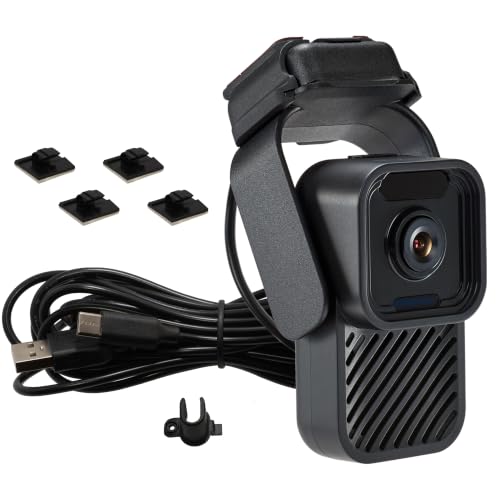
The MOVON M60 is a compact driver-monitoring device for cars, vans, trucks, and light fleet vehicles. It watches for signs such as closed eyes, looking away from the road, and extended driving time. When it detects a concern, its built-in speaker gives an audible warning. The system activates its alarm functions above 25 km/h, so it stays quiet when the vehicle is parked or moving slowly.
What sets this unit apart is what it does not do. It records no road footage or cabin video, which suits drivers who want safety prompts without a dash cam. It also works without a phone app, screen, or extra speaker. The USB-C power connection should fit many modern vehicle setups, while the small body can sit on the dashboard or near the front windshield. At around $159, it costs more than a basic dash cam, but its focus is narrower: alerting the driver instead of storing footage. It may suit commuters, family travelers, senior drivers, rideshare operators, and small businesses.
Pros
- Provides audible warnings for drowsiness and distraction cues.
- Records no road or in-cabin video.
- Works without a smartphone, display, or added audio equipment.
Cons
- Requires a USB-C power connection and a suitable mounting position.
- Audible alerts provide limited detail, so the driver may not know which behavior triggered a warning.
4. VOJKOREL AI Driver Fatigue Alarm System
Best for: Daily commuters seeking fatigue alerts
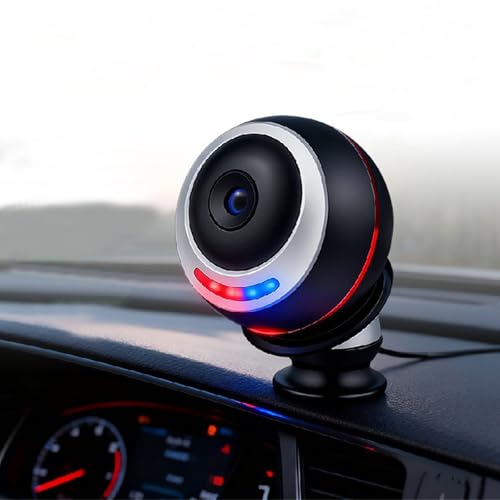
The VOJKOREL AI Driver Fatigue Alarm System is an in-car camera that watches the driver’s face and head position. Its dual-core AI chip analyzes eye closures, yawns, pupil changes, and shifts in gaze. The system costs around $120, which places it above simple buzzer-style fatigue alarms. It is designed for drivers who want a dedicated alert device rather than a phone app.
The camera records at up to 25 frames per second and uses an ultra-high-definition lens for facial detail. Eight hidden infrared lights support night monitoring without visible red illumination, including darker tunnel conditions. Alerts use blue reminder lights, red warning lights, and voice messages that change with the detected behavior. A magnetic mount adjusts through 360 degrees, while the Type-C connection supports a simple dashboard setup. The listing does not specify vehicle power requirements, storage, or app support, so buyers should confirm those details before ordering.
Pros
- Tracks eye closures, yawns, and gaze changes with facial analysis.
- Eight infrared lights support driver monitoring in low light.
- Magnetic 360-degree mount allows flexible dashboard positioning.
Cons
- Facial systems can issue false alarms or miss fatigue cues, especially with sunglasses, masks, glare, or poor camera placement.
- The product cannot replace rest, safe driving habits, or a vehicle’s built-in safety systems.
3. Kiaikmc A8 Driver Fatigue Alarm Device
Best for: Fleet drivers needing fatigue alerts
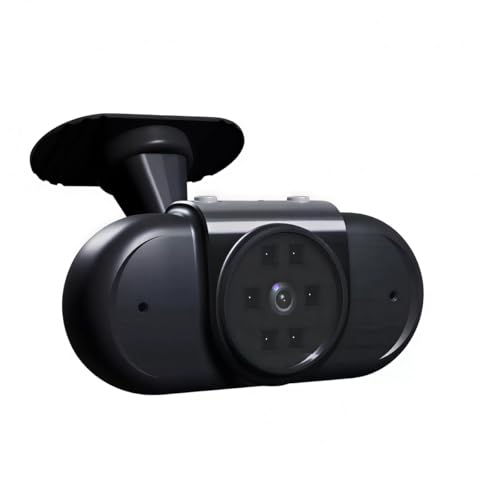
This compact in-car monitor uses AI face and eye detection to watch for signs of unsafe driving. It can flag closed eyes, a dropping head, yawning, phone use, or smoking within 1 to 3 seconds, then gives an audio and visual warning. A 4-hour continuous-driving reminder also prompts a rest stop. At around $65, it costs less than many dedicated camera systems, though it remains an aid rather than a substitute for sleep or attentive driving.
The A8 Standard Version records 1920x1080P video and switches to infrared night vision in dim conditions. When an alert occurs, it saves a 20-second clip. Loop recording supports TF cards up to 128GB, with older files overwritten as storage fills. Its 80 x 40 x 24mm body fits tight dashboards, while the 3-meter cable and 3M adhesive mount allow flexible placement. It powers on with the vehicle, and double-clicking the button mutes alerts. The unit is rated for -20°C to 70°C, but the listing does not specify whether a memory card or replacement adhesive is included.
Pros
- Detects multiple fatigue and distraction cues within 1 to 3 seconds.
- Records 1080P footage and 20-second alert clips, including at night.
- Small body, long cable, and adhesive mount suit many vehicle interiors.
Cons
- Requires a TF card, up to 128GB, for stored recordings, and the listing does not confirm one is included.
- AI alerts may need careful positioning, since the indicator light warns when it cannot detect your face.
2. RVGONOW DMS Driver Monitoring System

Best for: Drivers wanting several fatigue alerts
The RVGONOW DMS is an in-car AI monitoring device designed to watch the driver’s face and attention. It provides five main warning types: prolonged eye closure, repeated yawning, smoking, phone calling, and visual distraction. When it detects a possible risk, the unit sends a loud alert. That makes it more useful than a simple timer-based reminder, since it responds to signs of reduced focus.
Its broad alert coverage is the main reason to consider it. The system can react to closed eyes, a lowered head, looking away, or suspected phone use. It also addresses smoking, which many driver aids ignore. At around $40, it offers several safety prompts without the cost of a full fleet-monitoring system. Still, AI detection can produce false alerts, especially with sunglasses, poor lighting, or unusual head movement. The listing also does not provide the device’s dimensions, materials, warning duration, power requirements, or detailed installation steps.
Pros
- Covers five driving risks, including fatigue, yawning, phone use, smoking, and distraction.
- Uses loud warnings when it detects prolonged eye closure or repeated yawning.
- Can identify head-dropping and looking away, not just tired eyes.
Cons
- AI alerts may be inaccurate with sunglasses, dim cabins, or obstructed facial views.
- The available listing lacks key details about size, mounting, power, and alert timing.
1. LGI Driver Fatigue Alarm

Best for: Drivers needing a basic fatigue reminder
The LGI Driver Fatigue Alarm is marketed as an anti-sleep alert for people behind the wheel. The listing also mentions security cars and security guards, so its intended purpose is straightforward: warn a tired driver or worker before attention drops. It is described as a 3-in-1 device, but the available information does not explain the three functions, alarm types, sensor method, mounting style, or power source.
That lack of detail is the main concern. At around $40, this alarm may suit buyers who want a dedicated nap or fatigue reminder instead of relying only on a phone. Still, there are no confirmed dimensions, materials, alert duration, detection range, battery details, or compatibility notes. Buyers cannot tell if it detects head movement, inactivity, or a manually set nap period. Treat the product name as a description of intended use, not proof of a tested safety system.
Pros
- The 3-in-1 label suggests multiple alert functions in one device.
- Its intended driver and security-guard use covers two common fatigue-risk settings.
- A dedicated nap alert may be more convenient than setting a phone alarm.
Cons
- The listing provides no technical specifications, including size, power source, or alarm volume.
- There is no stated detection method, certification, or evidence that it provides reliable fatigue monitoring.
Buying Guide
Detection reliability is the most important factor in a driver alertness device. It should recognize eye closure or head movement, since timed reminders cannot detect sudden fatigue.
- Detection method: Choose camera-based models with infrared night detection, or wearables that monitor head position. Avoid units that only sound an alert at fixed intervals.
- Alert strength: Look for an alarm rated around 70 to 90 decibels, plus vibration or spoken warnings. Multiple alert types help in cars with loud road noise.
- False-alarm control: Select a model with at least three sensitivity levels and a manual mute button. Adjustable settings help prevent alerts from normal glances, bumps, or sunglasses.
- Power and setup: Aim for 8 to 12 hours of battery life for portable units. A USB-C charger or 12-volt adapter is useful for long trips, while mounting should take under five minutes.
- Privacy, fit, and cost: For camera units, check for models that process footage locally and do not save video. Wearables should weigh under 4 ounces and fit securely. Expect to pay about $40 to $200.
If you cannot have everything, prioritize reliable fatigue detection over extra features or a lower price.
Frequently Asked Questions
How does a driver fatigue alarm work?
A driver fatigue alarm watches for signs of reduced attention and gives a warning when it detects a possible problem. Camera-based models may track blinking, head position, or eye closure, while steering sensors watch vehicle movement. Some alerts sound within seconds, but the exact response depends on the device and installation.
What features should I look for in a driver alertness monitor?
Look for a clear alarm, adjustable sensitivity, night performance, and controls that are easy to reach without distraction. A camera unit should explain where it mounts and what it detects. Check the stated operating range too, since some products suit cars, while others are designed for trucks or fleet vehicles.
Can a fatigue warning device work at night?
Yes, some fatigue warning devices work at night, but performance depends on infrared support, cabin lighting, and camera placement. Models with infrared illumination can monitor a driver in darkness, while basic cameras may struggle with sunglasses, glare, or a covered face. Check whether the listing names night operation, rather than assuming every alarm works after sunset.
Are driver fatigue alarms reliable enough for long trips?
Driver fatigue alarms can support safer driving, but they are not reliable enough to replace sleep, breaks, or attention. Use them as a backup, and stop for a break about every two hours or sooner if you feel tired. False alerts can also occur when cameras lose sight of your face.
Conclusion
The LGI Driver Fatigue Alarm is the top pick for drivers who want a simple warning device for long highway trips, night work, or repeated commutes. If your priority is a different alert style, choose the option with the display, mounting method, or sound level that fits your vehicle and driving routine best. Before buying, double-check the alarm’s size, compatibility with your car or truck, package quantity, and current price, since listings and bundles can change. Treat any fatigue alert as a backup, not a replacement for sleep, regular breaks, and a safe decision to stop when you feel tired. The right device should support safer habits without distracting you from the road.