
5 Best Dash Cam for Cold Weather for Winter Roads
The 4K Triple-Channel WiFi Dash Camera is the best dash cam for cold weather for most buyers because its three-camera setup covers the road, cabin, and rear view. That broad coverage can provide more useful evidence after a collision, break-in, or parking-lot scrape. Its built-in Wi-Fi also makes transferring clips to a phone easier than removing the memory card.
This guide is for drivers who deal with freezing mornings, snow, and long winter commutes. For these cameras, low-temperature operating limits and parking-mode power draw matter most. A model that shuts down in the cold, or drains the vehicle battery overnight, can fail when you need it. Video resolution, camera coverage, and mounting size also affect daily use. The five picks below are ranked with clear reasons and honest drawbacks for each.
Quick Comparison
| # | Product | Best For | Price | |
|---|---|---|---|---|
| 1 | 4K Triple-Channel WiFi Dash Camera | Drivers Wanting Full-Coverage Recording | ~$24 | View → |
| 2 | Swissbit SFSD256GL1AM1TB-E-VG-211-STD Industrial microSD Card | Industrial Devices Needing Durable Storage | ~$262 | View → |
| 3 | 3M Double-Sided Adhesive Pads, 6-Pack | Mounting Projects Requiring Six Pads | ~$9 | View → |
| 4 | 3M Double-Sided Adhesive Pads, 6 Pack | Small Decor With Spare Pads | ~$9 | View → |
| 5 | 3M Double-Sided Pads | Lightweight Objects Needing Quick Mounting | ~$10 | View → |
5 Top Cold-Weather Dash Cams
These five cold-weather dash cams are ranked from fifth place down to the top pick, based on winter-ready features and value.
5. 3M Double-Sided Pads
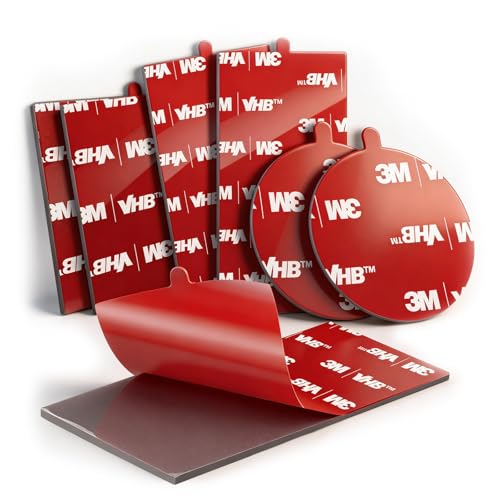
Best for: Drivers mounting dash cams securely
This six-pack includes two square, two rectangular, and two round double-sided pads. Each pad uses 1.6 mm thick closed-cell acrylic foam with 3M GPH-160 adhesive. The pads suit smooth glass, metal, tile, wood, and plastic surfaces. They can hold dash cams, GPS units, and phone holders without relying on suction cups. At around $10, the pack offers several shapes for different mounting bases.
Heat resistance is a major advantage. The adhesive can handle temperatures up to 300°F (150°C), plus moisture, UV exposure, cold, solvents, and road vibration. For the strongest bond, clean both surfaces with a 50:50 mix of isopropyl alcohol and water. Apply between 70°F and 100°F, press firmly, and let the mount set for up to 72 hours. The pads offer immediate handling strength, but full adhesion takes longer. They can be trimmed, though textured dashboards may need an adhesion promoter or a different mounting method.
Pros
- Six pads come in three shapes for varied mounting bases.
- Withstands temperatures up to 300°F and regular vehicle vibration.
- Closed-cell acrylic foam helps maintain the bond under stress.
Cons
- The pads work best on smooth, flat surfaces, not textured dashboards.
- Strong adhesion requires careful cleaning, warm application, and a 72-hour set time.
4. 3M Double-Sided Adhesive Pads, 6 Pack

Best for: Dash cams and phone mounts
These 3M adhesive pads provide six mounting pieces: three square and three round. Each pad measures 0.062 inches, or 1.6 mm, thick. The closed-cell acrylic foam core pairs with 3M GPH-160 adhesive for a strong bond on smooth glass, metal, tile, wood, and plastic. At around $9, the pack costs less than many replacement mounting bases.
Heat resistance is the main draw. The adhesive can withstand temperatures up to 300°F, plus UV exposure, moisture, cold, solvents, and road vibration. Apply the pads between 70°F and 100°F, after cleaning both surfaces with a 50:50 mix of isopropyl alcohol and water. Press firmly, then allow up to 72 hours for the bond to fully set. An adhesion promoter can improve results, especially on difficult surfaces. The pads offer immediate handling strength, but full adhesion takes time.
Pros
- Six pads include both square and round shapes.
- Handles temperatures up to 300°F for hot vehicles.
- Foam core helps absorb stress from vibration and movement.
Cons
- Designed for smooth, flat surfaces, not textured dashboards.
- Full bond strength may require 72 hours, so the mount is not ready for heavy use immediately.
3. 3M Double-Sided Adhesive Pads, 6-Pack

Best for: Dash cams on smooth surfaces
These six rectangular adhesive pads measure 1.5 by 3 inches and are 0.062 inches thick. Each uses 3M GPH-160 closed-cell acrylic foam tape, which creates a strong bond on clean glass, metal, tile, wood, and plastic. The pads can replace suction cups for dash cams, GPS units, and phone holders. At around $9, the six-pack costs less than many specialized mounting kits.
Heat resistance is the main standout. The adhesive is rated for temperatures up to 300°F and resists UV exposure, moisture, cold, solvents, and road vibration. For the best result, apply it between 70°F and 100°F after cleaning both surfaces with a 50:50 mix of isopropyl alcohol and water. It grips on contact, but the bond should set for 72 hours. The pads are trimmable, yet their flat design does not suit textured dashboards.
Pros
- Six 1.5-by-3-inch pads fit many compact vehicle mounts.
- Handles temperatures up to 300°F, plus moisture, UV rays, and vibration.
- Closed-cell acrylic foam helps maintain contact under repeated movement.
Cons
- Textured dashboards may need an adhesion promoter, and results can vary.
- Full bond strength requires 72 hours, so the mount should not face heavy loads right away.
2. Swissbit SFSD256GL1AM1TB-E-VG-211-STD Industrial microSD Card

Best for: Industrial equipment in harsh temperatures
The Swissbit S-56u is an industrial microSD memory card with 8 GB of storage. It uses 3D PSLC flash, a type of flash designed for applications that need more endurance than ordinary consumer cards. Its specified operating range runs from -40°C to +85°C, making it suited to outdoor controllers, vehicles, factory equipment, and other systems exposed to severe heat or cold. The package contains one card.
The main draw is its industrial temperature rating and flash type, not a large capacity or feature-packed bundle. An 8 GB card can hold firmware, configuration files, logs, or a small operating image. It leaves less room for high-resolution data and extended recording. The listed price is around $262, which is a major purchase for this capacity. Buyers should check host compatibility, card format support, and endurance requirements before ordering. The model text includes “256,” while the supplied capacity is 8 GB, so confirm the exact part number and capacity with the seller.
Pros
- The -40°C to +85°C rating suits equipment exposed to severe cold and heat.
- 3D PSLC flash targets demanding industrial storage applications.
- The compact microSD format fits compatible embedded devices and controllers.
Cons
- 8 GB provides limited room for large datasets, video, or lengthy logs.
- Around $262 is expensive compared with standard consumer microSD cards.
1. 4K Triple-Channel WiFi Dash Camera

Best for: Budget drivers wanting three-channel coverage
This dash camera is listed as a 4K Ultra HD recorder with a 3.16-inch display. Its triple-channel design is meant to capture footage from three camera views, although the listing does not identify their exact positions. Built-in Wi-Fi connects the unit with a phone app, allowing drivers to view clips and manage settings without removing the camera. At around $24, it targets buyers who want more features than a basic single-camera recorder.
The camera includes a G-sensor that can protect collision-related footage from being overwritten. Its ClearIR night-vision system is designed to improve visibility after dark, while the 24-hour parking monitor can watch for impacts when the vehicle is parked. The small screen should help with setup and quick playback, but it leaves limited room for detailed video review. The product page also does not confirm included storage, camera angles, or power requirements for parking mode.
Pros
- Triple-channel recording can cover more areas than a standard front-facing dash camera.
- Built-in Wi-Fi and app control make clip access easier from a compatible phone.
- G-sensor and 24-hour parking monitoring help preserve impact-related footage while driving or parked.
Cons
- The 3.16-inch display is compact, so reviewing details directly on the camera may feel cramped.
- The listing does not specify storage-card support, camera placement, or parking-mode power needs, leaving important setup details unclear.
Buying Guide
The most important factor is the camera’s operating-temperature range. Cold can reduce battery output, weaken adhesive mounts, and cause shutdowns, so choose a model rated below your local winter lows.
- Temperature rating: Look for operation from at least -20°C to 60°C (-4°F to 140°F). Drivers in colder areas should seek -30°C (-22°F) protection.
- Power backup: Choose a dash camera with a supercapacitor, not a standard lithium-ion battery. Supercapacitors handle repeated freezing and provide enough power to save the final video.
- Mounting system: Select a mount with a locking bracket and a spare adhesive pad. Keep the windshield area above 40°F (4°C) during installation so the pad bonds correctly.
- Parking mode: A hardwire kit with low-voltage cutoff should stop recording near 12.0V to 12.2V. This helps protect the car battery during long, cold parking periods.
- Video and storage: Use at least 1440p resolution, HDR, and a 128GB high-endurance microSD card. Cold weather can make license plates harder to read, especially at night, so front infrared lighting or strong low-light processing helps.
If you must compromise, prioritize the operating-temperature rating and supercapacitor power system over extra resolution.
Frequently Asked Questions
How do cold-weather dash cams work?
Cold-weather dash cams keep recording by using components rated for low operating temperatures and a power system that tolerates winter conditions. Look for a published range such as -4°F to 158°F, or -20°C to 70°C, rather than relying on marketing language. The car’s battery and hardwire kit also need protection from voltage drops during freezing starts.
What features matter in a dash camera for winter driving?
Look for a dash camera with a low-temperature operating rating, a supercapacitor, reliable parking-mode power control, a weather-resistant housing, and clear installation instructions. A rating near -4°F (-20°C) covers many winter drives, while a hardwire kit with low-voltage cutoff helps protect the vehicle battery.
Can a dash cam stay in a car overnight during freezing weather?
Yes, a properly rated dash cam can remain in a parked car overnight, but extreme cold may shorten battery life and delay startup. Choose a model rated below your local winter low, and remove a detachable lithium-ion battery if its manual forbids freezing storage. For example, a -20°C rating suits colder conditions than a 0°C rating.
Are supercapacitor dash cams better for cold climates?
Yes, supercapacitor dash cams are usually better for freezing climates because they tolerate temperature swings better than small lithium-ion batteries. They still need a suitable operating rating, and many retain power for only a few seconds after ignition stops, enough to save the final file rather than run overnight.
Conclusion
The 4K Triple-Channel WiFi Dash Camera is the top recommendation for drivers who want front, rear, and cabin coverage with phone access in one setup. It suits commuters, rideshare drivers, and anyone who wants more recorded detail during winter travel. If your priority is a smaller installation or a lower upfront cost, choose a compact two-channel model instead, since it uses fewer cameras and usually needs less space behind the windshield. Before buying, double-check each unit’s physical size, your vehicle’s mounting and power compatibility, the quantity included in the package, and the current price. Cold temperatures can affect batteries, adhesive mounts, and wiring, so confirm the maker’s operating range before relying on it.