
6 Best Carbon Monoxide Detector for Campervan Trips
The TOPTES CT-580 Portable Carbon Monoxide Detector is the best carbon monoxide detector for campervan owners and our top pick for most buyers. Its main advantage is portability, so you can move it between the sleeping area, cooking space, and campsite without installing a fixed unit. That flexible setup fits compact interiors well.
This guide is for campervan owners who need carbon monoxide protection without giving up limited wall or counter space. The most important factors include overall size, battery life, alarm volume, display readability, and how easily each monitor can be placed or mounted. The six picks below are ranked by their practical strengths, with clear reasons and honest drawbacks for each. Expect options for different layouts, power preferences, and budgets.
Quick Comparison
| # | Product | Best For | Price | |
|---|---|---|---|---|
| 1 | TOPTES CT-580 Portable Carbon Monoxide Detector | Campers needing portable CO checks | ~$66 | View → |
| 2 | Kidde Plug-in Carbon Monoxide Detector | Renters wanting simple wall power | ~$29 | View → |
| 3 | X-Sense SC07 Smoke and Carbon Monoxide Detector | Families needing smoke and CO coverage | ~$38 | View → |
| 4 | Kidde Plug-In Carbon Monoxide and Gas Alarm | Homes monitoring carbon monoxide and gas | ~$57 | View → |
| 5 | First Alert CO605 Plug-in Carbon Monoxide Detector | Bedrooms needing plug-in CO alerts | ~$24 | View → |
| 6 | Kidde COPDLG Carbon Monoxide & Explosive Gas Alarm | Households near gas appliances | ~$54 | View → |
6 Top Carbon Monoxide Alarms for Campervans
These picks are ranked by features, power options, and campervan suitability, counting down to the top choice.
6. Kidde COPDLG Carbon Monoxide & Explosive Gas Alarm

Best for: Homes needing CO and gas coverage
The Kidde COPDLG is a plug-in alarm for carbon monoxide, natural gas, and propane. It connects to a standard 120V outlet and includes two AA batteries for backup during power outages. Its rotating plug works with vertical or horizontal outlets, so placement is less restrictive. A backlit digital screen shows carbon monoxide levels or displays “GAS” when it detects explosive gas. The alarm reaches 85 decibels, loud enough to alert people across much of a home.
Its strongest feature is low-level carbon monoxide monitoring. The alarm can respond at 30 to 70 parts per million with a distinct light and sound pattern, before levels reach the separate danger alert at 70 ppm. That may give households extra warning, especially those with children, older adults, pregnant people, or pets. The alarm meets UL 2034, 5th Edition standards and is ETL Listed. A seven-year limited warranty adds useful coverage. At around $54, it costs more than a basic CO-only alarm, but it combines three types of detection in one unit.
Pros
- Detects carbon monoxide, natural gas, and propane.
- Two AA batteries provide backup during outages.
- Digital display shows CO levels or “GAS.”
Cons
- It needs an available 120V outlet for normal operation.
- The higher price may not suit buyers who only need CO detection.
5. First Alert CO605 Plug-in Carbon Monoxide Detector
Best for: Bedrooms and multi-level homes
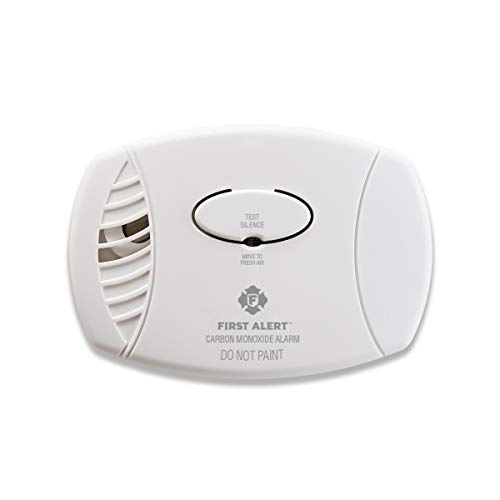
The FIRST ALERT CO605 is a white, plug-in carbon monoxide detector for homes that need protection without complicated setup. It fits a standard outlet and includes a battery backup, so it can continue watching for carbon monoxide during a power failure. Its compact body measures 3.4 inches long, 1.38 inches wide, and 5 inches high. At around $24, it costs less than many connected home safety devices.
A single test/silence button keeps daily checks simple. When carbon monoxide reaches a dangerous level, the alarm produces an 85-decibel warning. The electrochemical sensor is designed to detect CO in different room locations, while the low-battery signal can be muted for up to eight hours. An end-of-life chirp signals when replacement is due. First Alert lists a seven-year limited warranty, and the alarm is tested to meet UL standards. For broader coverage, the manufacturer recommends one detector on every level and inside each bedroom.
Pros
- Battery backup keeps the detector active during power outages.
- An 85-decibel alarm provides a loud warning for elevated CO levels.
- Seven-year limited warranty and an end-of-life chirp support long-term maintenance.
Cons
- The plug-in design uses one outlet and may not suit areas without convenient wall power.
- This is a carbon monoxide alarm, not a smoke detector, so separate fire alarms are still needed.
4. Kidde Plug-In Carbon Monoxide and Gas Alarm
Best for: Homes using gas appliances
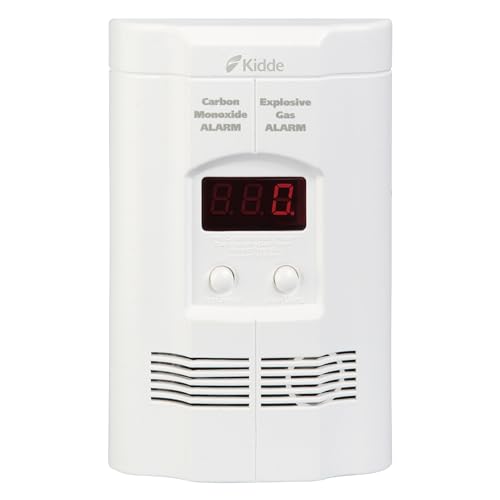
The Kidde Carbon Monoxide and Explosive Gas Alarm plugs into a standard 120V household outlet. It monitors carbon monoxide, natural gas, and propane, while a 9V battery backup keeps the alarm powered during an outage. The unit fits homes with gas furnaces, stoves, water heaters, or other fuel-burning equipment.
A digital display shows the detected carbon monoxide level and changes to “GAS” when explosive gas is present. An 85-decibel alarm provides a loud warning, while LED indicators show the unit’s status. Peak Level Memory records the last detected carbon monoxide reading or the last test event, which can help identify a previous alert. Installation requires no wiring, and the current price is around $57, though prices change. This is the 3rd Edition model, but the product details do not list its physical dimensions or battery life.
Pros
- Plug-in setup works with a standard 120V outlet and avoids hardwiring.
- A 9V backup battery helps maintain protection during power outages.
- The display identifies carbon monoxide levels or shows “GAS” for explosive gas.
Cons
- Placement depends on having a suitable outlet near the area you want to monitor.
- The backup battery requires periodic replacement, and no battery runtime is specified.
3. X-Sense SC07 Smoke and Carbon Monoxide Detector

Best for: Basic, long-term home protection
The X-Sense SC07 combines a smoke alarm and carbon monoxide detector in one standalone unit. This one-pack uses a photoelectric smoke sensor for slow-smoldering fires and an electrochemical sensor for carbon monoxide. Its sealed lithium battery lasts up to 10 years, so there are no routine battery changes or low-battery chirps during that period. At around $38, it costs more upfront than many replaceable-battery alarms, but it can reduce maintenance over time.
Installation requires no rewiring. The included mounting bracket, screws, and anchor plugs support placement on a wall or ceiling. The photoelectric sensor may also help limit cooking-related false alarms compared with some older alarm designs. X-Sense says the detector meets UL 217 for smoke alarms and UL 2034 for carbon monoxide alarms, with certification markings that help during safety checks. The SC07 is a basic standalone model, not part of a connected alarm network.
Pros
- A sealed 10-year lithium battery removes regular battery replacement.
- Separate photoelectric and electrochemical sensors cover smoke and carbon monoxide.
- Included hardware supports wall or ceiling installation without new wiring.
Cons
- This model does not support wireless interconnection, Wi-Fi, or a base station.
- A sealed battery means replacing the entire alarm when its service life ends.
2. Kidde Plug-in Carbon Monoxide Detector
Best for: Bedrooms near standard wall outlets
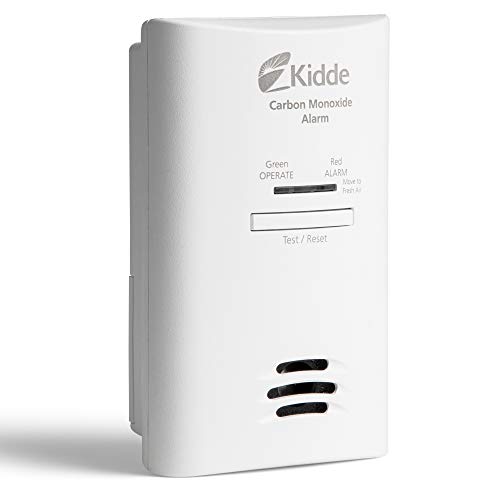
This Kidde carbon monoxide detector plugs into a standard 120-volt outlet, so setup takes little effort and does not require hardwiring. It also uses two AA batteries as backup, allowing the alarm to keep protecting your home during a power outage. At around $29, it offers a practical option for bedrooms, hallways, and other living areas.
The 85-decibel alarm provides a loud warning when carbon monoxide is detected. LED indicators show the unit’s status, while the peak level memory records the last detected carbon monoxide reading or the most recent test. That feature can help you check what happened if an alarm sounded while nobody was nearby. A combined Test-Hush button makes routine checks simple and can silence some false alarms. The third-edition design focuses on basic home protection without adding a monthly service cost.
Pros
- Plug-in setup works with a standard 120-volt outlet.
- Two AA batteries provide backup during power failures.
- Peak memory records the last detected level or test event.
Cons
- It needs a nearby wall outlet, which limits placement in rooms with few receptacles.
- Battery backup depends on maintaining two AA batteries, so the detector still requires periodic battery checks and replacement.
1. TOPTES CT-580 Portable Carbon Monoxide Detector

Best for: Portable CO checks while traveling
The TOPTES CT-580 is a handheld carbon monoxide meter for home checks, camping, travel, and workplace inspections. It reads concentrations from 0 to 1,000 ppm and claims a response within 0.3 seconds through its DDS sensor. A color TFT screen presents readings and alarm status in a graphical layout. At around $66, it costs more than a basic plug-in CO alarm, but offers portable measurements and business-focused controls.
When CO reaches either of the two set alarm thresholds, the CT-580 uses a warning light, audible alarm, and vibration at the same time. That combination helps in noisy spaces or when you cannot watch the display. The ABS housing should handle regular handling, while adjustable brightness, auto screen-off, a built-in flashlight, and USB-C charging add practical touches. Its menu includes alarm history plus zero and standard-gas calibration options. The package includes a protective case, charging cable, and manual. A national accredited laboratory certification adds useful confidence, though the provided details do not identify the lab or certification standard.
Pros
- Detects 0 to 1,000 ppm, with a stated response time of 0.3 seconds.
- Uses light, sound, and vibration alarms together.
- Includes alarm history, calibration settings, flashlight, and protective case.
Cons
- This is a handheld inspection meter, not clearly a fixed, always-on home alarm.
- Calibration controls may be more than casual users need, and the listed materials do not state battery runtime.
Buying Guide
Independent safety certification is the most important factor. It confirms that a carbon monoxide alarm meets tested standards, which matters when fuel-burning heaters, cookers, or engines run inside a small van.
- Certification: Choose UL 2034 in the US or Canada, or EN 50291 in the UK and EU. Avoid models with only vague claims such as “tested to industry standards.”
- Sensor lifespan: Select an electrochemical sensor with a stated service life of at least 5 years. Replace the whole alarm when its end-of-life warning appears.
- Power source: A sealed 10-year battery reduces maintenance, while replaceable AA or AAA models suit longer trips if they provide at least 12 months of battery life.
- Alarm strength: Look for an alarm rated at 85 decibels or louder at 10 feet. A large test button, low-battery alert, and peak-level memory add useful checks.
- Size and placement: Pick a unit smaller than 5 by 3 by 2 inches if wall space is limited. A two-pack can cover the sleeping area and a fuel-burning appliance separately, usually for $30 to $70.
If you cannot have everything, prioritize certified compliance and a reliable electrochemical sensor over extra displays or smartphone features.
Frequently Asked Questions
How do I choose a carbon monoxide detector for a campervan?
Choose a carbon monoxide alarm with recognised safety certification, a loud alarm, and a battery setup that suits your campervan. Look for EN 50291 in the UK and Europe, or UL 2034 in the United States and Canada. A digital display is useful, but it is not required for protection.
What type of CO detector works best in a campervan?
A battery-powered carbon monoxide detector is usually the most practical choice for a campervan because it keeps working when you are not connected to campsite mains power. Choose a model with a replaceable battery or a clearly stated battery life, such as 7 to 10 years for sealed units.
Can I use a household carbon monoxide alarm in a campervan?
Yes, but only if the alarm is approved for the conditions and vehicle type listed by its manufacturer. Check the manual for campervan, caravan, or RV use, then follow its placement rules. A detector designed for fixed homes may not suit vibration, humidity, or a 12-volt installation.
Are carbon monoxide alarms required in campervans?
Requirements vary by country, vehicle age, and fuel-burning equipment, so check local rules before travelling. Even when the law does not require one, install an alarm if the van has a gas heater, cooker, diesel heater, or other combustion appliance. Test it monthly and replace it by the stated date.
Conclusion
TOPTES CT-580 Portable Carbon Monoxide Detector is the strongest choice for campervan owners who want a compact, portable alarm they can move between sleeping and cooking areas. If your priority is a permanent setup rather than portability, pick a fixed 12-volt or mains-powered carbon monoxide alarm instead, since it can stay installed in one location. Before buying, double-check the detector’s size, power requirements, mounting method, vehicle compatibility, included quantity, and current price. A small van may have limited wall space, while a larger conversion might need more than one alarm. Also check the sensor type, display visibility, audible alarm level, and recommended replacement date. Keep the manual accessible for future checks.