
6 Best Work Boots for Sweaty Feet for Long Shifts
Arm & Hammer Work Boot Insoles is the top pick for most buyers searching for the best work boots for sweaty feet because its baking soda treatment helps control odor inside hard-working footwear. These are replacement insoles, not boots, but they offer a simple way to improve daily comfort without replacing a usable pair. The cut-to-fit design also works with many boot shapes.
This guide is for workers whose feet feel damp, hot, or unpleasant after long shifts. For this type of foot-care upgrade, focus on the insole’s size range, cushioning, moisture-handling materials, and fit inside your current boots. The six picks below are ranked by their strongest use cases, with clear reasons and honest drawbacks for each. You will see options for odor control, arch support, shock absorption, and long hours on concrete.
Quick Comparison
| # | Product | Best For | Price | |
|---|---|---|---|---|
| 1 | Arm & Hammer Work Boot Insoles | Sweaty work boot wearers | ~$10 | View → |
| 2 | Arm & Hammer In-Shoe Odor Control Pouches | Persistent shoe odor sufferers | ~$15 | View → |
| 3 | Furuian Pioneer Series Steel Toe Work Boots | Heavy-duty jobsite workers | ~$40 | View → |
| 4 | LMHCISO Women's No-Show Socks | Women wanting hidden sock coverage | ~$6 | View → |
| 5 | JOYNÉE Men's Athletic Crew Boot Socks, 5 Pairs | Men needing cushioned crew socks | ~$10 | View → |
| 6 | Zederna Cedar Wood Shoe Insoles | Natural cedar freshness seekers | ~$17 | View → |
6 Work Boots for Cooler, Drier Feet
We ranked these boots by airflow, moisture control, comfort, and job-site durability, counting down to the top pick.
6. Zederna Cedar Wood Shoe Insoles

Best for: Adults needing natural odor control
These Zederna insoles combine cedar wood and cotton in one super-thin pair. The cedar can absorb some moisture and leave a mild wood scent inside shoes, which may help reduce everyday foot odor. They fit men’s and women’s footwear, with this listing covering US M 14 and EU 48. The brand also offers 14 sizes, so shoppers have more options than with many specialty inserts. At around $17, they cost less than many cushioned replacement insoles.
The main appeal is the simple material choice. The inserts contain natural cedar wood, with no added chemicals or artificial fragrances listed. Their scent comes from the wood’s natural oils rather than a strong spray or powder. They are made in Europe using wood from sustainable forestry and are described as vegan and BPA-free. That said, these are odor-control inserts, not full orthopedic footbeds. Their thin design should fit many shoes, but it also limits cushioning and arch support. Odor results can vary with sweat levels, shoe materials, and how often the shoes air out.
Pros
- Natural cedar and cotton help manage moisture and shoe odor.
- Super-thin profile takes up less space than thick comfort insoles.
- European production, vegan materials, and sustainable forestry claims add useful sourcing details.
Cons
- One pair provides little cushioning or arch support for long shifts.
- The cedar scent and odor control may not suit people sensitive to wood aromas.
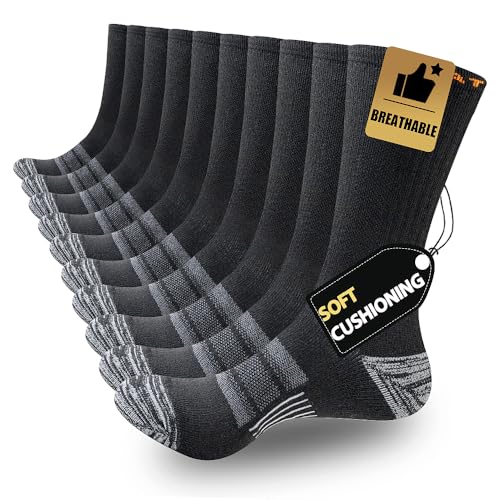
5. JOYNÉE Men’s Athletic Crew Boot Socks, 5 Pairs
Best for: Men needing cushioned work socks
The JOYNÉE set includes five pairs of black, lightweight athletic crew socks in sock size 13-15. That size is intended for men’s US shoe sizes 13-16. The high-calf cut works with work boots, sneakers, and many athletic shoes. At around $10, the pack offers a low-cost way to replace several worn pairs at once.
The design focuses on comfort during long days and active use. Cushioning sits in high-impact areas, while an engineered heel pocket helps the sock stay positioned. Arch support may reduce foot fatigue during walking, gym workouts, hiking, or sports. Reinforced heels and toes target common wear points. The socks also arrive in a gift box, which adds appeal for birthdays or holidays. Still, the listing does not provide fiber content, so shoppers cannot judge softness, stretch, or heat retention from the specifications alone.
Pros
- Five pairs provide useful value for work, exercise, and daily wear.
- Cushioning, arch support, and a deep heel pocket support extended use.
- Reinforced heel and toe areas may resist wear better than basic socks.
Cons
- Only two size ranges are listed, which may leave some foot sizes without a close fit.
- The product details omit material content, so breathability and drying speed are difficult to predict.
4. LMHCISO Women’s No-Show Socks

Best for: Women who dislike visible socks
LMHCISO’s no-show inserts sit inside shoes like low-profile socks, letting you skip traditional ankle socks without showing above the shoe. The thin design suits sneakers, casual shoes, and work boots. A floral print adds a small style detail, though most of it stays hidden inside footwear. The listed fit covers women’s sizes 6 to 9, with a separate men’s range of 6 to 8.
A grippy underside helps limit movement while walking, and the odor-resistant treatment may help shoes feel fresher between washes. Breathable, quick-drying construction suits warm days or feet that sweat during regular errands. Trimming lines underneath let you adjust the shape for a closer fit. They can also go in the washing machine, which makes this roughly $6 option practical for repeated daily use. Still, these inserts are not a replacement for cushioned athletic socks, and fit may vary by shoe shape.
Pros
- No-show coverage works with low-cut sneakers and casual shoes.
- Trim guides support women’s sizes 6 to 9 and men’s sizes 6 to 8.
- Grippy backing, odor resistance, and washable construction suit repeated wear.
Cons
- Thin inserts offer less cushioning and warmth than regular socks.
- Trimming takes care and may not produce a perfect fit in every shoe.
3. Furuian Pioneer Series Steel Toe Work Boots

Best for: Warehouse and light construction workers
The Furuian Pioneer Series is a low-cost work boot built around a steel toe cap, a layered sole, and a suede-style upper. The product listing identifies the toe protection with ASTM F2413-18, a useful detail for buyers comparing safety footwear. Its midsole is described as puncture resistant, adding a barrier against sharp objects underfoot. At around $40, it targets shoppers who need basic job-site protection without paying premium boot prices.
The upper combines suede with a microfiber lining, which should feel less abrasive than a rough interior. The material is also described as easier to clean than untreated fabric, though dirt will still collect in seams and textured sections. A patterned outsole aims to improve grip on everyday work surfaces. Keep expectations realistic, since the listing does not provide boot weight, waterproofing details, sizing measurements, or a defined slip-resistance test result. Furuian also lists 360 days of customer-care support, but the terms of that coverage should be confirmed before purchase.
Pros
- Steel toe cap is listed with ASTM F2413-18 protection.
- Puncture-resistant midsole adds coverage beneath the foot.
- Suede and microfiber construction should be easier to wipe clean.
Cons
- No waterproof rating or weather-sealing details are provided.
- The listing does not give weight, sizing measurements, or test data for slip resistance.
2. Arm & Hammer In-Shoe Odor Control Pouches

Best for: Sweaty shoes and gym gear
Arm & Hammer In-Shoe Odor Control Pouches are reusable deodorizing bags for footwear and sports equipment. This four-count package uses charcoal powder, zeolite, and Arm & Hammer baking soda to absorb moisture and reduce trapped smells. Place one pouch in each shoe, boot, skate, or cleat after use. They can also go inside gym bags, backpacks, luggage, and boxing gloves.
The pouches work overnight, so they fit a simple daily routine rather than quick, on-the-spot freshening. The company says they can help control odors for up to 90 days and remove up to 90% of odors, though results will vary with sweat levels and the item’s condition. Around $15, they cost more than basic sprays, but they avoid liquid residue and repeated spraying. Their bag design also stays in place better than loose deodorizer balls. Use them regularly for the best results, especially with damp athletic footwear.
Pros
- Four pouches cover two pairs of shoes at once.
- Charcoal, zeolite, and baking soda target both moisture and odor.
- Suitable for shoes, bags, skates, cleats, and other gear.
Cons
- They need overnight placement and regular use, not instant odor removal.
- The four-count package may not cover a large collection of footwear and equipment.
1. Arm & Hammer Work Boot Insoles

Best for: Budget-conscious work boot wearers
These Arm & Hammer replacement insoles combine lightweight memory foam with a shaped arch and contoured heel cup. The cushioning helps spread pressure across feet that spend long hours on concrete or other hard surfaces. They fit men’s shoe sizes 8–13 and women’s sizes 6–10. A trim guide on the underside lets you adjust the length with scissors, which helps when the original insole has an unusual shape. At around $10, they offer a low-cost way to refresh worn work boots.
The main point of difference is odor control. Baking soda and other odor-neutralizing ingredients sit in the top fabric, while the formula activates when it meets sweat. That may help reduce foot odor during a full workday, though results can vary with moisture, socks, and boot ventilation. The foam adds softness without much bulk, but it may not provide enough firmness for people who need strong medical-grade arch support. Like most trim-to-fit inserts, cutting too much cannot be reversed. Check your shoe size and available space before buying.
Pros
- Memory foam cushions feet against hard floors and pavement.
- Arch support and a heel cup improve shock absorption.
- Baking soda-based odor control activates with sweat.
Cons
- The size range excludes men below size 8 and women above size 10.
- The trim-to-fit design requires careful cutting, and the foam may flatten with heavy daily use.
Buying Guide
Breathable uppers and moisture-managing linings matter most because trapped heat leaves feet damp, softens skin, and increases blister risk. Look for mesh or perforated panels with moisture-wicking textile lining, unless your job requires full waterproof protection.
- Upper ventilation: Choose leather-mesh or textile panels, plus a gusseted tongue with airflow. Avoid fully rubberized designs for indoor or summer work.
- Lining and footbed: Prefer polyester, nylon, or merino-blend lining over cotton. A removable footbed helps drying. Keep two pairs and rotate them every 24 hours.
- Fit and toe room: Measure your feet at the end of the day. Leave about 3/8 to 1/2 inch in front of the longest toe, and limit heel lift to roughly 1/4 inch.
- Water protection: Match the membrane to the job. Waterproof boots suit rain and wet grass, but non-waterproof models usually release heat faster. Skip the added cost for indoor work.
- Safety and outsole: Select ASTM-rated toe protection when required, then check the sole’s slip rating and tread. Deep, oil-resistant rubber matters in shops, kitchens, and garages.
If you cannot get everything, prioritize ventilation and a secure, roomy fit before extra insulation or waterproofing.
Frequently Asked Questions
How do I choose work boots for sweaty feet?
Choose work boots with breathable uppers, moisture-wicking linings, and removable footbeds for sweaty feet. Leather with ventilation zones or durable mesh can release heat better than fully sealed rubber. A roomy toe box also helps airflow, while merino wool or synthetic socks dry faster than cotton during long shifts.
What materials keep feet drier in work boots?
Mesh, perforated leather, and moisture-wicking textile linings usually keep feet drier than plastic-like synthetic interiors. Look for removable insoles that can dry outside the boot after each shift. Replacing worn footbeds every 6 to 12 months can also help, since compressed foam holds heat and moisture against the soles.
Can waterproof boots work for sweaty feet?
Waterproof work boots can work for sweaty feet when they include breathable membranes and moisture-wicking interiors. Fully sealed rubber styles often trap more heat than boots with waterproof fabric membranes. If your job involves frequent rain, choose a pair with ventilation and let the boots dry for 24 hours between shifts.
Are wool socks enough for sweaty feet in work boots?
Wool socks help manage sweat, but they cannot fully solve overheating caused by poorly ventilated work boots. Choose lightweight merino socks, ideally around sock thicknesses? Need number. “A pair weighing roughly 40 to 60 grams…” Is that valid? Better “Change socks halfway through a 10- to 12-hour shift…” Concrete. Full sentence answer direct. Need avoid awkward. “For a 10- to 12-hour shift, carrying a second pair…” Good. Count 45.
Conclusion
Arm & Hammer Work Boot Insoles are the top recommendation for workers who want affordable odor control and added comfort without buying new boots. If cooler feet matter more than odor control, choose a moisture-wicking insole with breathable materials and ventilation, since those features can help move sweat away during long shifts. Before buying, double-check the listed size, confirm compatibility with your boot shape and existing footbed, check how many insoles come in the package, and compare the current price across retailers. Also make sure the insert will not crowd your toes, raise your heel too much, or make the boot fit too tightly during a full workday.