
5 Best Motorcycle Gloves for Beginners on a Budget
KEMIMOTO Tactical Motorcycle Gloves are the top pick for most buyers. They are the best motorcycle gloves for beginners because their balance of basic impact coverage, grip, and price fits everyday street riding. This tactical-style pair also suits riders who want a practical, low-cost starting point instead of a track-focused glove. Check the size chart carefully before ordering, since a loose fit can reduce control and protection.
This guide is for new riders choosing gloves for commuting, lessons, and weekend trips. Focus first on sizing and coverage, then check the palm material, knuckle protection, wrist closure, and ventilation. Those details affect comfort, control, and protection during a slide. The five picks below are ranked with clear reasons and honest drawbacks for each, so you can match the glove to your riding habits and budget.
Quick Comparison
| # | Product | Best For | Price | |
|---|---|---|---|---|
| 1 | KEMIMOTO Tactical Motorcycle Gloves | Riders Wanting Tactical Protection | ~$20 | View → |
| 2 | INBIKE Motorcycle Gloves with Hard Knuckles | Commuters Needing Hard Knuckles | ~$30 | View → |
| 3 | COFIT Motorcycle Gloves | Budget-Conscious Everyday Riders | ~$15 | View → |
| 4 | KEMIMOTO Motorcycle Gloves with Touchscreen Support | Navigation-Friendly Smartphone Users | ~$14 | View → |
| 5 | KEMIMOTO Tactical Motorcycle Gloves | Off-Road Adventure Motorcyclists | ~$30 | View → |
5 Beginner Motorcycle Gloves Worth Considering
These picks are ranked by protection, comfort, fit, and value, counting down from a capable starter option to the top choice.
5. KEMIMOTO Tactical Motorcycle Gloves

Best for: Riders needing light hand protection
The KEMIMOTO Tactical Gloves are full-finger work and riding gloves for motorcycle use, cycling, airsoft, paintball, hiking, and similar outdoor tasks. This black Large pair uses microfiber reinforcement, a hard protective shell, and padded palms. Double-stitched seams support repeated use, while the size chart helps match the glove to your palm. At around $30, they sit in the middle of the budget tactical-glove range.
The strongest feature is the mix of hand protection and device access. Reinforced double-layer synthetic leather covers the palm, with anti-slip mesh to improve grip on handlebars, tools, or outdoor gear. Touchscreen material covers the thumb, index finger, and middle finger, so basic phone use does not require removal. Five angled rubber vents at the finger joints allow heat to escape during active use. The design favors general protection and dexterity rather than heavy winter insulation. Buyers should check measurements carefully, since a loose fit can reduce control and touchscreen accuracy.
Pros
- Hard shell and microfiber reinforcement help shield knuckles and the back of the hand from bumps and scrapes.
- Double-layer synthetic leather and anti-slip mesh add palm padding and grip.
- Three touchscreen fingertips allow phone access without removing the gloves.
Cons
- They are not described as waterproof or insulated, so rain and cold weather may require another pair.
- Protective materials and palm padding can reduce fine finger feel compared with thin cycling gloves.
4. KEMIMOTO Motorcycle Gloves with Touchscreen Support

Best for: Casual motorcycle and BMX riders
The KEMIMOTO motorcycle gloves are lightweight riding gloves for motorcycling, dirt biking, cycling, BMX, ATV, UTV, and hiking. They use a fine-fiber outer material for airflow, plus PVC hard-shell sections that add coverage against scrapes and minor impacts. An adjustable magic-tape wrist closure helps keep the fit secure. Choose the correct size from the brand’s palm measurement chart.
The palms combine an anti-slip surface with gel padding to improve grip and reduce pressure during longer rides. The thumb and index finger each have touchscreen material, so you can check a phone without removing the gloves. At around $14, they offer useful features for riders who want basic hand coverage without paying for premium race gear. Their lighter construction should suit warm-weather use better than insulated winter gloves.
Pros
- PVC hard shells add a protective layer over vulnerable hand areas.
- Gel padding and anti-slip palms support grip on handlebars.
- Touchscreen thumb and index fingertips allow quick phone use.
Cons
- The product details do not list an impact-safety certification or tested protection rating.
- Lightweight, breathable material may provide limited warmth in cold weather and less water resistance in rain.
3. COFIT Motorcycle Gloves

Best for: Casual riders needing touchscreen control
These full-finger COFIT gloves are made for motorcycle, BMX, ATV, MTB, cycling, motocross, skating, and climbing use. This listing is the black, size L version. Breathable polyester and air vents help move heat away, with the maker recommending them for roughly 50°F to 95°F. That range suits many rides, but it does not make these a cold-weather or winter glove.
The useful feature is touchscreen access without removing the gloves. Conductive metal fiber on the index finger and thumb lets you operate compatible phones and other touch displays. Professional knuckle protection and palm pads add coverage, while silicone gel across the palm can improve handlebar grip and reduce slipping. At around $15, they offer a low-cost option for riders who want basic coverage and phone control in one pair. Still, the description does not provide impact-test ratings, armor standards, or a waterproof rating, so buyers should treat them as light-to-moderate protection rather than track-grade gear.
Pros
- Touchscreen material on the index finger and thumb supports phone use while riding.
- Knuckle guards and palm pads cover two high-contact areas.
- Silicone gel and full-finger coverage can improve grip on handlebars.
Cons
- No stated impact certification or waterproof rating limits their use for severe riding conditions.
- The listed version is size L, so fit may be unsuitable without checking hand measurements.
2. INBIKE Motorcycle Gloves with Hard Knuckles
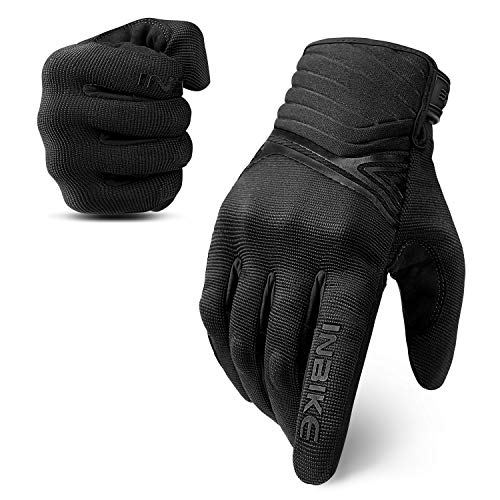
Best for: Warm-weather motorcycle and road cycling
These INBIKE motorcycle gloves suit riders who want basic coverage without a bulky winter design. The shell combines polyester and microfiber, with ventilation holes across the fingers and palm. A stretchy cuff helps the gloves sit close to the hand, while the hook-and-loop wrist closure allows more size adjustment. A pull tab also makes removal easier after a ride.
Protection comes from several added layers. TPR in the palm helps resist wear, and thicker microfiber patches cover high-contact areas on the palm and fingers. EUDE foam at the joints is designed to soften some impact and vibration. The index finger uses touchscreen-friendly microfiber, so you can handle a phone or navigation device without removing the glove. At around $30, they offer a useful mix of airflow, padding, and convenience. Still, buyers should check the size chart carefully because the listing does not provide a sizing range here.
Pros
- Mesh openings in the fingers and palm improve airflow in warm conditions.
- TPR, microfiber patches, and EUDE foam add coverage to key contact areas.
- Touchscreen material on the index finger supports basic device use.
Cons
- No waterproofing or cold-weather insulation is listed.
- The product information does not mention a safety certification or impact rating.
1. KEMIMOTO Tactical Motorcycle Gloves
Best for: Trail riders needing basic hand protection
The KEMIMOTO Tactical Gloves are lightweight riding and utility gloves for motorcycle trips, cycling, airsoft, paintball, hiking, and outdoor work. This Black, Medium pair combines a hard-shell upper with microfiber reinforcement to help reduce scratches and abrasion. Around $20, they offer more coverage than basic fabric work gloves without moving into premium pricing.
The palm uses double-layer synthetic leather with anti-slip mesh, giving you a steadier grip on handlebars, tools, or outdoor equipment. Double-stitched seams support repeated use, while five angled rubber vents at the finger joints help release heat. Touchscreen material covers the thumb, index finger, and middle finger, so you can use a phone without removing the gloves. Check the size chart carefully, since a poor fit can reduce dexterity and comfort.
Pros
- Hard-shell protection and microfiber reinforcement help shield hands from light impacts, scratches, and abrasions.
- Double-layer synthetic leather and anti-slip mesh improve grip on handlebars and tools.
- Three-finger touchscreen coverage lets you operate compatible devices while wearing the gloves.
Cons
- Touchscreen coverage is limited to three fingers, so other fingers cannot operate a phone directly.
- The gloves may not provide enough protection for severe impacts, sharp blades, or heavy-duty motorcycle crashes.
Buying Guide
Prioritize a secure fit with certified protection. Gloves that slide around can reduce control and leave gaps over the knuckles, palms, or wrists during a fall.
- Safety certification: Choose gloves marked CE EN 13594. Look for CE-rated knuckle armor, reinforced palms, and abrasion-resistant materials such as leather or textile blends.
- Fit and sizing: Measure your dominant hand around the widest part of the palm, excluding the thumb. The gloves should feel snug, with less than ¼ inch of extra material at the fingertips.
- Wrist security: Pick a pair with a wide hook-and-loop wrist strap. It should prevent the glove from pulling off when you tug firmly at the fingertips.
- Season and weather: For warm rides, use short-cuff mesh gloves with leather or synthetic-leather palm panels. For rain or temperatures below 50°F, choose waterproof gloves with insulation, but check that finger movement remains easy.
- Controls and comfort: Look for pre-curved fingers, padded palms, and touchscreen-compatible fingertips. Beginners should avoid bulky seams that make levers harder to feel. A price of $40 to $100 usually covers dependable entry-level protection.
If you cannot have everything, prioritize fit and CE-rated impact protection over touchscreen features or extra insulation.
Frequently Asked Questions
How do I choose motorcycle gloves as a beginner?
Choose motorcycle gloves that fit snugly, protect the knuckles and palms, and match your riding weather. Look for abrasion-resistant leather or textile, padded palms, wrist closure, and fingers that reach the tips without pressure. A beginner-friendly pair often costs about $30 to $100, but fit matters more than price.
What protection should beginner riding gloves have?
Beginner riding gloves should have abrasion-resistant material, knuckle protection, palm padding, and a secure wrist closure. Full-finger coverage matters because hands often reach the ground first during a fall. Check for reinforced stitching and a palm made from leather or layered textile, rather than thin fashion fabric.
Can I use regular work gloves for motorcycle riding?
No, regular work gloves are not a reliable substitute for motorcycle gloves because they may lack knuckle armor, palm reinforcement, and secure closures. Some also use loose cuffs that can pull off in a crash. Choose riding gloves with full fingers and at least one wrist strap for road use.
Are short-cuff motorcycle gloves safe for new riders?
Short-cuff motorcycle gloves can be safe for new riders when they fit firmly, cover the wrist joint, and include impact and abrasion protection. They are easier to wear with a jacket, but leave more skin exposed than gauntlet styles. For highway trips, choose longer cuffs that overlap the sleeves.
Conclusion
KEMIMOTO Tactical Motorcycle Gloves are the top pick for new riders who want affordable hand coverage for daily commutes and short recreational rides. If your priority is cold-weather or wet-road protection, choose a purpose-built insulated, waterproof motorcycle glove instead, since tactical-style options may provide less warmth and rain resistance. Before buying, double-check the size chart and measure your hand at the widest point, since glove sizing varies by brand. Confirm that the armor and closure design fit your riding style, controls, and jacket cuffs. Check the package quantity, especially when listings show single gloves or pairs. Finally, review the current price, shipping cost, and return policy before placing the order.